Preserved Mattituck farmland sparks fight over proposed oyster-processing operation
A Mattituck property saved from becoming a housing subdivision has become the latest flashpoint over what farming on preserved North Fork land can look like.
Neighbors who helped protect the 14.5-acre New Suffolk Avenue property are now raising concerns about plans by West Robins Oyster Company to build an aquaculture operation that would include processing shellfish for other growers.
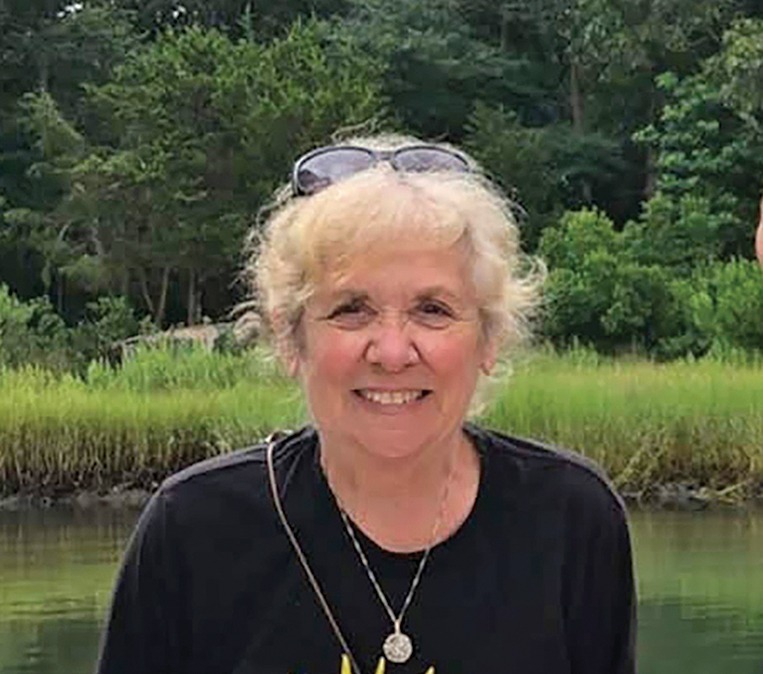
“There are some things going around about how big this business is going to grow; it’s going to be far more than we ever expected, and people are a little scared,” resident Joni Strong said.
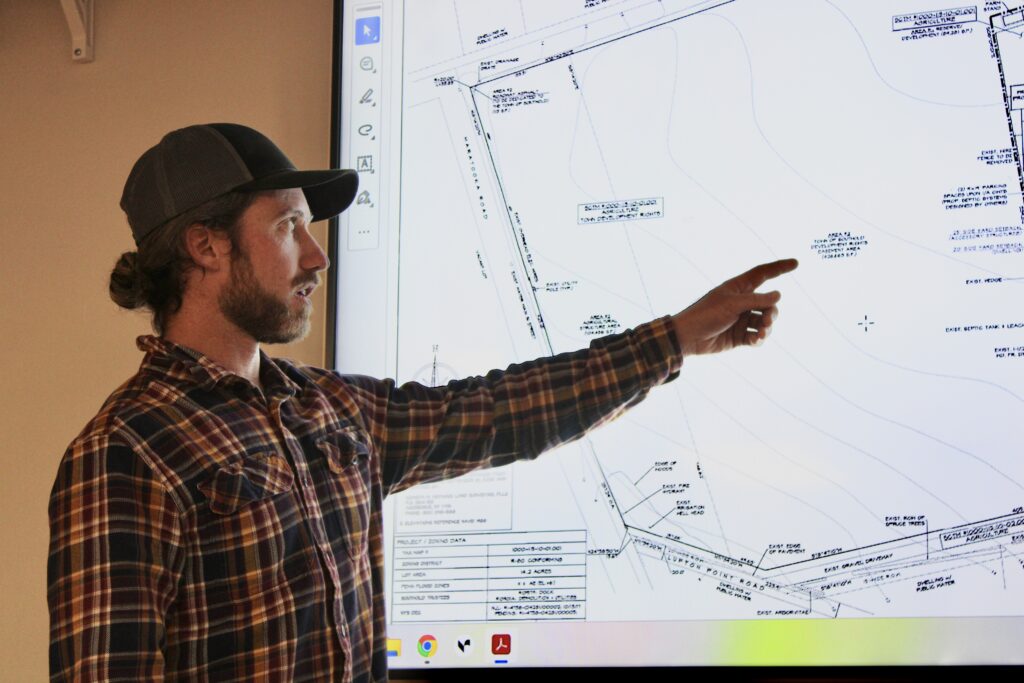
West Robins Oyster Company co-founder Will Peckham gave residents their first detailed look Tuesday, Sept. 1, at the Mattituck-Laurel Library at his proposed site plan for 4180 New Suffolk Ave. in Mattituck.
Mr. Peckham purchased the property from Peconic Land Trust in 2023 for $1.6 million. He plans to build on roughly two acres on the eastern side of the parcel, while 12 acres are protected under an agricultural easement with the Town of Southold.
There is an additional sliver on the western side along Marratooka Lane where a greenhouse or livestock barn could be built in the future.
“What that means is, thanks to many of you in the room, now this will never be seven spec homes here in the field, so I think everybody can feel really good about that,” Mr. Peckham said.
On the two acres where he can build, he’s said he plans to construct a farmhouse for he and his girlfriend, a small farm stand to sell shellfish and crops from the land, an agricultural production building — which is a greenhouse with a permanent foundation — and a 3,000-square-foot agriculture and aquaculture processing and production pole barn.
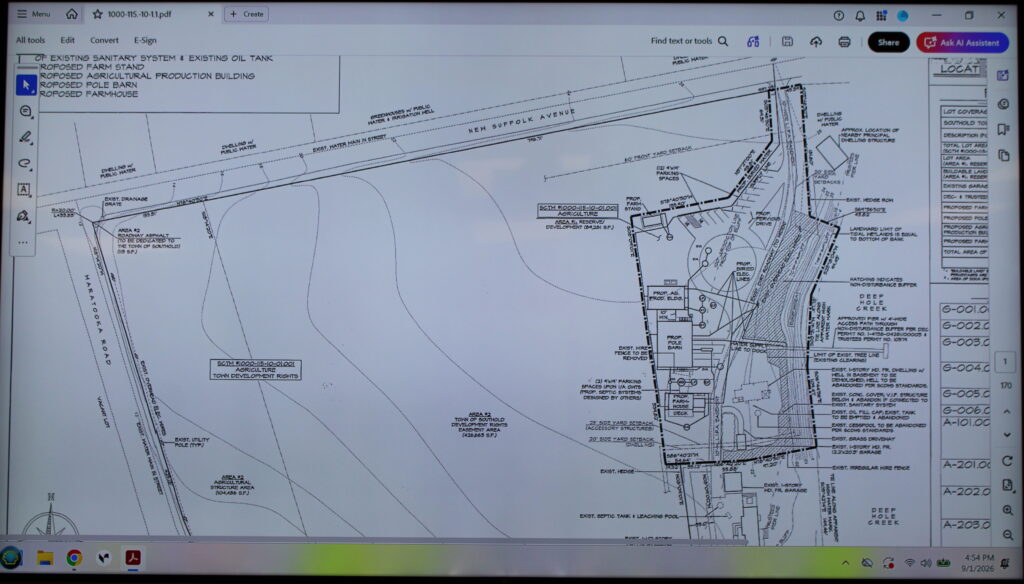
Mr. Peckham stressed that the processing aspect is only a minor part, and that part of the building would only be about 425 square feet.
He said the property would be connected to public water and already has electricity, eliminating the need for new overhead lines. The project also calls for an innovative and alternative septic system intended to minimize nitrogen pollution.
“We’re trying to keep the vistas relatively clear,” he said. “Everything that we’re doing is really agricultural buildings, and they are sited to minimize environmental impact as much as possible.”
But residents repeatedly returned to questions about scale, truck traffic, odors, water use and how much shellfish could eventually be processed on the site.
“To the best of your knowledge, does a facility such as this exist anywhere on the North or South Fork on a residential creek?” Bob Strong asked regarding Deep Hole Creek. “Either you know, or you don’t know.”
Mr. Peckham argued that there’s no such thing as a residential creek, and that it’s zoned for agriculture, and the neighboring parcels just happen to be residential.
“That’s how it goes on Long Island, and that’s why we’re trying to protect what we have left,” he said.
Some residents also questioned whether the operation could grow into a larger processing hub for other oyster farms.
Mr. Peckham acknowledged there would be some truck traffic and said he plans to shuck and distribute product from other oyster growers as well.
“To a certain extent, it’s not that useful for us to each try and build the same stuff in different places,” he said.
That answer sharpened questions about how large the operation could eventually become.
Southold Town code requires at least 66% of products processed on an agricultural property to come from that farm’s own operation. Mr. Peckham said West Robins currently grows about 600,000 to 700,000 market oysters a year.
“If we grow a million oysters, we could shuck up to, let’s say, 300,000 of somebody else’s without running foul of the code,” Mr. Peckham said.
When asked what the business could look like five years from now, Mr. Peckham said he honestly did not know.
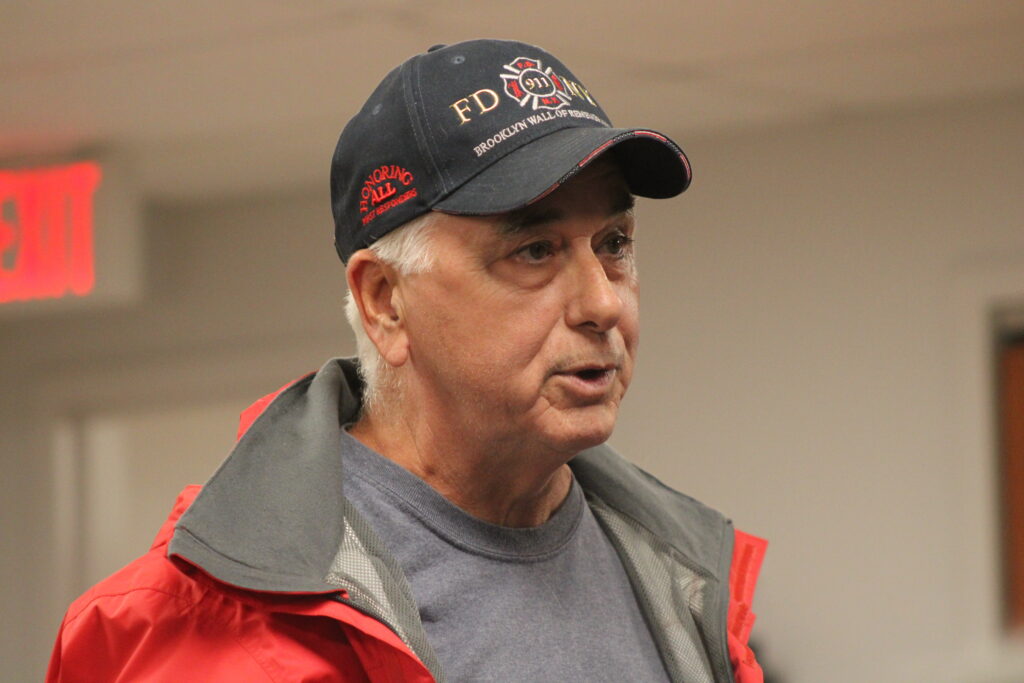
He said, however, that he would periodically reassess whether the business remained a good fit for the community.
“One question was asked to you about the overall production capacity that you envision. You said, ‘Who knows?” Bill Boyden said. “That gave me a little concern. I appreciate the honesty; that just gives me some level of uncertainty.”
Mr. Peckham was also questioned about how pungent his “fragrant business” will be.
He said discarded shells would be used “productively,” either for shellfish restoration or as soil amendments. He said Southold has setback requirements for compost, which would place it at least 150 feet from the lot line, and that most activity would take place indoors.
Mr. Peckham said his hours of operation would be 8 a.m. to 4:30 p.m., with no nighttime illumination, which was another concern.
The dispute comes as Southold wrestles with another fight over the use of preserved farmland, this one involving a proposed chicken farm on Ackerly Pond Lane. Neighbors on nearby Jasmine Lane have similarly questioned how intensive agricultural operations fit alongside residential properties.
There will be a public hearing on the oyster proposal at Southold Town Hall on Sept. 14.
“I’m in this business to make some money while also leaving the world better,” Mr. Peckham said. “If the legacy that we hold is a sustainable shellfish farm that filters billions of gallons of bay water, and puts this industry back on the map and provides good-paying local jobs, then yeah, guilty.”