North Fork history comes alive with battle reenactment
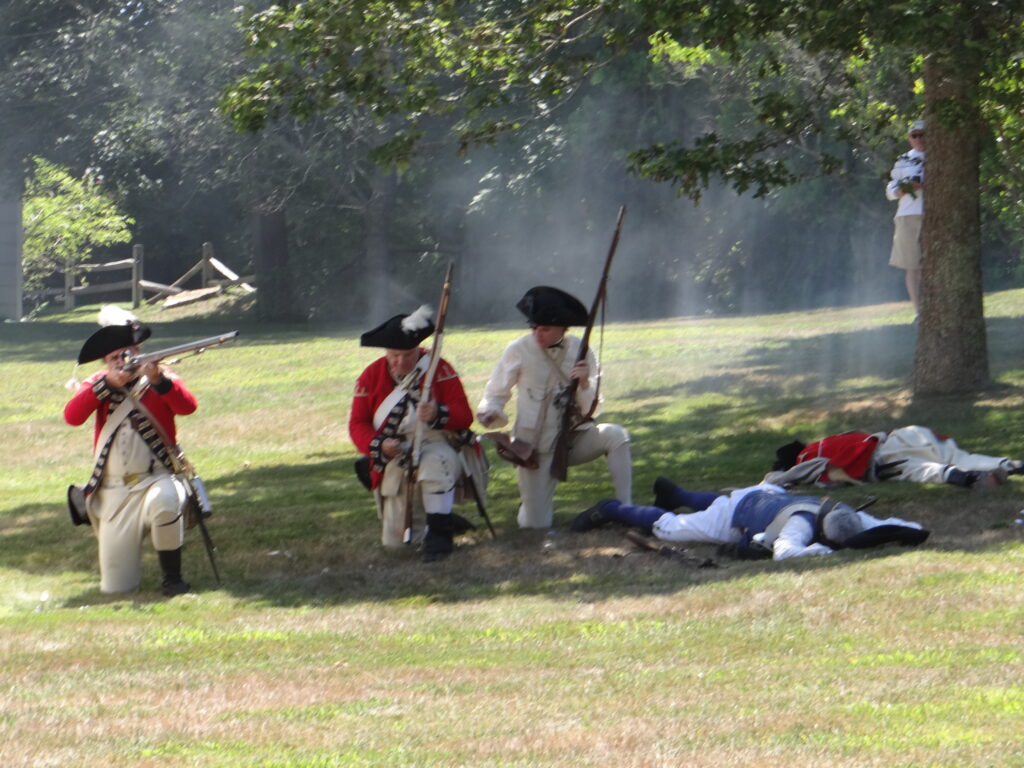
Volunteers from across Long Island performed a reenactment of the Battle of Oyster Ponds Saturday on the lawn of the Village Green in Cutchogue. On that day 250 years ago, pesky British soldiers looking to replenish their supplies by grabbing whatever they could from North Fork farms were stopped by the colonial forces.
The day-long event included drills, field maneuvers, weapons demonstrations, tours of historic houses and a historically realistic reenactment involving a small corps of volunteers representing opposing sides.
The purpose of the day was education, according to Mark MacNish, executive director of the Cutchogue New Suffolk Historical Society and Museums. “They’re very regimented in teaching people how soldiers would have fought and survived in an encampment. It’s all about the historical lessons,” he said.
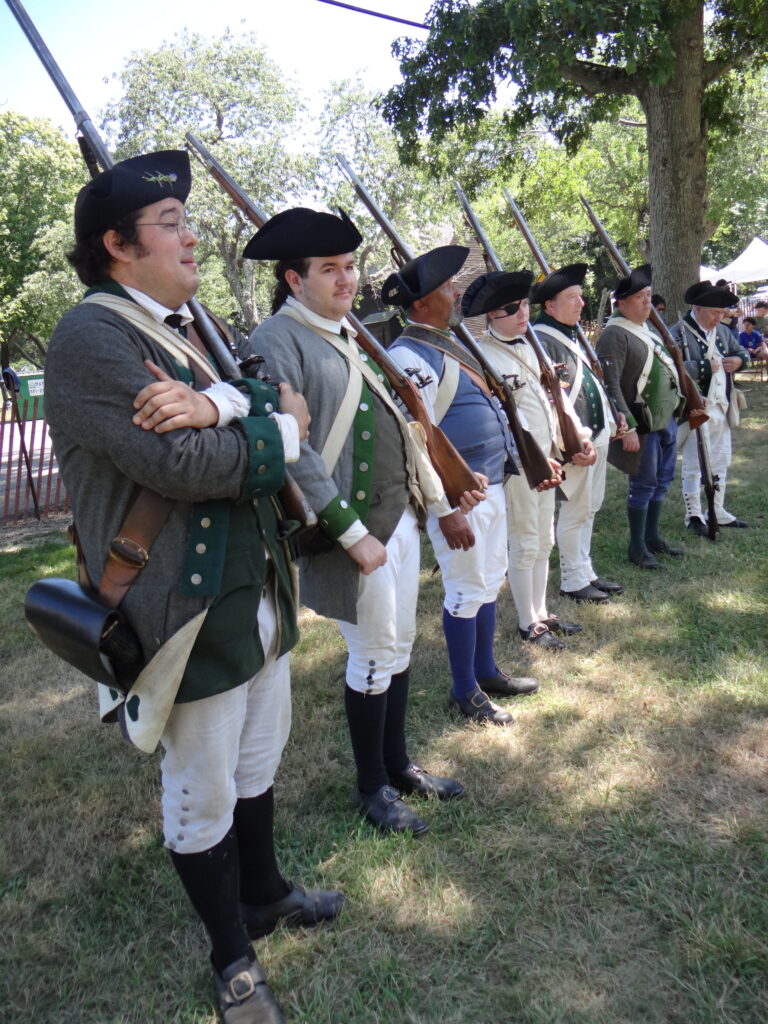
The lessons require commitment from the volunteers, said Mr. MacNish, who was decked out in colonial-era uniform, sporting a white shirt with ruffles at neck and wrists covered by a scarlet wool vest and white linen pants with a drop front and back. “It’s not easy getting in and out of these,” he said.
The story of the Battle at Oyster Ponds was provided by Andrew Freleng, Long Island Commander of the 3rd New York Regiment, a nonprofit historical organization.
“At the request of the Provincial Congress in 1775, the regiment stepped up to protect the locals from the plundering British,” he explained. “After Bunker Hill, the British couldn’t get out of Boston. They had their Royal Navy go to all the islands in our area — Plum Island, Gardiners and then the whole East Coast — with the intent to steal livestock, farm products and silver.”
The re-created British unit was the Prince of Wales 23rd Regiment of Foot, Royal Welsh Fusiliers. They were met by members of the 3rd New York Regiment, some members of which are buried at the Old Burying Ground in Cutchogue. In those days, the Britons were career soldiers with the best training and weapons; the Continental soldiers had only a six-month enlistment fighting with sparse supplies.
“It’s hard to find people who want to portray the British,” Mr. MacNish laughed.
On Saturday, as the Patriots gathered under white tents on the north side of the Green, the opposite side of the lawn was occupied by the enemy: British soldiers in regimental white and red wool frock coats, a sword for show on their belts and, of course, their bayonets.
Two of them were brothers Michael and Kenneth Boyle of Medford, seen pouring bottled Poland Spring water into their metal canteens.
“We’ve been doing this since 2013, because we love history,” said Michael, who added he didn’t mind being among the villains. “Well, it’s usually a positive experience. My father’s family is from Scotland, so that’s the connection, and people like to ‘boo’ us because we’re the enemy.”
“The regiment likes to think of ourselves as living historians,” said Mr. Freleng. “We want people to feel and touch the uniforms and get a close look at the muskets and in a fun way, learn about the 18th century. They can ask questions about gunpowder and weapons. Rather than just reading a book, they’re actually living it.”
Suddenly, he shouted, “Third New York, fall in!” and the rivals lined up on either side of the hilly lawn. First came a weapons safety inspection on both sides. Then the Patriots pretended they had gotten word that the Brits were looking to pillage a house in Orient.
They began marching in line up the hill behind several large evergreens. Mr. Freleng’s sergeant Justin Costatino shouted, “I see you, bloody Brit!” The British were lined up under trees on the opposite slope when the live firing began with blanks. Loud blasts, puffs of smoke and two of the enemy slumped to the ground.
The clash ended in a tactical draw, with the opposing sides thanking the cheering audience of about 60 people.
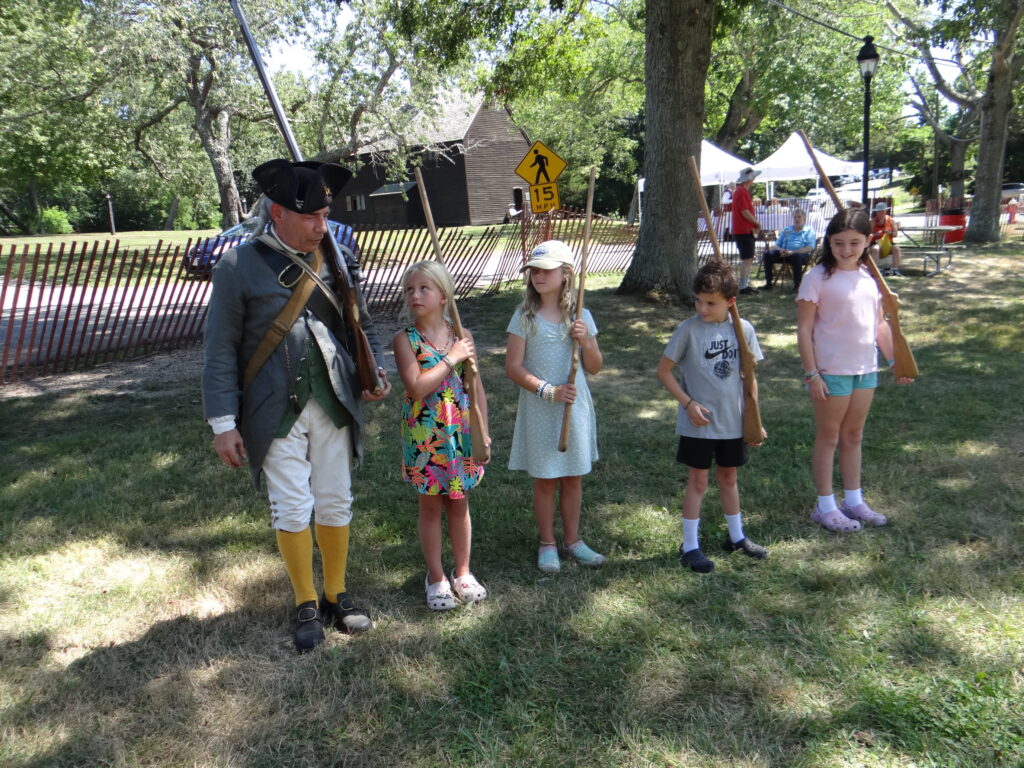
Next it was the children’s drill. Forming a four-person regiment, three girls and one boy, the kids were shown how to hold a musket, stand at attention and march in unison. Nine-year-old friends Charlotte Gillin and Evelyn Matlock of Westhampton said it was great. “I wanted to be on the Revolutionary side, and I’m proud that I learned about the commands,” said Charlotte.
“We all have to have a crazy gene to get dressed in wool, march around in the heat and get covered in black powder,” said Mr. Freleng. “All reenactors are interested in history, military tactics. Some of those here today are historians fascinated with Long Island’s past.”
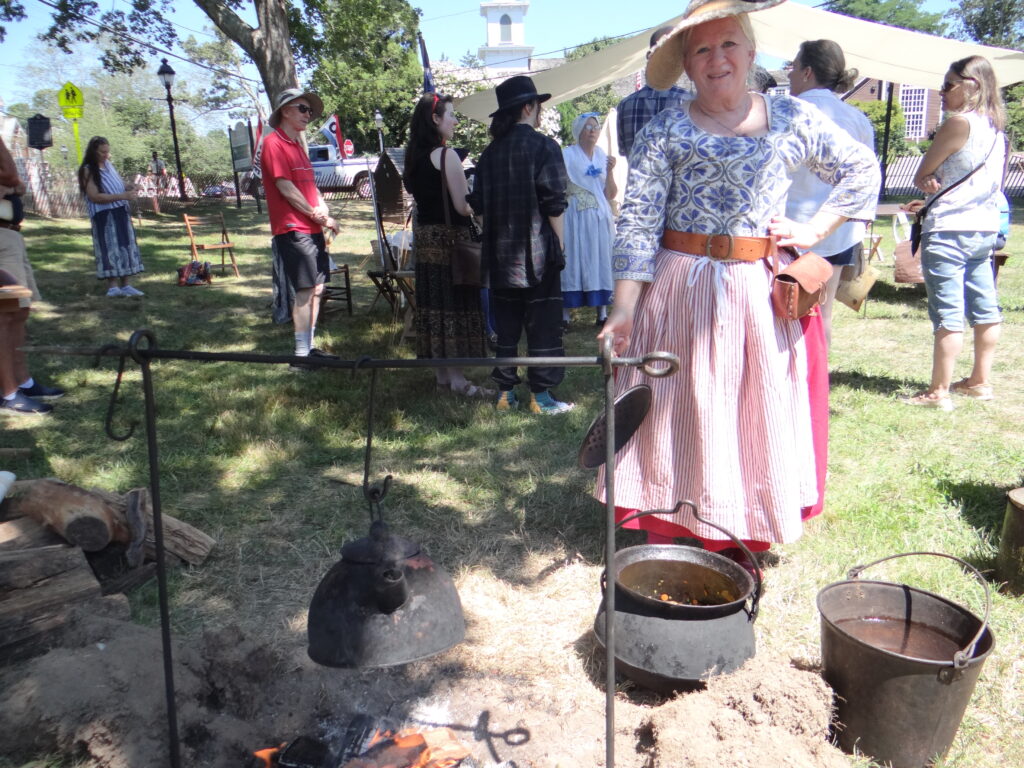
Keeping an eye on a smoky smoldering wood fire with a cast iron tea kettle waiting to boil, was Kristina Foster of Hampton Bays. A Long Island Head Start teacher, on this day she was in colonial dress, acting as the camp cook. The participants, among them her husband, ate her homemade stew of bacon, beef, peas, carrots, parsnips and corn, along with smoked meat and hard cheeses.
Amy Ohman of Boston, vacationing on the North Fork, arrived at 10 a.m., right when the event started. “I’m a history geek!” she declared. “And this was wonderful. All of the reenactors are so knowledgeable. It was a great day.”