Libraries still matter in the age of distraction
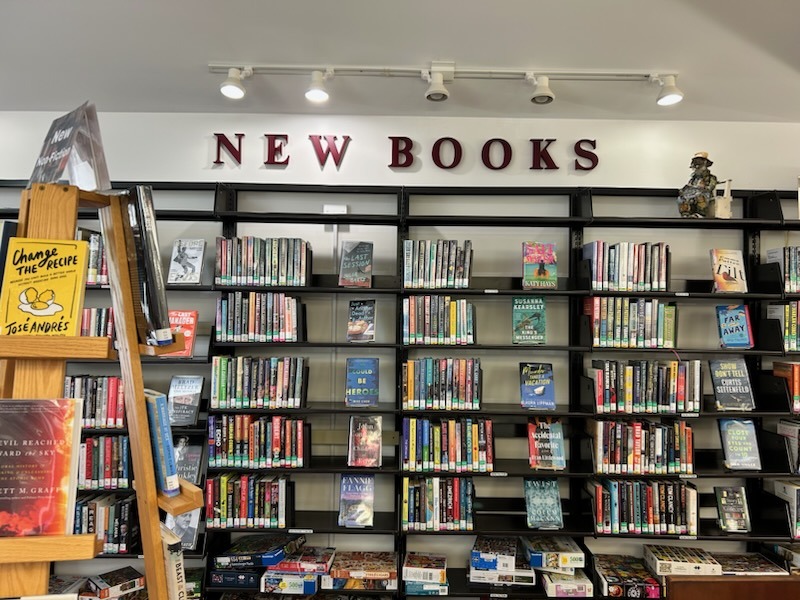
According to a recent paper released by the Journal iScience, daily reading for pleasure in the United States has declined by 40% in the last 20 years. Despite this dire sounding news, many local libraries are working hard to deliver materials in whatever format people wish to consume them.
“People borrowing via downloads has increased, to the point where there’s an overall increase in usage of materials,” said Caroline MacArthur, director of Southold Free Library. “The number of people walking into the library borrowing a book and walking out has trended [as] decreasing for many years. However, book usage, book borrowing at the library, has increased, and that’s due to Ebooks and audiobooks.”
Shauna Scholl, director of Mattituck-Laurel Library, also reported a decline in lending for physical materials, but stated that people are borrowing in other ways.
“Our circulation statistics for physical items are definitely down. In 2001, we checked out about 65,000 physical books, and then in 2024, we checked out about 21,000. So that’s a pretty steep difference, but we’re making up for some of that drop off with other items,” said Ms. Scholl.
With the number of distractions competing for attention, patrons often choose to download a book or listen to a digital audiobook rather than taking out a physical copy.
“If you think about over the last 20 years, between our cell phones or social media and all this other stuff, we have so many more things to distract us. There’s so many other things to choose before you get to reading,” said Ellen Nasto, director at Floyd Memorial Library.
Rosemary Winters, director at the Cutchogue New Suffolk Free Library, notes that people aren’t just distracted. Besides other types of entertainment, there are a greater number of demands put on an individual’s time, from work to caregiving to maintaining our own well-being.
“I think that there’s some merit to people saying that they’re not reading as much for pleasure because everybody is so incredibly busy with work, and that’s probably growing over the years,” said Ms. Winters. “When they do have time, they’re apt to be listening to audio. And it could have something to do with staring at the computer screen and needing a break or just wanting to change content type, I can’t be certain, but we’ve definitely seen a rise in that format being utilized.”
There are multiple ways for individuals to engage with literature, including graphic novels and even some video games.
“We do talk about a physical book being the ultimate [means] of consuming stories and literature, but in library world we kind of look at it as however you’re consuming it, it is still learning and reading,” said Ms. Scholl. “All of that is still very much valid.”
Libraries are also striving to fill their community’s needs beyond books. They offer classes ranging from art to conversational Spanish. Many libraries have a “library of things,” where patrons can borrow a wide range of items they would not have access to otherwise. Libraries also often have passport forms, tax paperwork and COVID tests.
“Reading is just an element of what a library can provide. They provide other types of entertainment, they provide other types of information, they provide other methods that people can gain knowledge. It doesn’t stop the fact that libraries continually try to foster that love of reading and encourage people to read for pleasure,” said Kevin Verbesey, executive director of the Suffolk Cooperative Library System.
While daily reading for pleasure may be elusive for many people, consuming stories and engaging their imaginations is still a worthwhile pursuit.
“I don’t agree that people aren’t leisure reading, because our figures are showing otherwise. We still see people constantly checking out items, and we have a really diverse downloadable collection, which they’re seeing as well,” said Ms. Winters. “It might be the format is changing, but I think people are still looking for the opportunity to read and absorb information.”