Rain-tracking network seeks volunteers on the North Fork
A national weather monitoring network is looking for volunteers to help fill a gap in rainfall data on the East End, where, in many places, no one is measuring what falls after a storm.
The Community Collaborative Rain, Hail and Snow Network — based at Colorado State University in Fort Collins, Colo. — provides precipitation data to the National Weather Service and other agencies to track storms, flooding and drought conditions.
This information is especially critical on the North Fork and Shelter Island, where farmers use precipitation data to make irrigation and crop timing decisions. Environmental officials track rainfall to understand runoff into bays and estuaries. During heavy storms, volunteer reports can help the National Weather Service verify radar readings and issue flood warnings more quickly.
Henry Reges, a meteorologist and national coordinator for the CoCoRaHS network, visited the East End last week to spread the word about the program. The network has more than 27,000 volunteers across North America, but only about 50 on Long Island, he said.
Mr. Reges met with local officials, including Southold Town Supervisor Al Krupski, and visited libraries on both the North and South forks.
“It’s kind of an enigma,” said Mr. Reges, a Long Island native who grew up in Islip. “You look at other parts of the country and see dense networks of observers, and then you get out here and there’s just not much coverage.”
Only a handful of active observers cover the North Fork, including volunteers in Mattituck and South Jamesport. Shelter Island has little to no consistent coverage, leaving large areas unmeasured after rain events, he said.
“With such a narrow strip of land, you can get rain in one place and nothing a mile down the road,” Reges said. “If someone reports an inch of rain in 15 minutes, that goes straight into the system.”
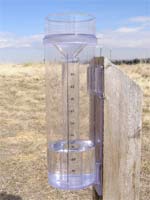
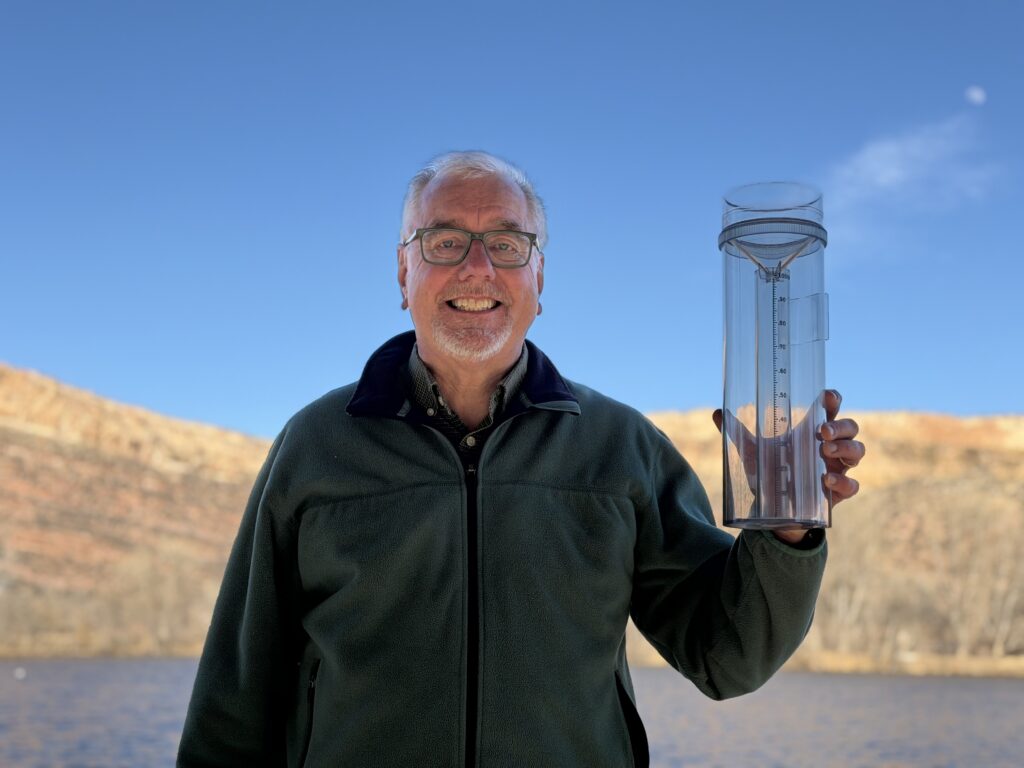
Volunteers use a clear, cylindrical rain gauge mounted in an open area, calibrated in hundredths of an inch. Rain collects in an inner tube, with heavier amounts overflowing into an outer cylinder, allowing observers to combine the measurements for an accurate total. The design is approved for use by the National Weather Service and is considered more reliable for precipitation than many automated systems.
Prospective amateur meteorologists are required to purchase the rain gauge, typically about $40, and commit to regular observations. Mr. Reges said the program is designed to be flexible.
“There’s no long-term commitment,” he said. “People find it becomes part of their routine.”
Participants range from school groups to retirees. Mr. Reges said the barrier is rarely lack of interest, just that most people simply haven’t heard of the program.
“I don’t think the word has gotten out,” he said. “We just need more people out there measuring.”
Residents interested in joining can learn more or sign up at cocorahs.org.