Southold Town Board extends BESS moratorium to 2027 amid safety, zoning debate
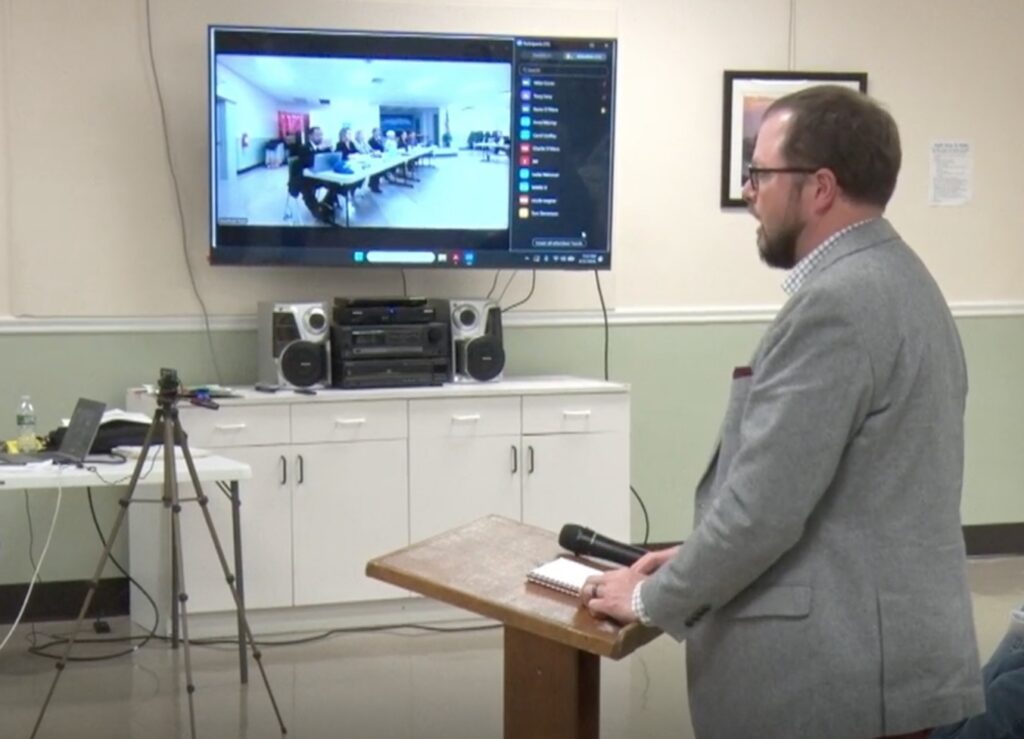
The Southold Town Board unanimously approved a 12-month extension of its moratorium on Battery Energy Storage System (BESS) facilities last Tuesday — buying time to draft and vote on local legislation governing their use.
The latest extension keeps the moratorium in place through April 2027.
The law was first enacted by the Town Board on Jan. 31, 2023, with an effective date of April 11, 2023, following public scrutiny of a BESS facility proposed by Key Capture Energy on Oregon Road in Cutchogue the previous year.
The town’s BESS Task Force — formed in 2023 as part of state recommendations — spent about a year studying the issue and issued a comprehensive report in April 2024, officials said.
When the Town Board enacted the moratorium extension in 2025, they cited the state’s ongoing review of fire codes regarding BESS facilities, Supervisor Al Krupski said. The board had also been weighing a series of fires at battery storage facilities at the time, as concerns over safety grew.
Town officials said the additional year will allow them to reconvene the town’s BESS Task Force, gather public input and craft regulations aligned with new state guidance.
“The recommended 12-month extension of the moratorium would be time to complete and accomplish the steps recommended by the state in their new [BESS] guidance document, and the year would be spent updating that,” Mr. Krupski said.
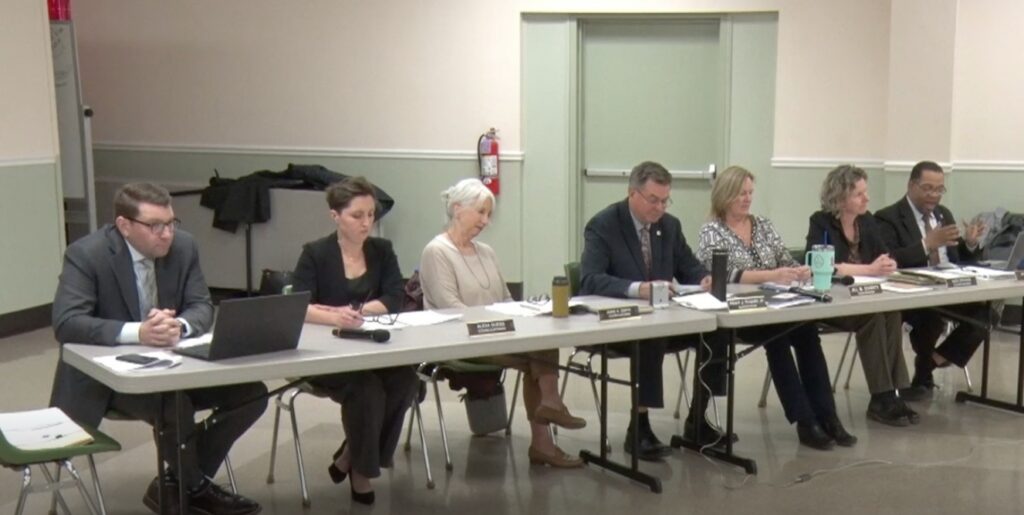
The first step, officials said, will be updating the town’s Comprehensive Plan to address battery energy storage facilities, which would then guide future zoning regulations.
The year-long extension would also give the town time to work on other initiatives, such as its update for the zoning code, which will take a more piecemeal approach after planning director Heather Lanza said a complete overhaul was decidedly impractical.
There was a mix of attendees supporting and opposing the moratorium and use of BESS facilities in Southold during the April 21 public hearing. Major concerns expressed by opponents were that the lithium-ion batteries used at the facilities can create hazardous conditions for the soil, water table and surrounding community if a fire were to occur.
Kevin O’Mara, a member of the Friends of Oregon Road group, referenced a January 2025 BESS facility fire in Moss Landing, Calif., which created an environmental and public health crisis in the community, as reported by The New York Times. Tests conducted by a state agency and by San Jose State University both detected cobalt, nickel and manganese in topsoil in the area that allegedly exceeded the Environmental Protection Agency’s risk level for residential soil, per The Times report.
Mr. O’Mara said contamination from heavy metals could render nearby preserved farmland unusable.
“The town has spent millions of dollars preserving the agricultural land around this site, which would become unusable if there were a fire because of the contamination of these heavy metals,” he said.
The project that sparked the debate — a proposed 60-megawatt lithium-ion battery storage facility and Long Island Power Authority substation on a 27-acre Oregon Road site — remains a focal point for residents.
The Albany-based developer, Key Capture Energy, has argued that such facilities are safe and necessary to support renewable energy.
The stations are unmanned and remotely monitored 24/7, according to Key Capture Energy senior development director Kolin Loveless, who urged the board to reject the extension.
He said fire response would rely on standard equipment, with guidance generally recommending that such fires be allowed to burn out.
Mr. O’Mara challenged that assertion.
“What he slipped in is that there would be a shelter-in-place order for everybody who was within a certain perimeter of the facility,” he said. “That includes homes, businesses, a church, all within the two-mile radius.”
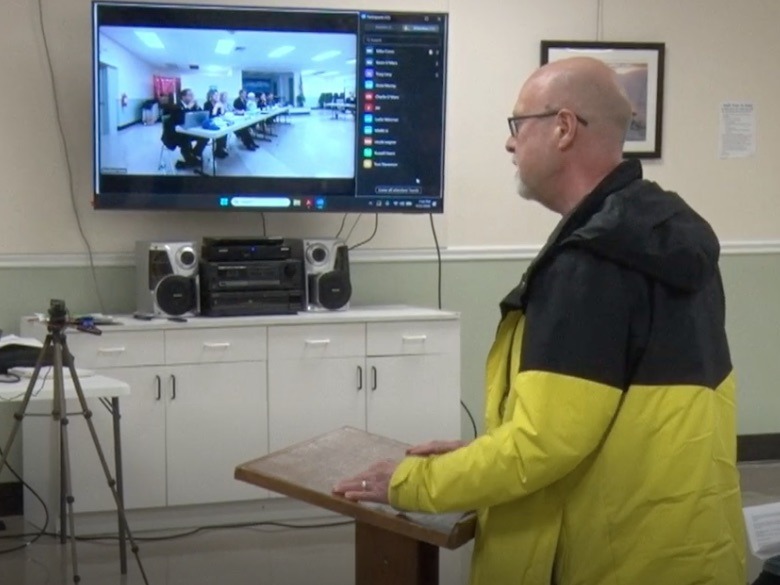
Others urged the town not to delay a decision indefinitely.
Mattituck resident Eric McClure said “our future is clean energy” and that energy storage will be necessary to distribute power when it is needed. He called on officials to use the extension to reach a clear decision rather than prolong uncertainty.
The Town Board’s decision overrode an April 8 Suffolk County Planning Commission report that recommended against the extension, citing updated state fire codes adopted in 2025.
“It’s good that the state considered this for 18 months and has provided the town with guidance. I think that will or will not be helpful,” Mr. Krupski said. “It’s unfortunate that Suffolk County is not interested in the town trying to review this on its own. As a township, this is our land use and our zoning, and it’s our responsibility.”
Southold is one of three Suffolk County towns with active moratoriums on battery storage facilities. Babylon’s expires in August, and Islip’s is set to lapse in September.