New Sound Partnership director looks to 10-year plan to address North Fork water quality
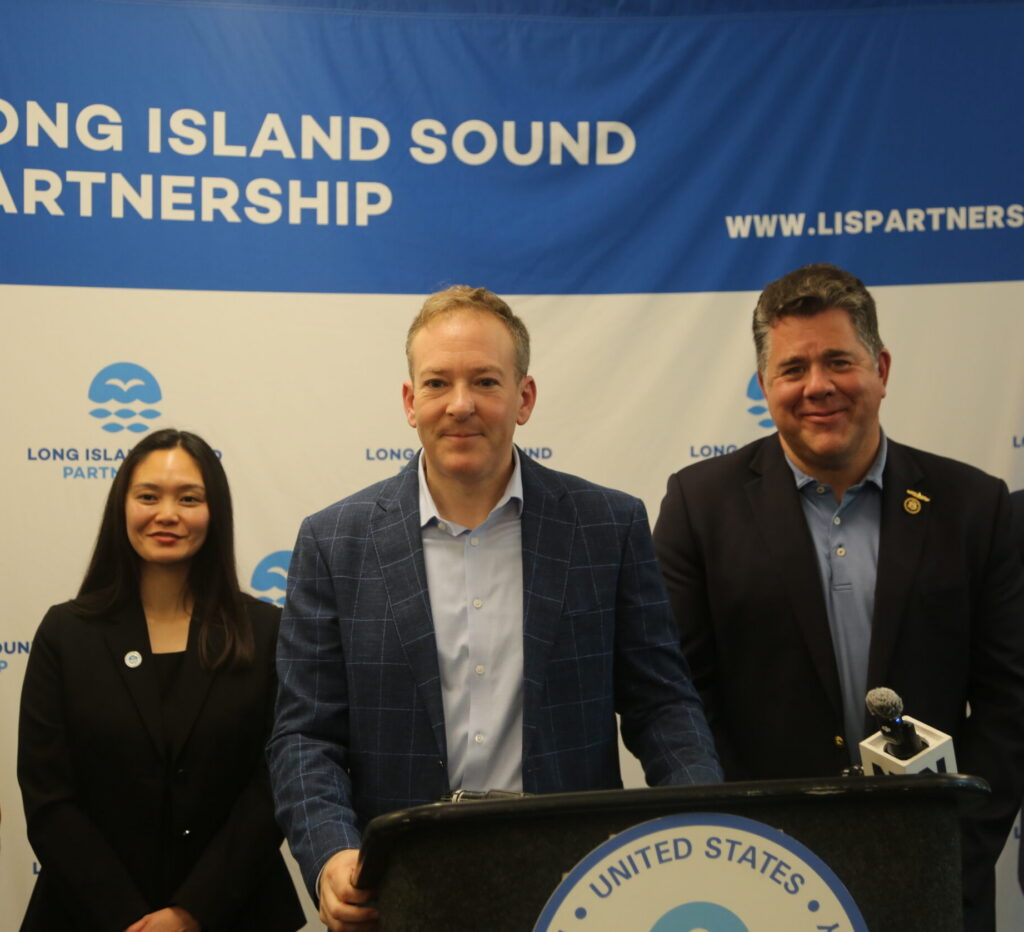
Nicole Tachiki has spent the past several years helping shape the Long Island Sound Partnership’s environmental priorities. Now, she will lead the program into the next decade, taking over as director as the partnership begins implementing its 10-year plan aimed at improving water quality, restoring habitat and building resilience across the Sound’s watershed — including communities on the North Fork.
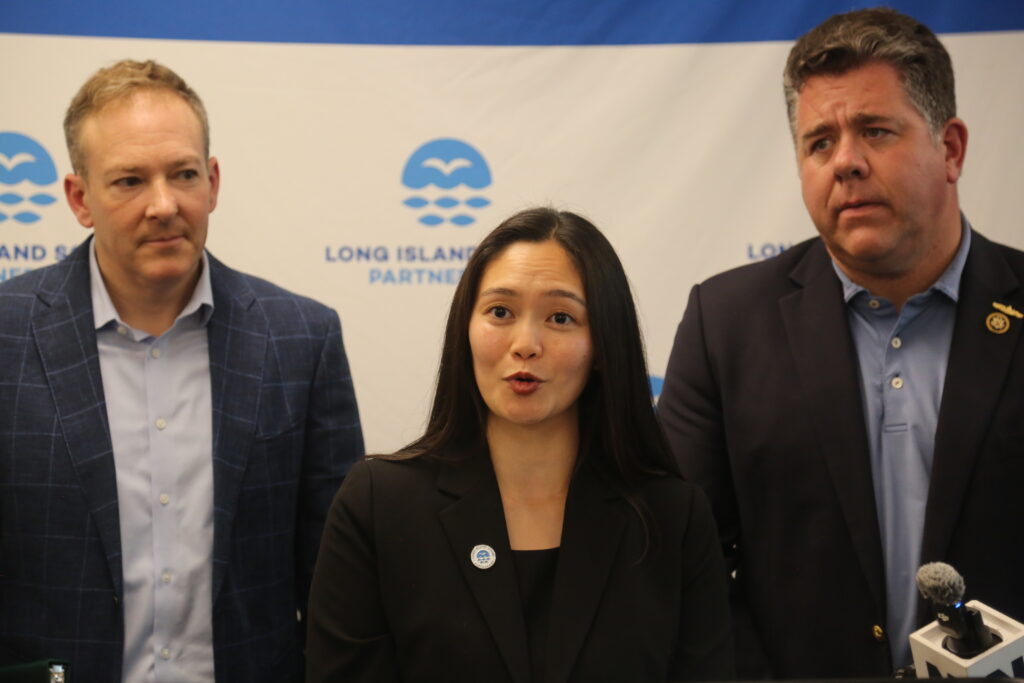
Ms. Tachiki, who has worked with EPA Region 2 since 2019, was announced as the new leadership Thursday afternoon at EPA Administrator Lee Zeldin and Congressman Nick LaLota’s press conference. Ms. Tachiki is the successor to Mark Tedesco, who led the Long Island Sound Partnership for 29 years.
EPA officials said Ms. Tachiki brings extensive experience with the partnership, having played a central role in developing its 2025 Comprehensive Conservation and Management Plan, a 10-year roadmap for protecting and restoring the Sound.
“As director, I will prioritize the goals laid out in the plan,” Ms. Tachiki said during her announcement at the Port Jefferson Village Center in Port Jefferson.
For the North Fork, Ms. Tachiki pointed to a hydrodynamic and water-quality modeling project as one of the major efforts ahead, saying it will help determine how much nutrient reduction is needed to meet water-quality goals and where those reductions should occur. This model is coming this fall.
“We do partner with the Peconic Estuary Partnership,” Ms. Tachiki said. “New York State Department of Environmental Conservation takes the lead in coordinating the three estuary programs on Long Island, the South Shore Estuary Reserve, Long Island Sound Study and Peconic Estuary Partnership. We partner with that program in doing a lot of shared initiatives, whether it’s clean water or outreach.”
Where the LISP may not be direct implementers, they’re partnering with PEP and their partners to have the same reach that they want to have in achieving clean waters, she continued.
Ms. Tachiki emphasized that the partnership’s work on the North Fork will continue to rely on collaboration with state and regional partners. That approach aligns with Mr. Zeldin’s broader view that environmental decisions should incorporate local knowledge and input.
“We don’t want to micromanage all of this where we are picking and choosing which projects get built and which ones don’t, and just cutting out this whole process of states and local communities and local input,” Mr. Zeldin said.