How to keep your boat safe as nor’easter whips up winds on North Fork
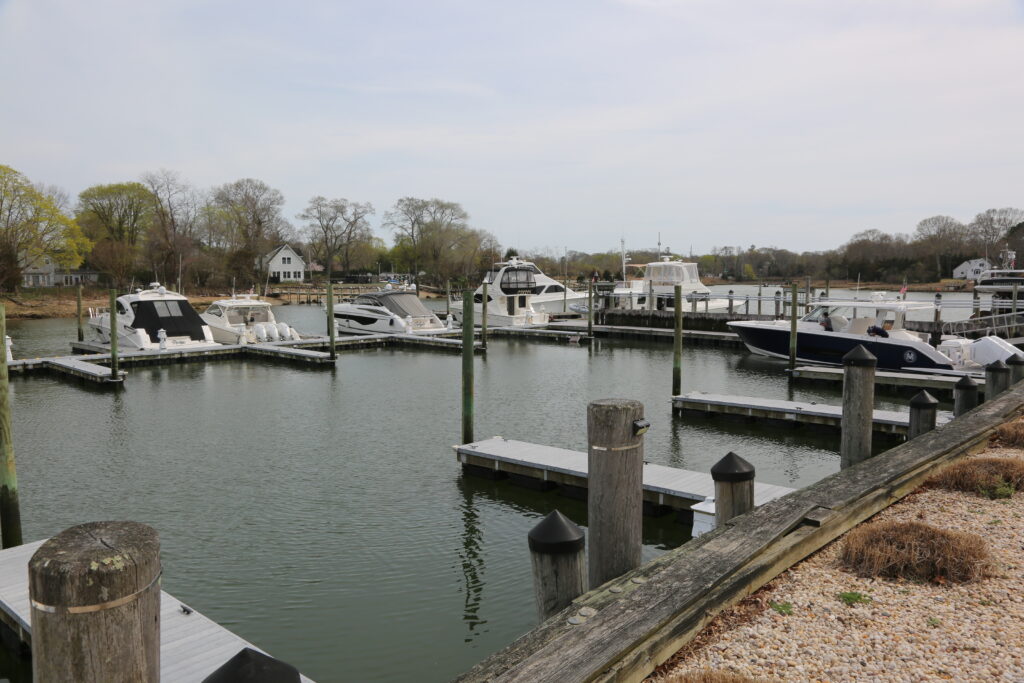
The nor’easter bearing down on the region is forcing the North Fork’s boating community to scramble for shelter — but whether the safest place for a boat is in or out of the water is harder to gauge.
Some boats are being moved to more sheltered marinas, while others will stay put with extra lines and their canvas stripped away, maritime experts told The Suffolk Times Thursday.
“It’s less so about the boat and more about if a given marina is in a more exposed area,” said Jeff Strong of Strong’s Marine, which operates several North Fork marinas, including locations on James Creek and Mattituck Inlet.
The storm’s potential impact was part of the chatter during Wednesday’s “Meet the Boat Builders” discussion, held at Wooden Boatworks’ Southold location.
The forecast calls for two different stories on either side of the East End. Ocean waters from Moriches Inlet to Montauk Point could see gusts of 50 knots and seas of 10 to 14 feet Friday and Saturday, according to the National Weather Service. Eastern Long Island Sound faces gusts of 40 knots Friday, rising to 45 knots that night and Saturday, with seas of 4 to 7 feet over the two days.
Yvonne Lieblein, the business development manager at Hinckley Port of Egypt in Southold, said preparations should account for a storm that could linger.
“It’s important to check that lines are secure and fenders are in place, especially since there may be multiple high tides in the event the storm stalls,” she said.
Ms. Lieblein, whose family owned Port of Egypt for eight decades before the sale to the luxury yacht builder in April, said some customers are ready to haul their boats out and call it a season, while others hope to get back on the water after the storm.
“We’re making sure the boats in our slips are secure, and our team will be checking on them throughout the storm,” she said.
At Oakland’s Restaurant & Marina on Dune Road in Hampton Bays, owners were directed to remove their vessels ahead of the storm, Mr. Strong said. Strong’s moved customers’ boats from there to one of its more sheltered marinas.
Mr. Strong said boats can sometimes be better off remaining afloat, but a sheltered slip doesn’t eliminate the prep work.
“Thankfully, all of ours are in pretty decently protected areas, so we’re usually in pretty good shape that way,” Mr. Strong said. “But it’s the loose components. Make sure your lines are tight and doubled up. Like I say, take the canvas off.”
“Yes, your boat will get dirty,” he said — but that’s better than having the canvas destroyed. Removing it also gives the wind less to grab.
Strong’s has fielded questions from worried boat owners but has not seen a rush to haul vessels, he added.
His biggest concern with this particular storm is high water coinciding with the full-moon tide.
At Coecles Harbor Marina on Shelter Island, crews are getting as many boats as possible off the docks, said marina president John Needham. Some are being hauled out, others moved to suitable moorings or more sheltered locations.
“Hauling out to higher ground is a sure bet. Unfortunately, there’s only so much time and upland space available. And it’s rarely enough,” he said.
Coecles Harbor and Sag Harbor are particularly exposed to wave action during nor’easters, Mr. Needham said. Well-maintained moorings can offer protection, but owners need to guard against lines wearing through where they rub against the boat’s fittings.
“The risk one can’t avoid is a neighboring moored vessel that has not been prepared and is at risk of leaving her mooring and spreading damage elsewhere,” said Mr. Needham, one of the panelists at Wednesday’s discussion.
At Wooden Boatworks, the preparations vary between its two locations, said proprietor Patrick Brennan, another panelist.
The boats in the water at the Southold yard are relatively well protected from northeasterly winds, Mr. Brennan said Thursday. Boats on moorings in Stirling Basin near the company’s Greenport shop at Hanff’s are more exposed, though he said they can fare well if secured to sound moorings.
For boats on moorings, preparation includes tightening hatches, checking and doubling mooring pennants, securing sails and sail covers, checking batteries and pumps and removing loose gear from the deck.
“In addition to high winds, excessively high tides can cause problems for boats tied to docks, where the boat may fetch-up on a piling or bulkhead,” he said.
Even neighboring slips can offer different levels of protection, said Paul Gartside, an East Hampton-based boat designer and builder who specializes in wooden boats. A friend in Montauk planned to borrow another berth to move his boat out of the path of northeasterly winds.
“The risk is damage to the boat from pounding against the docks and pilings,” said Mr. Gartside, another panelist.
Boaters passing through are seeking their own pockets of protection. While crossing on the South Ferry Wednesday, Mr. Gartside saw yachts tucked close to shore in Smith Cove, on Shelter Island’s sheltered side.
“No doubt they will be up and down all night checking for dragging anchors — theirs and those of the boats around them,” he said.
For other owners, the storm may settle a seasonal question: whether to haul out now and call it a year.
“Typically that’s what happens when a late season storm comes through — okay I guess boating season is over for another year!” Mr. Gartside said.