Chief Grattan defends Flock cameras as privacy concerns fuel calls to end contract
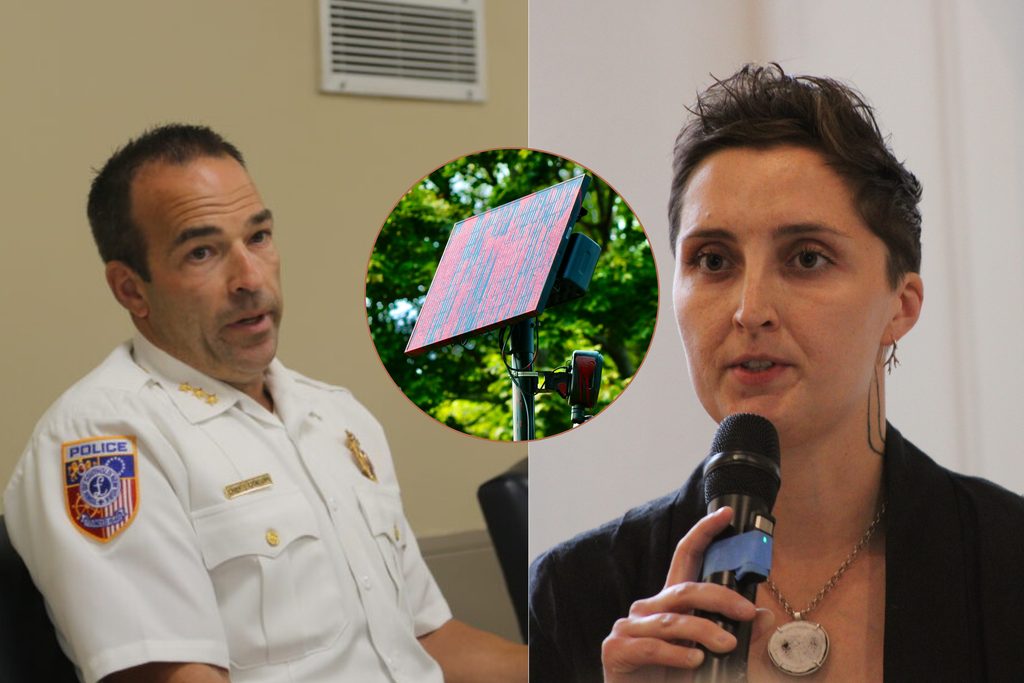
Southold Police Chief Steven Grattan vigorously defended the town’s use of Flock cameras after a councilwoman called for cutting ties with the controversial license plate reader company over privacy and data-sharing concerns.
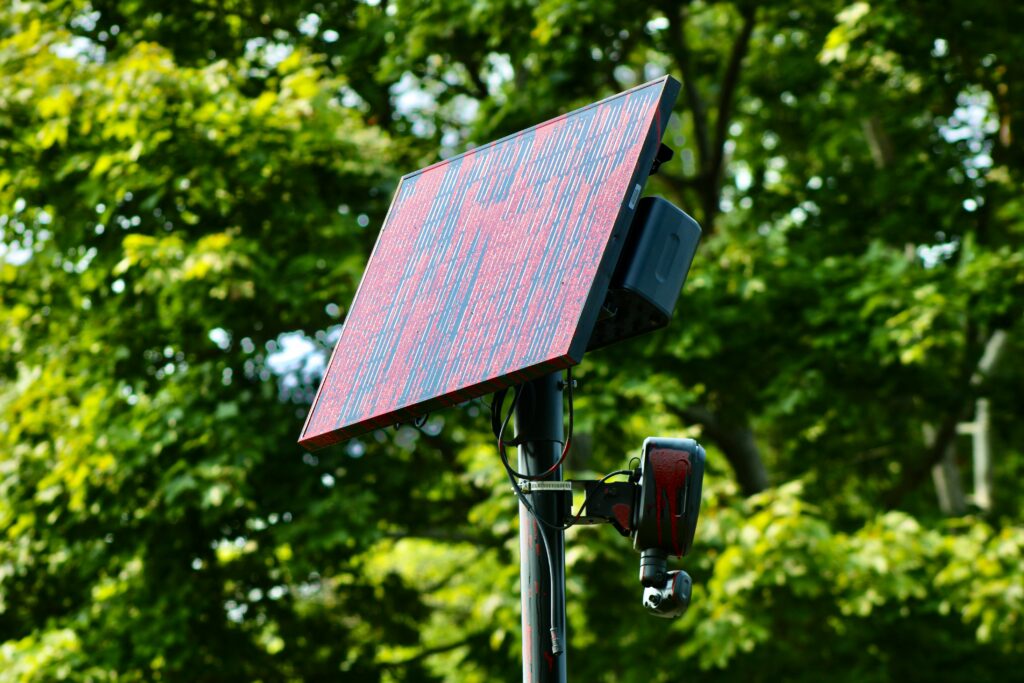
The town’s top cop cited repeated successes with the technology, part of a network of 11 Flock cameras stretching from Greenport to Laurel.
“Flock has benefited the police department in investigations in locating missing persons, solving crimes, and locating stolen vehicles,” Chief Grattan told The Suffolk Times on Thursday.
His comments came a day after Councilwoman Alexa Suess raised “so many community concerns” about the system during Wednesday’s Town Board work session. Chief Grattan did not attend that meeting.
“We should reconsider our relationship with Flock, or at least commit to not renewing a contract,” Ms. Suess said.
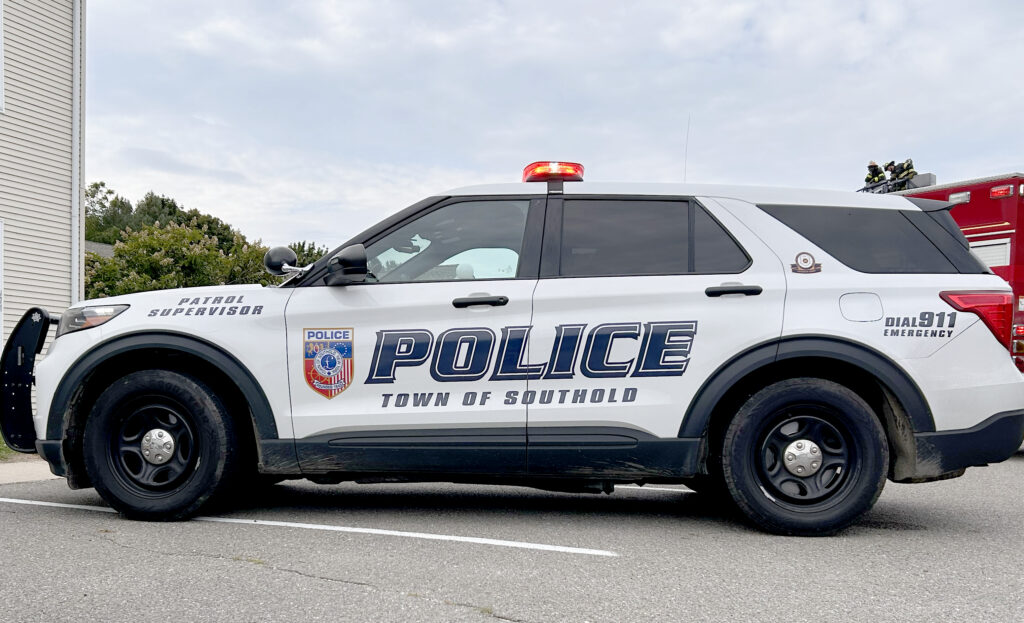
The police department controls three of the 11 cameras under a four-year, $37,152 contract with Flock approved in January 2025, according to town documents. The Suffolk County Sheriff’s Office controls the other eight.
Ms. Suess pointed to repeated vandalism of the cameras, particularly in Greenport. Last month, license plate readers at Moores Lane and Front Street, and at Knapp Place and Main Road were found with cut wires or covered lenses. A sign attached to one demanded the cameras’ removal and criticized ICE, President Donald Trump and village trustees.
The councilwoman also argued that information collected through license plate readers could reveal more than someone’s driving patterns, potentially showing where people live and work, where they worship, whether they visit medical facilities and what organizations they associate with.
“This is a feature of a private company that is a data aggregation platform that’s marketed as a law enforcement tool,” she said.
She also claimed the information could potentially be used by corporations, insurance companies or political strategists.
In a Thursday email to The Suffolk Times, Ms. Suess cited reports alleging that Flock had shared information elsewhere in the country despite restrictions imposed by municipalities. She questioned how much control local departments have over their records.
A Flock spokesperson refuted Ms. Suess’ assertions Friday.
“Agencies own and control their data, access is limited to authorized users, every search requires a documented reason, and each search creates a permanent audit trail,” the rep told The Suffolk Times. “Flock does not own or sell data.”
Chief Grattan said Southold changed its data-sharing settings a few weeks ago.
“We were noticing that a lot of agencies from out of state were accessing data because we had elected to do nationwide sharing,” he said. “We went ahead and disabled the feature.”
The department continues to share data with a handful of agencies, mostly in New York and Connecticut, and now must approve additional requests from outside agencies, he said.
He added that the Flock software runs in the background at the department’s dispatch center, alerting officers to stolen vehicles, missing persons and stolen license plates. Officers on patrol can also have the program running on their vehicle computers.
Chief Grattan said the department used the cameras over the summer to help identify suspects in an arson investigation and make an arrest. The system also helped locate a 79-year-old Orient woman with dementia who was found in Maryland in March.
The system has also logged more than 500 “hits” involving suspended vehicle registrations, he said.

There are two cameras located on Route 25 in the vicinity of Laurel Lane and two on Sound Avenue in the vicinity of Laurel Lane. There is one on the corner of Route 25 and Wells Road in Peconic, one in the median of Route 48 and another on the north side near the county highway maintenance yard in Southold.
In Greenport, there is one on the corner of Moores Lane and Front Street, one on Main Street near Knapp Place, one on the corner of Manhanset Avenue and North Road, and one on the corner of Shipyard Lane and North Road in East Marion.
On Wednesday, Ms. Suess suggested the town could consider other license plate reader systems that store information locally rather than sharing it across outside networks.
Councilwoman Jill Doherty also expressed reservations at the work session.
“The positive things about it are very positive, and you don’t want to lose them,” she said. “But I think the negatives are starting to outweigh the positives.”
Councilwoman Anne Smith suggested examining immediate safeguards while reviewing the town’s relationship with Flock. Councilwoman Kate Stevens proposed consulting law enforcement technology experts and the New York Association of Towns about the town’s options.
The board took no action Wednesday.
Chief Grattan said he and a sheriff’s office representative will discuss the system’s investigative benefits with the Town Board at its next work session on Nov. 17.
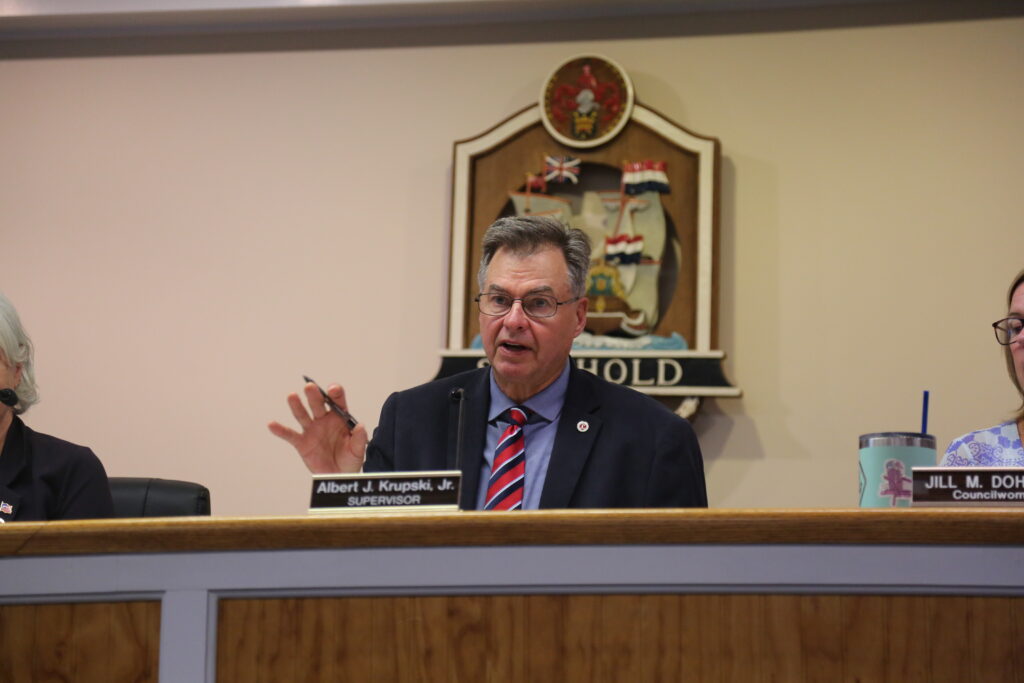
Supervisor Al Krupski urged residents to email the Town Board with any questions or concerns ahead of the meeting.