Southold chicken farm developer hits water snag in pivot to produce
The developer who scrapped plans for a controversial 6,000-chicken farm in Southold has run afoul of town leaders over his latest proposal — an organic produce operation they say needs its own well for water.
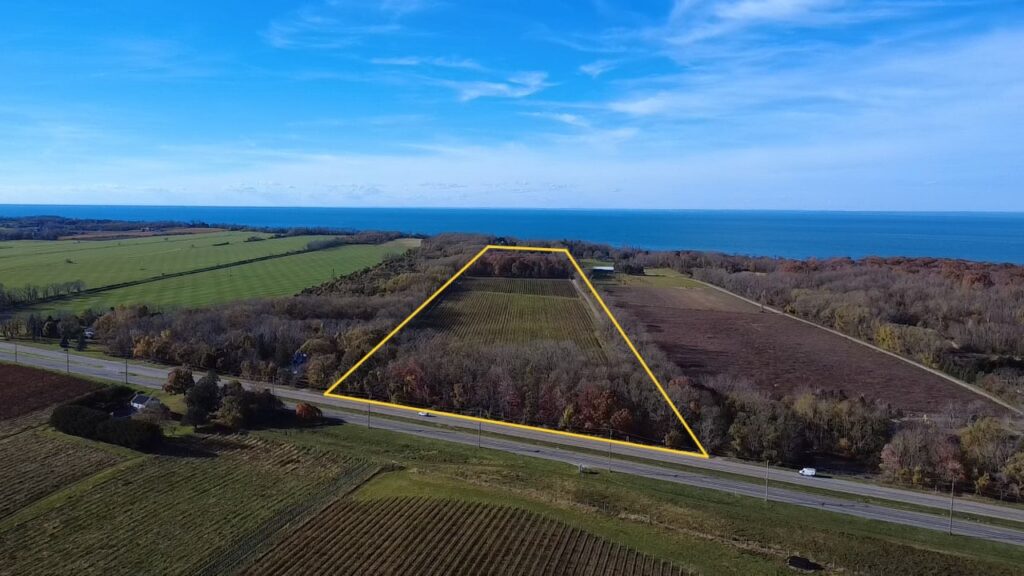
The Land Preservation Committee urged Grant Callahan to develop a more detailed farming plan for his 16-acre Ackerly Pond Lane property, questioning how he would irrigate the land and what crops he intends to grow.
Public water is available from neighboring Jasmine Lane, rather than Ackerly Pond Lane, committee member Lilly McCullough said during the Nov. 10 meeting at Town Hall Annex. But committee members questioned whether that supply would provide enough irrigation for the operation.
Mr. Callahan, the owner of 2340 Ackerly Pond LLC, said he intends to start without a well and reconsider if one becomes necessary.
Committee member William Lee said irrigating even 5 acres could require at least 70 gallons of water per minute, depending on the crops and irrigation system. Mr. Callahan plans to farm all 16 acres.
“You’re going to need a well,” Mr. Lee said at Tuesday’s meeting at the Southold Town Hall Annex. “Five horsepower at least, maybe 10.”
Committee chairman Norman McCullough advised Mr. Callahan to firm up his plan before seeking the committee’s support.
“I think it’d be premature for us to say yes to the plan right now until we hear more about what you’re actually going to do,” he said.
Mr. Callahan did not return calls seeking comment after the meeting.
Bill Zalakar, executive director of the Long Island Farm Bureau, said building a well could be an expense that may be tough to swallow for any aspiring farmer.
“I do agree with the Land Preservation Committee, he’ll need well water of some type,” said “It’ll cost upwards of $50,000 to $75,000.”
Mr. Zalakar also recommended drip irrigation to conserve water, rather than overhead sprinklers. He pointed to the past growing season as an example of why farmers need a reliable supply.
“If you didn’t have some type of well back then, you have a good chance of losing stuff,” Mr. Zalakar said. “If it was up to me, I would recommend that he put in the well.”
The town has a financial stake in keeping the property in agricultural use. Southold purchased its development rights in 2007 for $1.15 million, The Suffolk Times previously reported. Mr. Callahan’s LLC bought the property for $650,000 last year.
The water questions are the latest chapter in a dispute that has stretched through much of the year. Mr. Callahan, an undergrad at New York University, abandoned the 6,000-hen proposal in a Sept. 4 letter from his attorney, following months of complaints from neighbors about potential noise, odors, disease and other impacts.
The town had issued a stop-work order June 29 after the LLC began building a hoop-style chicken shelter without Planning Board approval.
The switch to produce did not end the neighborhood dispute. Residents continued to challenge the location of a proposed agricultural storage barn near their Jasmine Lane homes, as The Suffolk Times reported in October.
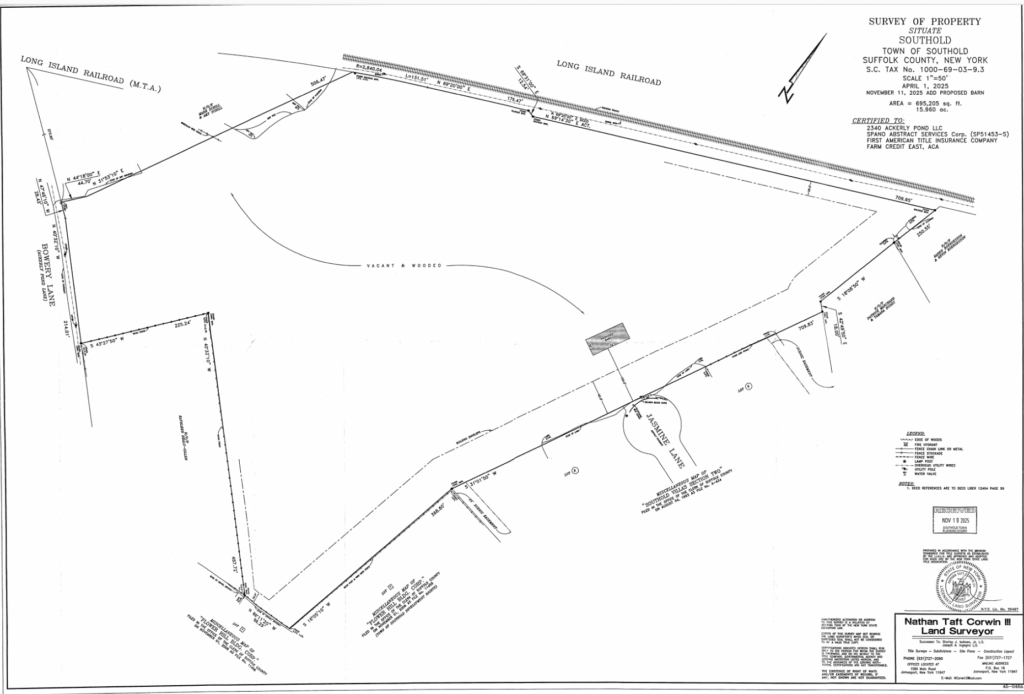
At an Oct. 5 Planning Board hearing, Mr. Callahan said the barn’s location would allow a public water connection from Jasmine Lane. His revised application reduced the requested service from a four-inch line to a one-inch line.
“We fully intend to design the farm and our water usage to remain within the capacity of that one-inch residential line, which is the same maximum water capacity that any of my neighbors can have in their own residential homes,” Mr. Callahan said at that hearing.
The proposed 70-by-30-foot, 2,100-square-foot barn would store farm equipment and supplies. Mr. Callahan again cited access to water as the reason for its location when he appeared before the committee on Nov. 10.
Other questions concerned the crops Mr. Callahan intends to grow, which he has not yet decided, and how he will prepare the land.
Mr. Lee warned him about the cold and wet months and the risks of working the soil in those conditions.
“Be careful in the offseason with the compaction and letting people do the soil and excavating work, taking the trees out when it’s cold and wet,” he said. “The soil structure will be mutilated, and you won’t be able to farm it properly — not organically.”
Ms. McCullough suggested reviewing the property’s topography and retaining some vegetation to help manage runoff. Mr. Lee suggested growing clover to keep dust from blowing onto neighboring properties.
Mr. Callahan began clearing the land last winter, but said the change in plans means redoing some of the work. For now, he is working alone and plans to start small.
“It’s hard to find a staff without making any money,” Mr. Callahan said.