Southold plans 80% cut in Airbnb-style rentals, permit lottery amid housing crisis
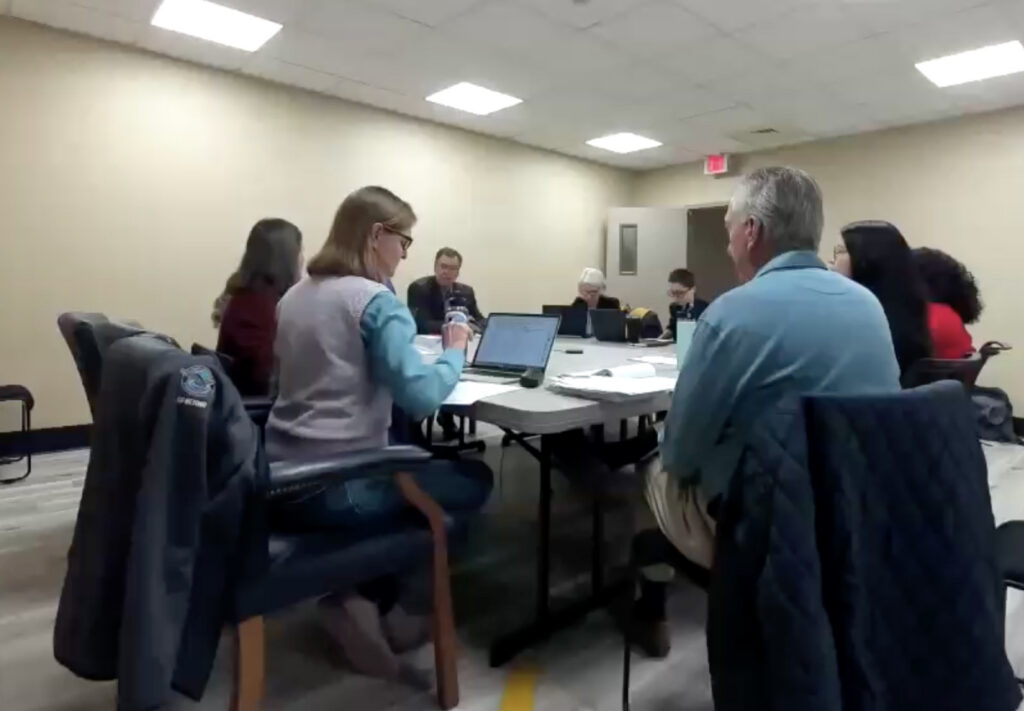
Southold Town leaders backed a plan to severely curtail Airbnb-style rentals amid the North Fork’s housing crisis — with a lottery next fall that would decide which homeowners get permits.
The proposal, discussed during a nearly two-hour Code Committee meeting Wednesday, would limit permits to 1% of the single-family homes in each of the town’s North Fork hamlets. Owners of multiple properties would still be limited to one permit townwide
That would allow about 120 permitted properties — roughly 80% fewer than the 640 active short-term rentals Town Attorney Ben Johnson reported at a civic forum Thursday.
“After all the due diligence, we came back to 1 percent,” Supervisor Al Krupski said.
The restrictions are part of Southold’s broader effort to regulate short-term rentals and preserve year-round housing by limiting the conversion of homes to vacation rentals.
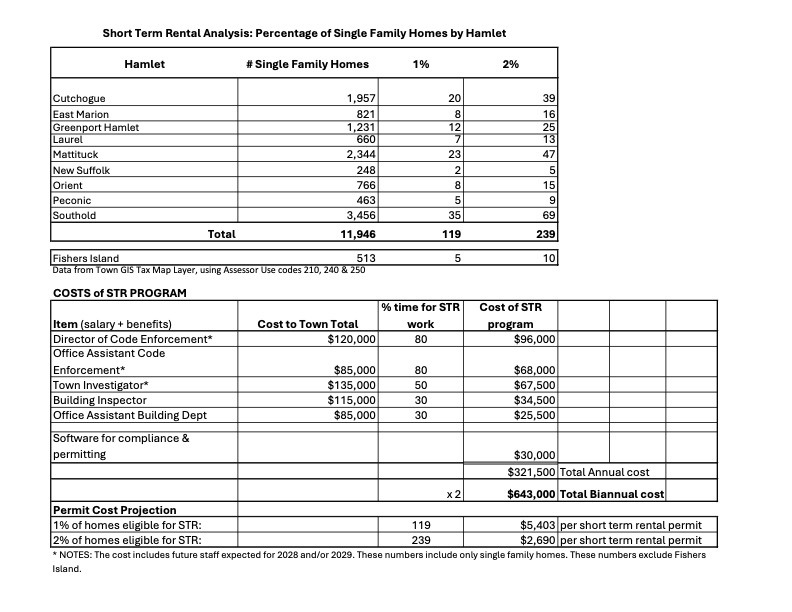
The town’s breakdown would allow 35 permits in Southold hamlet, 23 in Mattituck and 20 in Cutchogue, compared with five in Peconic and two in New Suffolk. The analysis counts 11,946 single-family homes across nine North Fork hamlets, with Fishers Island listed separately.
Under the proposed rules, stays of fewer than 30 consecutive days would require a short-term rental permit. Current town law prohibits rentals of fewer than 14 nights, but officials say the ban has been difficult to enforce.
The timetable calls for applications July 1-31, 2027, followed by town review in August and September and an Oct. 15 lottery for two-year permits. Officials are targeting January 2028 for the program’s launch, with the dates to be established by Town Board resolution.
The Town Board is expected to schedule public hearings later this year.
To strengthen oversight, Mr. Krupski’s 2027 budget proposal calls for a new full-time director of code enforcement.

“The control and regulation of short-term rentals require real oversight,” he wrote in his budget message earlier this month.
The town cost analysis estimates that administering the rental program would cost $321,500 annually, or $643,000 over two years. That includes portions of staff salaries and benefits, along with $30,000 annually for compliance and permitting software.
Officials cautioned that the estimates still needed adjustments, including adding benefits for the director and potentially information-technology support. The staffing projections also include future positions expected in 2028 or 2029.
At the 1% cap, the analysis puts the two-year administrative cost at $5,403 per permit. Under a 2% cap, with a projected 239 permits, that would fall to $2,690. Those figures are cost projections, not adopted permit fees.
Councilwoman Alexa Suess said she had previously considered a 2% cap for economic reasons.
“In looking at this, I would be supportive of 1%,” she said.
Owners would first need a regular town rental permit, which costs $300 for two years. The additional fee for a short-term rental permit has not been set.
Officials said that only one-family homes, including primary and second homes, should qualify. They called for the draft to make clear that apartments, condominiums and multiple dwellings would not be eligible.
Owners would have to maintain their regular rental permits throughout the short-term rental permit’s two-year term and register with the Suffolk County treasurer’s occupancy-tax program.
Properties served by cesspools would not qualify, and accessory dwelling units could not be used as short-term rentals. Owners would also need at least $1 million in liability insurance, naming the town as an additional insured.
A designated operator would have to be available around the clock during rental periods and able to arrive at the property within 60 minutes of being notified of a problem. If the operator failed to respond, both the owner and operator would be in violation.
An operator could be the owner, a property manager or an agent designated in writing and listed on the permit. A new operator must be reported to the town within 10 business days.
Fines would range from $3,000 to $10,000 for a first conviction and $5,000 to $20,000 for a second within five years. If higher, the property’s 30-day rental rate would apply instead. Each week’s continued violation would constitute an additional violation.
Mr. Johnson outlined the rental market and the challenges of enforcing restrictions at Thursday’s Southold-Peconic Civic Association forum at the Peconic Community Center. His October figures showed an average nightly rate of $903 and occupancy of 18%.
The number of active rentals was down 11 from September, while the average nightly rate fell $18. Mr. Johnson attributed the declines to the end of summer.
At Wednesday’s Code Committee meeting, Councilwoman Anne Smith cited concerns about businesses operating in residential neighborhoods and the availability of year-round rentals.
Residents at Thursday’s forum complained about noise from pool parties, bachelor and bachelorette parties, weddings and other large gatherings. They also raised concerns about traffic, parking and the loss of neighborhood character.
“I’m in a residential community, this is where I want to live,” one person said. “I don’t want to live in a business district.”
The discussion also turned to how the town could prove rental violations.
“The best source of complaints is neighbors being willing to work with code enforcement,” Mr. Johnson said.