The family tree at sea — the Selina II sails home
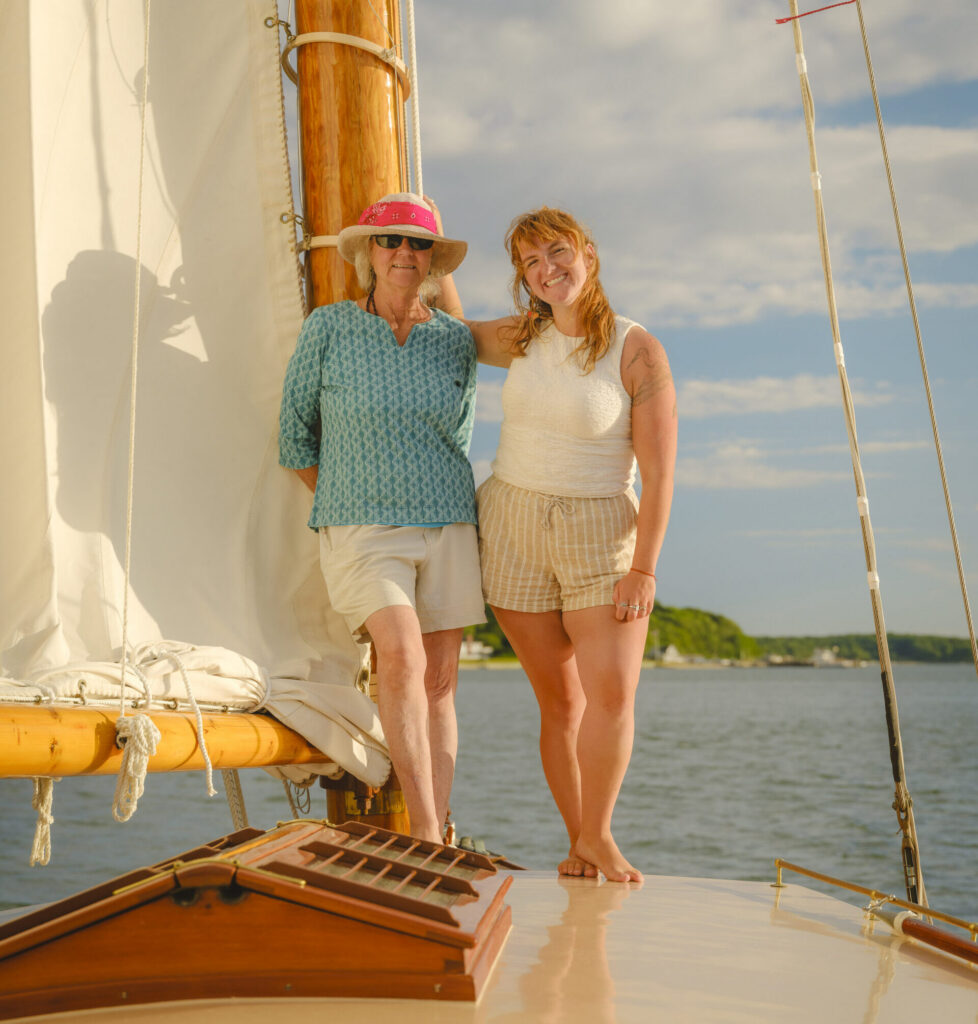
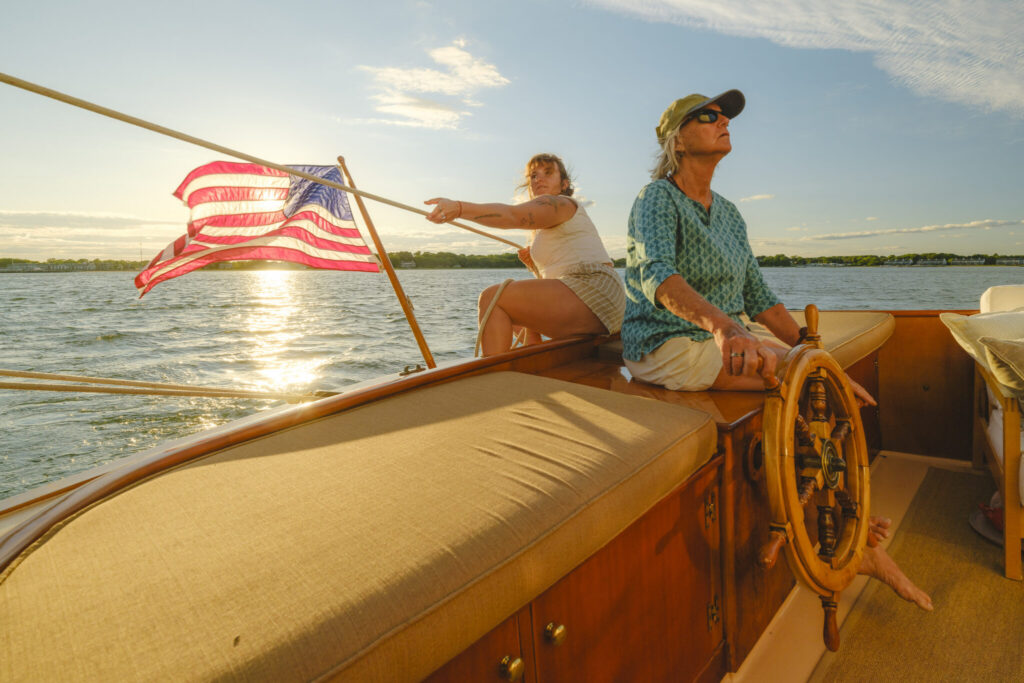
In April, the Selina II, a 41-foot wooden catboat built in Greenport in 1926, set sail from Saint Michaels, Md., on her way back to her original home of Dering Harbor, Shelter Island — but this wasn’t any old pleasure cruise up the East Coast. It was a voyage of generation-spanning family connection.
Capt. Selina Iris Hird Robertson, known as Iris, was at the helm of the boat that has been in her family for exactly a century this year.
“My family has been on Shelter Island for seven generations,” says Robertson. Her great-grandfather Samuel Hird built the family’s house in the village in 1913. Her mother, Esther Hird Hunt, of Dering Harbor, passed away in May at the age of 102, sadly missing the catboat’s return to the family’s dock.
After 25 years, Robertson is about to hang up her proverbial captain’s cap after the Island-bound sail, but it’s not the end of her family’s story with the Selina II. Instead, it’s the opportunity to begin a new chapter.
A LIVING PIECE OF MARITIME HISTORY
“Anybody who knows catboats ‘oohs’ and ‘ahhs’ [over the Selina II],” says Robertson of the grand single-masted vessel. Indeed, the boat is the only surviving example of a catboat over 40 feet long (only four were ever built), making it a bit of a special spectacle to sailing fans and aficionados.
As Robertson tells the story, her grandparents “wanted a boat and they got a long, skinny power boat. It was tippy and it made my grandmother nervous.” The family got rid of that vessel, the Selina I (“Selina” being a family name passed down through the generations), and had a second boat, Selina II, built in the H.W. Sweet Shipyard (now known as Clarke’s Shipyard at the end of Carpenter Street) — “a knockoff of a Crosby-designed catboat in the Massachusetts area but bigger,” Robertson explains.
A catboat is a traditional sailboat with a single sail on a single mast set forward in the bow. According to the Catboat Association, “a commonality of catboat design is a beam of one-half waterline length, making them very stable and comfortable boats. Cruising catboats have cabins and normally range in overall length from 16 to 26 feet.”
Ubiquitous along the New England coast down to Chesapeake Bay in the mid-19th and early 20th centuries, catboats were used inshore by fishermen harvesting finfish, lobster or clams, or for transportation, racing or as pleasure boats, their use only declining as the rise of engine-driven vessels grew.
“My grandfather,” says Robertson, “was her master from 1926 to 1962 — 36 years; not to be outdone by his daughter, Mildred Esther Hird Hunt, master from 1962 to 2001 — 39 years.” Robertson took over the helm of the Selina II in 2001.