Southold Police Chief Grattan looks back on 9/11/01
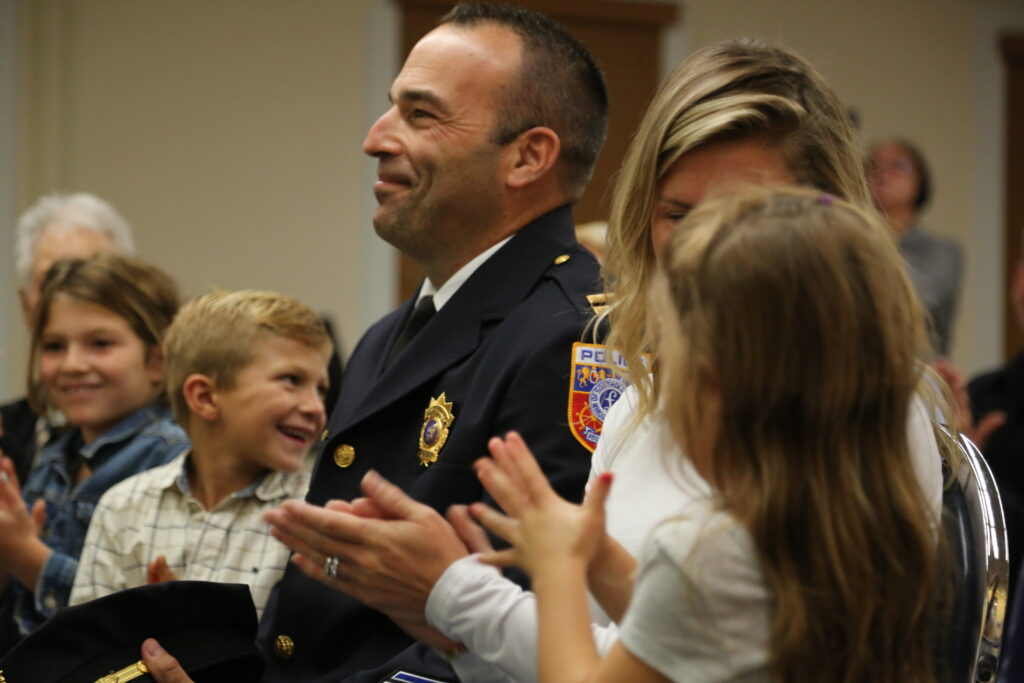
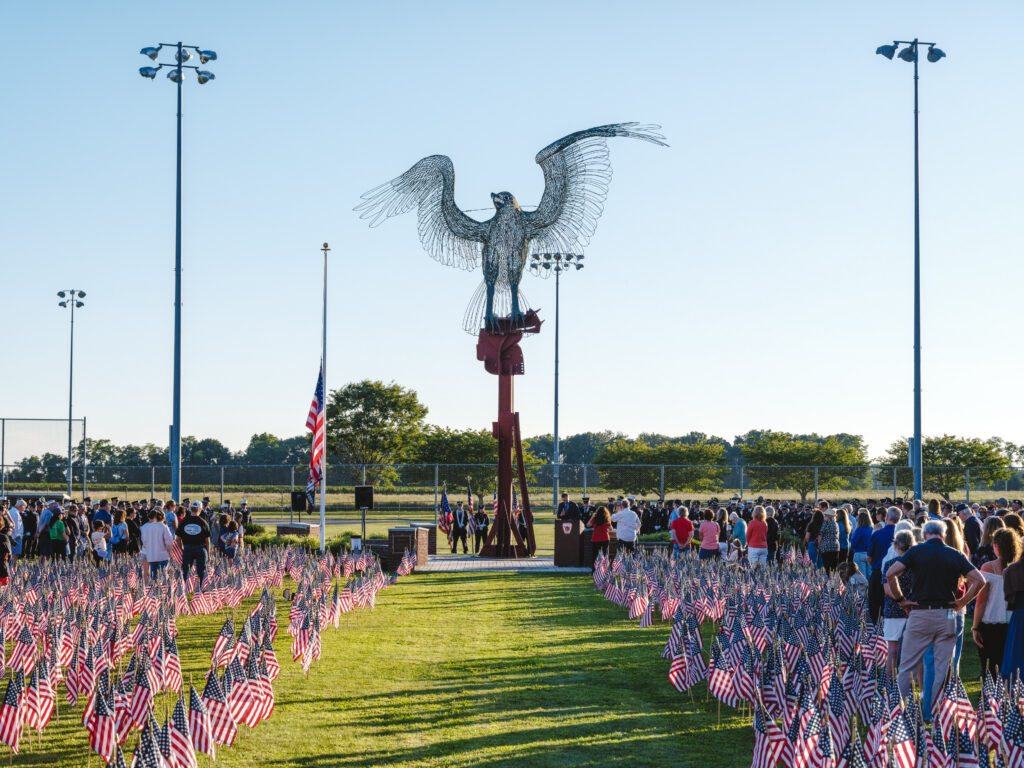
This year marks 24 years since the Sept. 11 attacks. Countless numbers of police officers, firefighters and more acted as first responders, helping in any way they could. No matter how small each action seemed, it was much-needed help.
Several departments on the North Fork were responders that day. The Riverhead Fire Department sent a crew to Manhattan’s financial district, and were stationed right by the charging bull statue on Broadway. They assisted in opening up the area, supplied a generator and stayed there for 24 hours. The Cutchogue Fire Department also responded in the days following the attacks, providing support to the NYPD and sending approximately five members to help illuminate intersections in lower Manhattan.
That day, Southold Police Chief Steven Grattan was a fresh, 22-year-old recruit in the New York City police academy in Brooklyn. He joined the academy on July 2 that year, just over two months prior, and celebrated his birthday the week before.
Chief Grattan remembers that day clearly. He was sitting in class, learning about testifying, when one of his instructors came in. He, along with the other recruits, left class and went up to the rooftop.
“We went up to the rooftop, and we observed that a plane had struck that tower. We stood there, awestruck, wondering what had happened, assuming it was an accident,” said Chief Grattan. “Then the instructor called us back down, and we went back into our classroom. We learned a moment later that another plane had crashed into the tower. Then we realized that it was not an accident, that we were under attack. We didn’t have any idea what was going to happen next.”
The recruits mobilized and went across the street from where they were training to the 84th precinct. Everyone was assigned to a supervisor and given a post for the day. Chief Grattan was assigned to the base of the Brooklyn Bridge.
Almost all day into the evening, he helped direct people who were fleeing Manhattan, mostly on foot, across the bridge. They had Emergency Medical Services waiting for everybody who was injured and had cases of water brought in. After being dismissed late that evening, he took the train home to Rocky Point. He had to report back into the city at 4 a.m., but he had just enough time to shower and change. Then it was back to Manhattan.
“What was really super eerie when we got off that train, is the academy was on 23rd street, so we would typically take a taxi to the academy. There was no taxi,” said Chief Grattan. “There was nobody. There were no vehicles on the road. There were no people. So some of my classmates and I walked from Penn Station all the way over to the academy. We were given an assignment for the day and most of it was assisting with directing traffic.”
After about a month of being that extra help throughout the city, they had to return to the academy and continue training once more. Being out with their instructors doing what they did, the relationship between them changed a bit.
“Obviously, our instructors had never seen anything like this either. I think we were all somewhat traumatized by the whole experience, and we were there for each other,” he said.
Getting back into the academy setting, they had to push past their befriending and move back into a recruit-instructor relationship. Chief Grattan said that made the transition back a little more difficult. They also had to start the curriculum all over again since they missed so much time.
Chief Grattan’s academy class ended up taking almost nine months to finish, which is one of, if not the, longest class in the history of the NYPD. It typically takes a class six months to complete. It was a difficult and traumatizing time for everyone, but just like the rest of New York — and even the country — everyone banded together.
“We were not prepared. I don’t think I really processed what was taking place,” said Chief Grattan. “It certainly took a lot of willpower to continue and remain in the academy. It was pretty grueling — long days, sleep deprivation for all of us. But I had some really, really close friends in the academy and good instructors who supported each other, and fortunately, made it through that.”