Couple expands backyard oyster farm with $40K grant
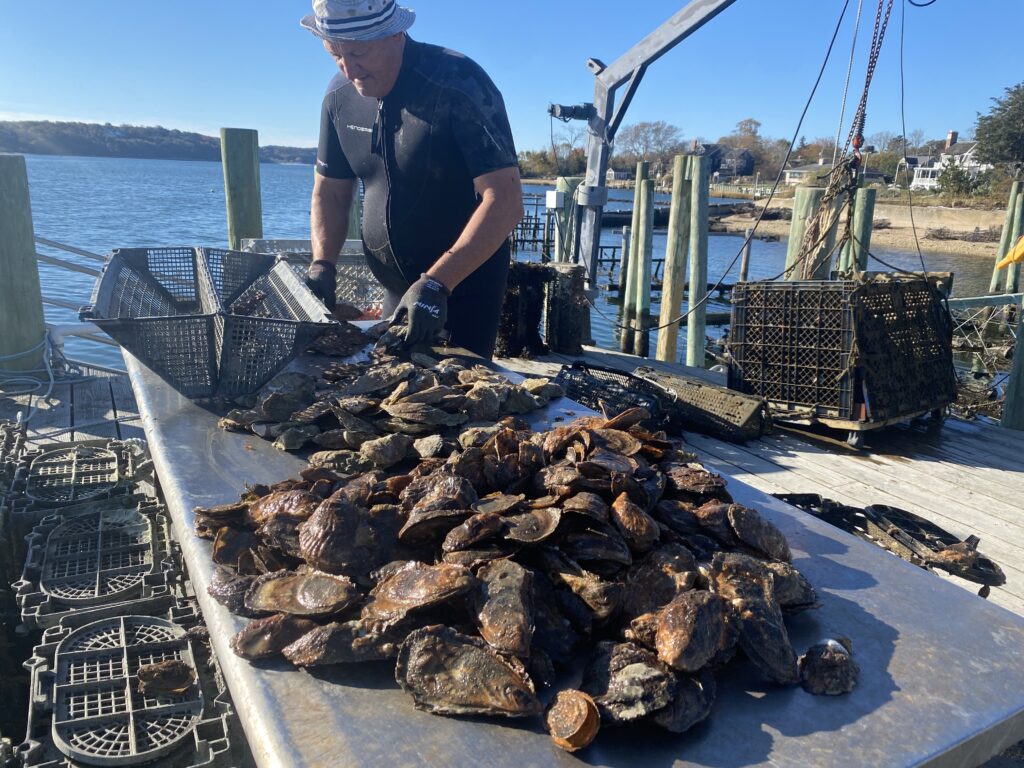
Mike and Isabel Osinski sold their software firm in the early 2000s to grow oysters in their backyard. Literally.
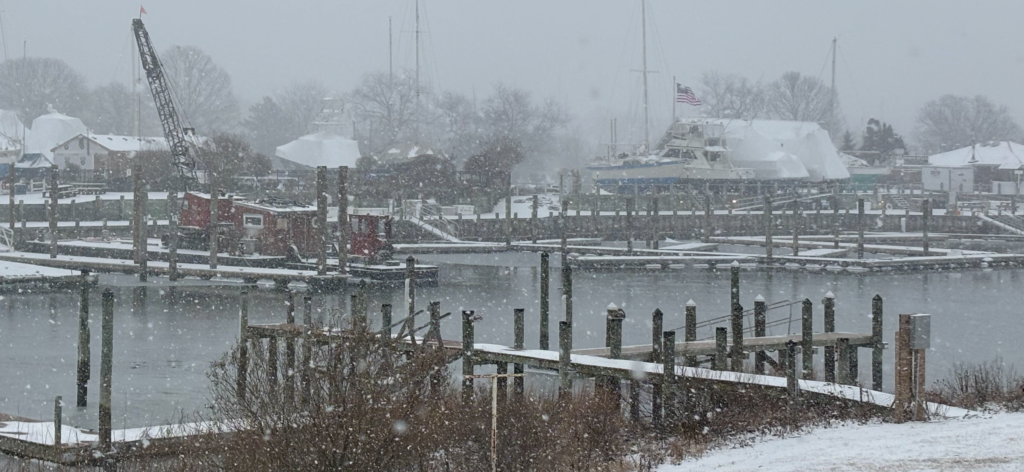
Their weathered Victorian home sits on a spit of land that extends into Greenport harbor, allowing them to maintain the operation of Widow’s Hole Oyster Co. from the comfort of their own home.
Last month, New York State awarded the farm $40,000 through the Aquaculture Infrastructure Grant Program to buy 1,000 new purses — the baskets used to grow their sumptuous oysters. The pair plan to apply for the next round of funding to add pilings and a pack house.
The money for the Osinskis was part of $4.2 million grant to revive Long Island’s once-thriving oyster industry. As climate change and coastal development threaten marine ecosystems, state officials are betting that investments in sustainable aquaculture can restore both environmental health and the region’s maritime economy, one small farm at a time.
“We got 50% more purses in to expand and increase our production. There’s a second round for infrastructure, so we’ll go for the pilings, which aren’t that expensive,” Mr. Osinski said. “Fall and winter are the best time to eat oysters, but it gets cold and we’d like to be able to pack them in an enclosed environment where we’re not freezing.”
Widow’s Hole uses a hybrid Australian/Japanese style of growing oysters, where the purses are suspended from cables strung between pilings. These baskets are out of the water at low tide, allowing them to dry out and help rid the oysters of potential parasites. At high tide the purses float above the cables, turning the oysters naturally.
According to the state Department of Agriculture, the Long Island Aquaculture Infrastructure Grant Program will fund up to $4.2 million through two grant opportunities, Equipment-Only Grants and Infrastructure Grants. These bolster marine agriculture, promote a healthy natural environment, and provide New Yorkers with a nutritious source of locally grown seafood.
The grant program is a part of the State’s Blue Food Transformation initiative.
“[The grant funding] will facilitate our expansion and create more jobs. And, it will greatly make our work more efficient and comfortable,” said Ms. Osinski, co-owner of the farm.
In Greenport, oyster farmers own the bottom rather than leasing it from the county. Mr. Osinski is proud to be carrying on a legacy of oyster harvest that dates back to the early 20th century.
“The history of Greenport is very fascinating. This was really a big oystering town. There’s a one-square-mile village, there’s 1,100 houses, but 1,500 people worked in the oystering industry,” Mr. Osinski said. “Anywhere in the village that you see a condominium today was an oyster cannery. Every condominium. There’s one at the end of Fifth Street, one at the end of Sixth, those were big.”
The village even ran sewer lines to protect the quality of the water near shore. They couldn’t risk harming one of their main industries with pollution.
“That’s why they sewered the village. You can’t have millions and millions of oysters that close to shore without a sewage system. Very forward-thinking people, this whole industry, 100 years ago. Really very impressive, what they did,” said Mr. Osinski.
For the Osinskis, the plan is for their daughter, Susanna, who is currently working at a fish hatchery in New England, to eventually take over the business.
Their son, Mercator, an engineer, is also helping out by designing some of the new buildings.
“We’re actually doing a legacy expansion, hopefully,” said Ms. Osinski.