Declining enrollment puts area schools under pressure for consolidation
A significant decline in student enrollment over the past decade is putting North Fork school districts under growing financial and academic pressure — forcing one superintendent to raise the prospect of consolidation to preserve the quality of education parents demand.
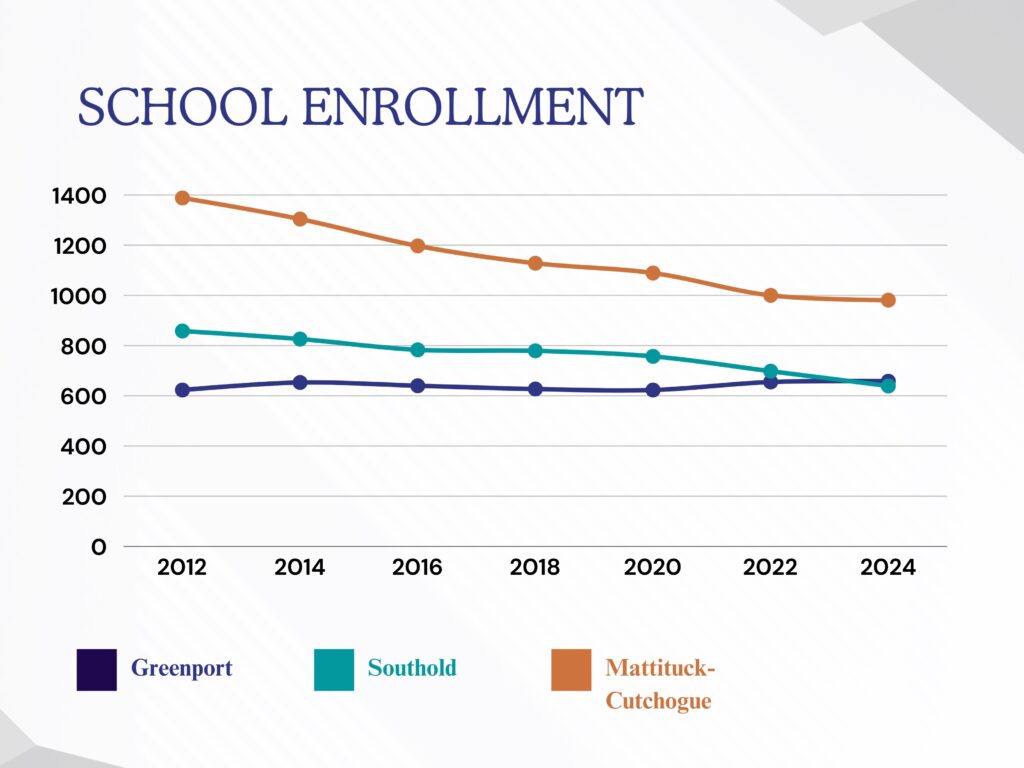
Since 2012, districts in Southold Town have lost more than 700 students, according to state Education Department data. The trend seems driven by high housing costs and smaller family sizes that shows no sign of reversing.
The Mattituck-Cutchogue School District alone has seen enrollment plunge by more than a third, from 1,481 students in 2012 to 981 in 2024.
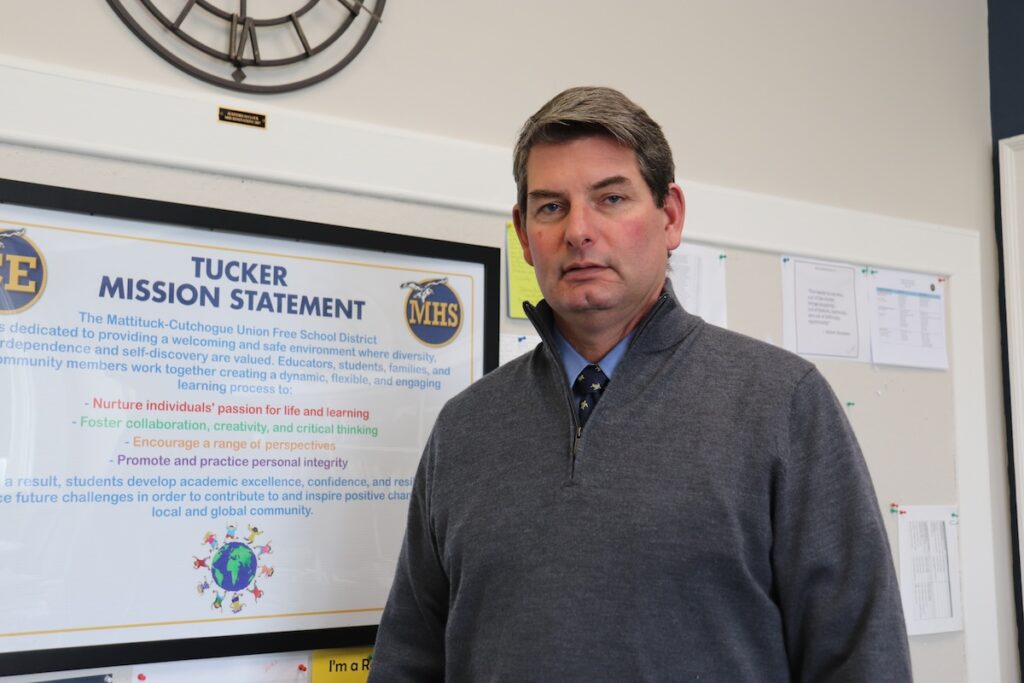
Superintendent Shawn Petretti has been sounding the alarm about the consequences of emptying hallways at his schools. As enrollment falls, the district risks losing state aid tied to student counts while struggling to sustain advanced coursework, electives and specialty programs that depend on a robust student body to remain viable.
He only needs to look over to the South Fork to see how the pressure is reshaping school governance. Earlier this month, the Southampton school board approved a $110,000 feasibility study exploring a potential merger with Tuckahoe, with a community vote possible in fall 2027, according to Newsday.
Consolidation, once unthinkable on the North Fork, has been prevalent in rural school districts upstate in recent years.
Mr. Petretti has followed those developments closely and first raised the issue publicly last year at the 2025 State of Mattituck dinner, hosted by the Mattituck Chamber of Commerce. He warned that potential changes to the state’s foundation aid formula, recalibrated to reflect current enrollment, could result in significant funding cuts for rural districts like his.
“Every year ticks and it comes closer and closer,” Mr. Petretti said of the projected foundation aid changes. The new formula could be recalibrated to reflect current enrollments, he noted. “For many rural districts, like Mattituck, those would be tremendous cuts.”
The district’s kindergarten class this year numbered just 47 students. Bolstering overall enrollment is a spike in Hispanic students, who now make up 28% of the student body according to state Education Department data.
Mr. Petretti, who was Mattituck Senior-Junior High principal for 16 years before getting the superintendent job in 2021, has pointed to two demographic trends for the declines: high home prices and people having fewer kids. The median home price on the North Fork is around $1.1 million, according to the Corcoran Group’s Fall 2025 East End Market Report. Meanwhile, couples are waiting longer to have children as they pursue careers. The national fertility rates dropped to 1.62 births in 2025, down from 2.02 before the 2008 recession, according to the Congressional Budget Office.
Obstacles to consolidation
By law, school districts can only merge with a neighboring district. Riverhead to the west is both too far away and too big for serious consideration, leaving Southold as Mattituck-Cutchogue’s most logical merger partner.
The Southold and Mattituck-Cutchogue districts, along with Greenport, already share some services, including Navy Junior Reserve Officers Training Corps and joint Advanced Placement classes, where teachers travel between schools. Greenport School District also shares a director of special education and a Spanish teacher with Oysterponds School District based in Orient.
Southold has seen enrollment plummet by nearly 30% over the past decade, dropping to 639 students in 2024 from 858 in 2012, according to the state Education Department. Greenport has held steady in the last 12 years, with enrollment rising from 623 in 2012 to 658 in 2024.
Southold School District Superintendent Anthony Mauro said the enrollment shift “took place a long time ago” and has since “leveled out.”

Kindergarten through seventh grade classes in Southold range from 30 to 54 students, according to state Education Department data for 2024. The district’s smallest grade levels are in eighth and ninth grades with 42 and 36 students, respectively.
While consolidation hasn’t been a topic of conversation among the Southold board of education during his tenure as superintendent, Mr. Mauro said he is a proponent of shared services.
“I’m happy to be part of it, because it really does provide opportunities for kids that we may not be able to have if we didn’t share with other places,” said the superintendent, who took over in the midst of the Covid-19 crisis in 2020.
The Southold board of education did not respond to The Suffolk Times’ request for comment.
Greenport Schools Superintendent Beth Doyle, hired last March, told The Suffolk Times that the district’s board of education had not expressed interest in consolidation.
She also praised the benefits of shared services.
“We’re always open to exploring opportunities that benefit the students on the East End that also make financial sense,” Ms. Doyle said.
Greenport Board of Education president Jaime Martilotta reiterated to The Suffolk Times that the district is not actively exploring consolidation with other school districts.
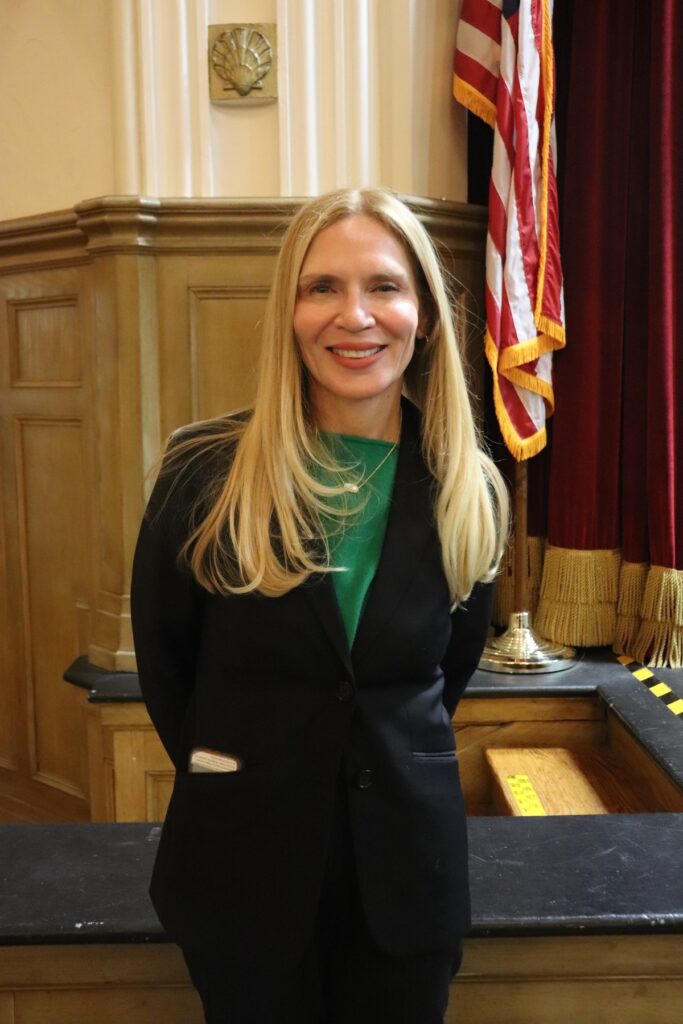
“We maintain strong, collaborative relationships with our neighboring districts and currently share a number of services,” Ms. Martilotta said. “These partnerships allow us to expand educational opportunities for students across the North Fork while continuing to uphold fiscal responsibility.”
This year, Greenport and Southold agreed to share an assistant superintendent for business. The districts also share a music and physics teacher.
History of shared services
The idea of shared services dates back decades, with local districts having shared resources for NJROTC across districts since Greenport joined in 1995.
Local athletic programs have also been combined to provide students an opportunity to play a sport of their choosing, with more than a dozen teams sharing resources across districts. Greenport and Southold even shared a superintendent, David Gamberg, from 2014 through his retirement in 2020.
“Anything we can do to really help each other out, we try to do,” Mr. Petretti said.
The Mattituck-Cutchogue district’s 2024 strategic plan calls for a continuation of shared services for the foreseeable future.
Mattituck-Cutchogue School District Board of Education president Pat Arslanian noted conversations about consolidation in October were “preliminary,” as a way to address challenges posed by decreasing enrollment and potential state aid cuts.
“Our board recognizes the impact that these conversations have on our district and is committed to do all we can to continue offering the robust programs for our students that are currently available,” Ms. Arslanian wrote in an email to The Suffolk Times. “At this time, we have not had any further conversations related to consolidation, nor have we reached out to other local districts in an official capacity. Should any conversations about this topic be considered in the future, those conversations will be held in public and we will seek input from all stakeholders.”
Financial incentives, practical barriers
One enticement: a treasure chest of state aid for districts willing to merge.
If districts decided to reorganize, their calculated state operating aid could increase up to 40% of the total foundation aid base over a 14-year phase-out period.
For Mattituck, that could total around $27 million if a merger were completed — a figure that would grow if combined with aid granted to a merger partner.
But before any consolidation could move forward, districts would need to commission a feasibility study examining the merger’s impact on programs, staffing, tax rates, facilities and transportation.
Such studies typically cost around $110,000, split equally between districts, according to the Southampton-Tuckahoe proposal. The state reimburses the cost after completion, but both districts must commit the money upfront, which can be a financial and political hurdle when one partner is reluctant.
To begin conversations around consolidation, local communities would have to express interest in pursuing a merger before the school boards would fully pursue one.
Even in the best-case scenario, school consolidation is a multi-year slog. Southampton and Tuckahoe won’t vote until fall 2027, with an actual merger not happening until July 2028 at the earliest.
The two districts previously explored consolidation in 2013 and 2014, when Tuckahoe voters approved the merger but Southampton residents rejected it amid concerns about financial burden, Newsday reported. This time, Southampton — the larger district with 1,152 students — approached Tuckahoe, which has 397 students, reversing the dynamic from the earlier failed attempt.