Southold native Rabbitt publishes new guide to women’s health
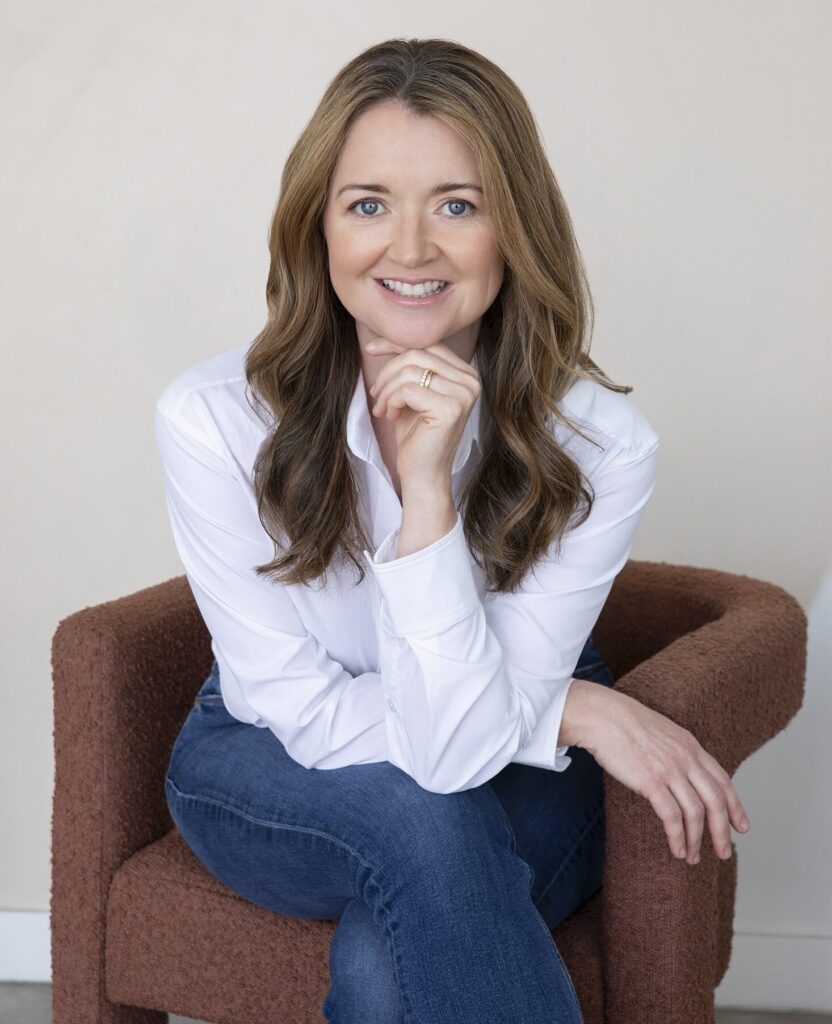
Journalist and editor Meghan Rabbitt, who grew up on the North Fork and graduated from Southold High School, has just published a new book — the 642-page The New Rules of Women’s Health, a comprehensive, research-based guide commissioned by Maria Shriver.
Rabbitt spent three years interviewing over 150 experts (racking up over 300 hours on the phone) and reported, wrote and revised the work, which was then professionally fact checked. All the experts quoted in the book — doctors, scientists and researchers — are women. “I felt really passionate about that,” Rabbitt notes. “Part of why we are finally starting to research women is that women researchers and doctors and other clinicians now have a seat at the table and are making the decisions about what to research … it felt really important to me to have all women’s voices throughout the book.”
As a child, Rabbitt thought she wanted to be a doctor, but later on found that she didn’t love the idea of completing years of science classes. Her life took a different turn at the University of Delaware, where she majored in English and took a journalism class. “I was hooked,” she says. “I had always used writing as a way of processing the world.”
After graduation, Rabbitt worked for a series of national magazines, starting at Parenting. “It was part of Time, Inc.; it was a really big magazine. I think it had a circulation of over two million at the time,” she recalls. “It was kind of funny to be fresh out of college working at a parenting magazine, writing about pregnancy and childbirth and becoming a parent,” Rabbitt says. “It was an amazing job … I stayed there for nearly seven years because I kept learning … I had top editors who were really brilliant magazine journalists who taught me so much.”
After a series of magazine jobs at Alternative Medicine, Natural Health, and Yoga Journal and at digital sites like totalbeauty.com and yogajournal.com (and respective moves to Los Angeles and Colorado, where she lives now), Rabbitt turned to freelancing, writing articles about women’s health for major publications like Women’s Health, Oprah and Runner’s World.
“I always gravitated toward health topics —they interested me. I’ve always really loved talking to doctors and scientists and researchers and other clinicians and asking them questions to try to translate some of the complicated science — what can feel like jargon to us — into language that feels really accessible. And [I try to] get very actionable steps from them … don’t just tell me to eat oatmeal to lower my cholesterol — I want to understand how that works in the body. That’s what is going to inspire me to make the change.”
Rabbitt was approached by Maria Shriver — journalist, former First Lady of California and women’s health advocate — to write the book for her publishing imprint The Open Field at Penguin Random House.
Shriver read an article Rabbitt had written on women’s brain health and the fact that two-thirds of all Alzheimer’s cases occur in women, which led to a position for Rabbitt at Shriver’s digital newsletter, The Sunday Paper.
Shriver, who established the Women’s Alzheimer’s Movement to raise awareness and fund research on the disease and its impact on women, notes in the book’s introduction that “the realization — and frustration — that we hadn’t adequately researched women’s brains fired me up,” leading to the idea for a very broad women’s health manifesto.
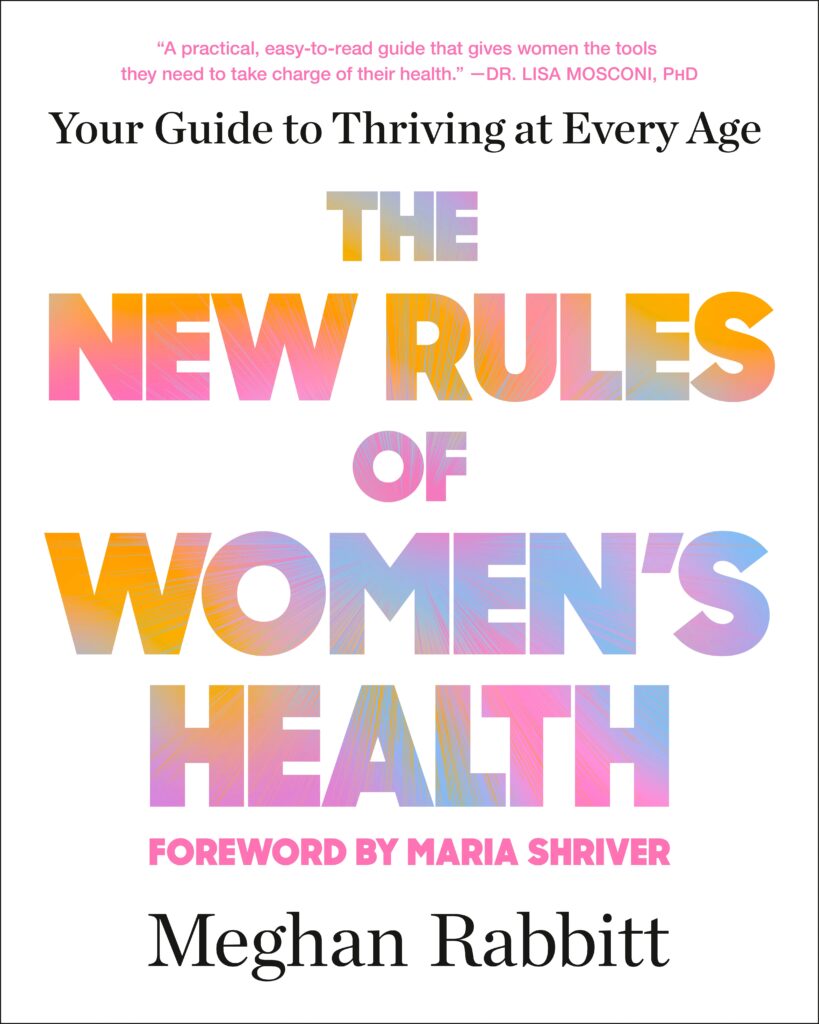
The New Rules of Women’s Health is broken down into three parts: Part one is an overview of women’s healthcare, including primers on anatomy, puberty, gynecology, childbirth, menopause and breast health. Part two discusses six body systems: the immune system, pain, brain health, heart health, gut health, and skin health. Part three is about optimizing health in categories like sleep, exercise, nutrition, managing disease and mental and emotional health.
The experts quoted in the book were chosen, Rabbitt says, by looking at who was studying each topic and doing good work in research and education in that area. “In each chapter there are five to ten experts; I could have talked to fifty for each chapter,” she remarks.
“A lot of doctors and researchers are now taking to social media who’ve got great credentials … [they] are going to socials to educate us and fill in the gaps that we might have when it comes to our understanding of women’s health,” Rabbitt says.
But with the constant flow of information into our lives online and elsewhere, it can be hard to identify who to trust. “We are bombarded with information and misinformation,” Rabbitt says. “I did my due diligence in talking to experts who were not selling a bunch of products, who are university-affiliated and who have done the research and are steeped in the topic.”
Rabbitt hopes that women will gain a baseline of knowledge through her book and thus will be able to distinguish between experts and influencers and decide whether that information applies to them. In a sense, every woman can become a health journalist to advocate for themselves.
Following the basic tenets that every journalist learns, readers can verify their sources, says Rabbitt. “Who are you talking to and do they have an ulterior motive? You also want to talk to multiple sources. When you hear advice on social media, do a google search and see if there is a medical consensus…is this advice something that most people agree with, or is this advice off the wall? Every woman can do that.”
While Rabbitt is making a few upcoming in-person appearances in New York City and Colorado to promote her book (and some in February in Los Angeles), she notes that podcast appearances are taking the place of traditional book tours. “I think I’ve recorded thirty podcasts so far,” Rabbitt says; indeed, she has a live podcast recording scheduled on January 20 at the Whitby Hotel in New York City for Zibby Owens’ Totally Booked podcast.
Rabbitt has dedicated her book to her nieces Maeve, McKenna and Sydney, and hopes that it will help lead to their empowerment.
“I think now more than ever we really need to own our health. Maria said something that I think is so wonderful, that ‘women need to become the CEO of our own health care,’ and that’s what I hope this book helps women do,” says Rabbitt.
The New Rules of Women’s Health by Meghan Rabbitt retails for $35; for more details, check here.
See more from Northforker.com

Shelter Island History Museum helps Sylvester Manor keep the past perfect