Proposed SEQRA reforms draw fire at regional roundtable
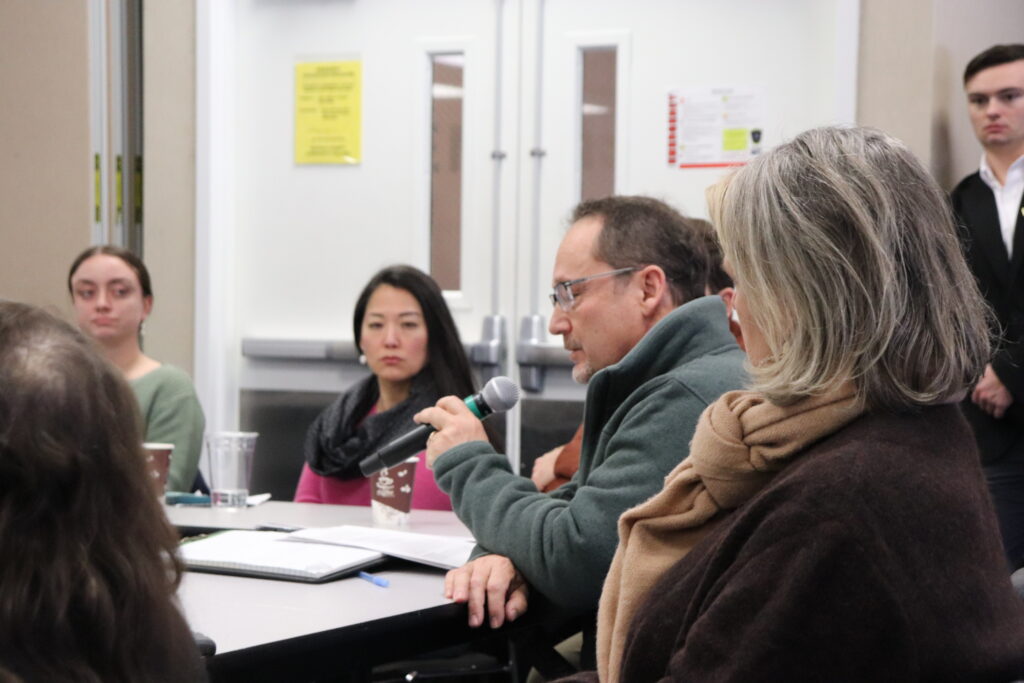
Proposed changes to New York’s environmental review law that could exempt developments of up to 100 housing units from scrutiny drew sharp criticism from environmental advocates during a roundtable that included Southold Town Supervisor Al Krupski Jr.
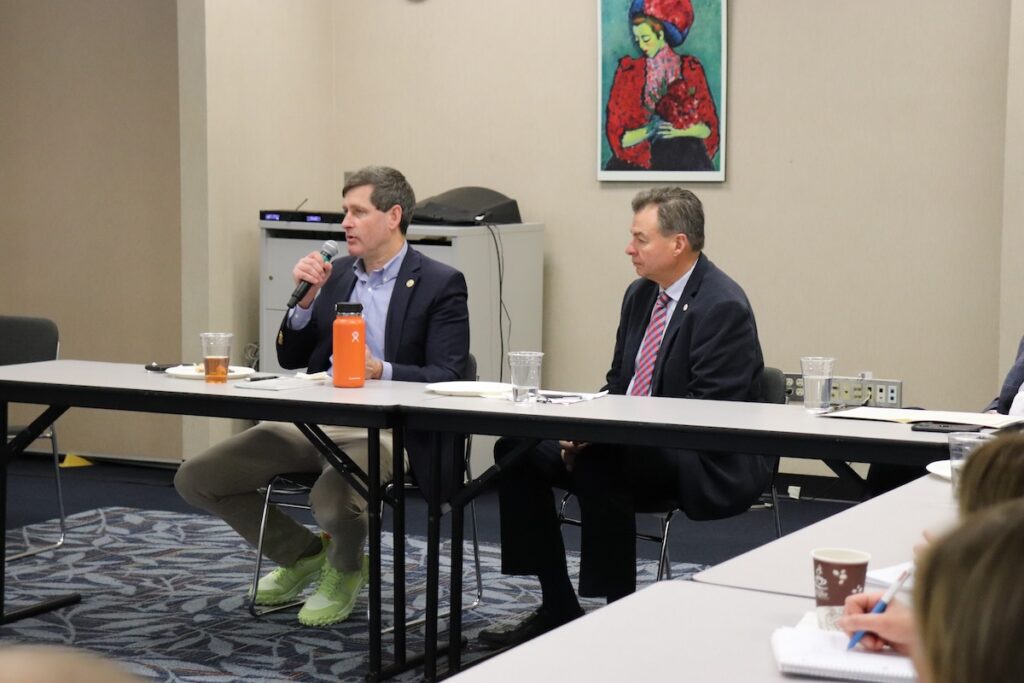
The event — hosted by State Sen. Anthony Palumbo on Monday, Feb. 2, at Suffolk County Community College Culinary Arts and Hospitality Center in Riverhead — drew nearly 50 stakeholders including regional elected officials, environmental advocates and other community members.
Gov. Kathy Hochul’s proposed changes to the State Environmental Quality Review Act (SEQRA) are framed to fast track the building permit process for housing and infrastructure projects. The changes cite a study from Empire State Development “that manufacturing, housing and energy projects can take as much as 56% longer in New York State to get from concept to groundbreaking compared to peer states,” a Jan. 13 news release from Gov. Hochul stated.
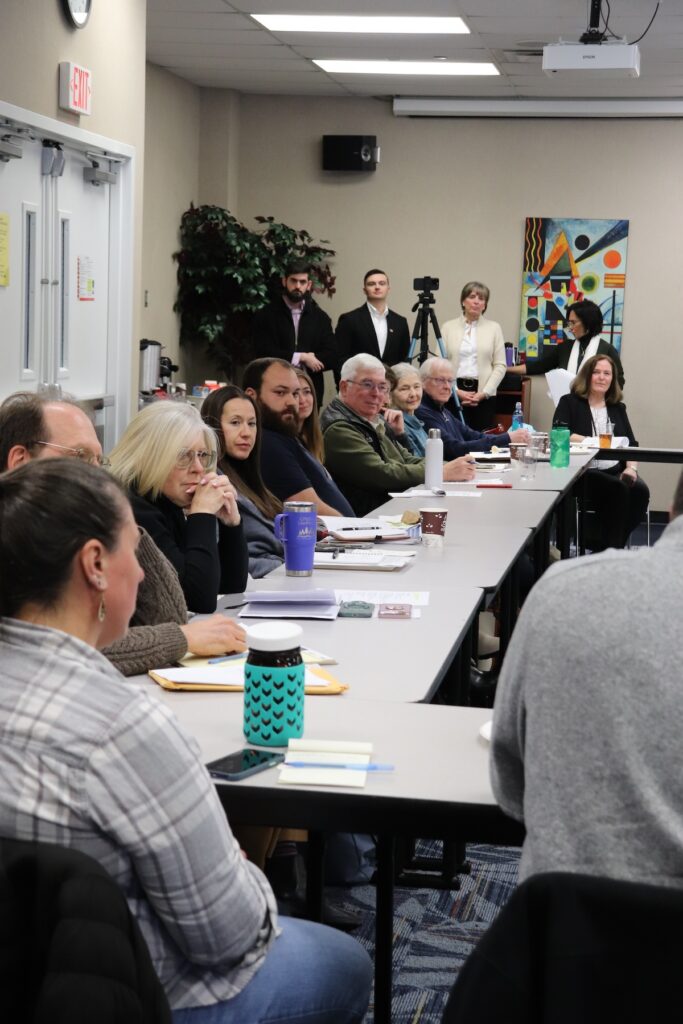
Adrienne Esposito, executive director of nonprofit Citizens Campaign for the Environment, described the current language as “insufficient and anemic.” She walked attendees through the changes, noting that the number of housing units immune from SEQRA review would change from three to 100 units and how “previously disturbed land” definitions remain unclear.
“This process needs to be done in a judicious, thoughtful way,” Ms. Esposito said. “And we reject the whole premise that SEQRA is the reason we don’t have affordable housing. That is ridiculous. When SEQRA arises and is used properly, it safeguards our environment.”
Bob DeLuca, president of the Group for the East End, said SEQRA law has been in place since 1977 so that local municipalities can discern whether a project’s public benefit outweighs an environmental review and let it proceed with a negative declaration.
“You can get through the process if you will do it properly,” Mr. DeLuca said. “If developers will not withhold information and not finish environmental impact statements, and stop crying and carrying on about doing another alternative, things would move more quickly.”
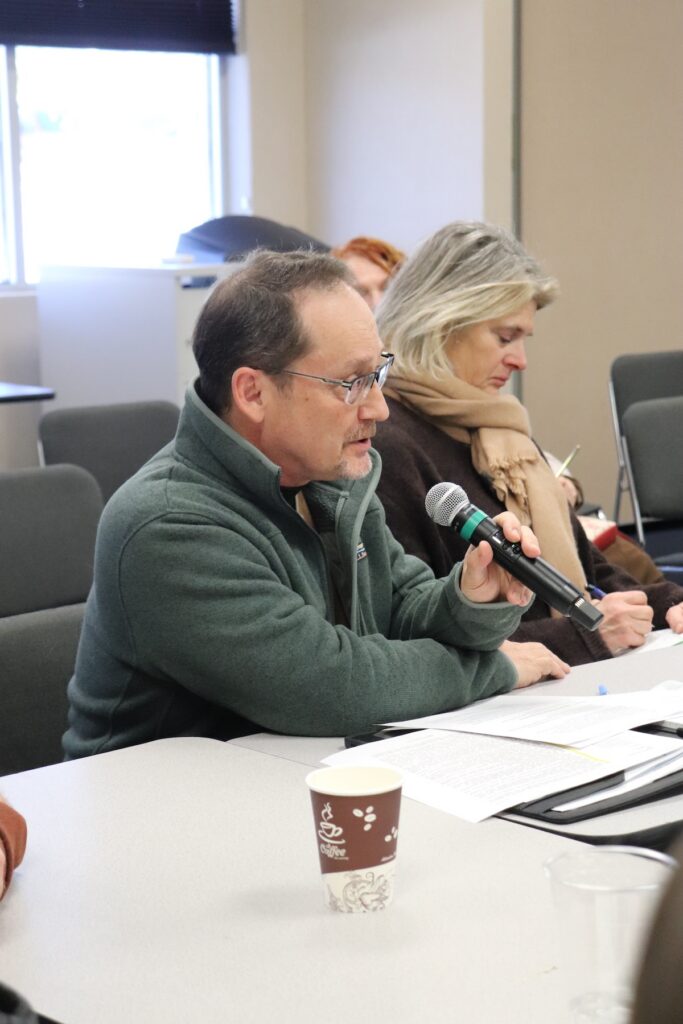
Development holdups as far as SEQRA is concerned are endemic of a “process issue,” more than a legal issue, he said. The changes could make the process more confusing, Mr. DeLuca added.
“Chances are, the folks that are looking to exploit these holes will have better resources than the people looking to protect the environment,” he said.
Assemblyman Tommy John Schiavoni said he was “disappointed” over how the SEQRA reforms pit housing and environmental interests against one another following advocates’ comments on the matter.
“We’re all reading through it, looking at it,” Riverhead Town Supervisor Jerry Halpin said of the proposed SEQRA changes. “We’re really just trying to figure out how to best navigate it.”
The wide-ranging Environmental Roundtable also tackled the thorny issue of waste management.
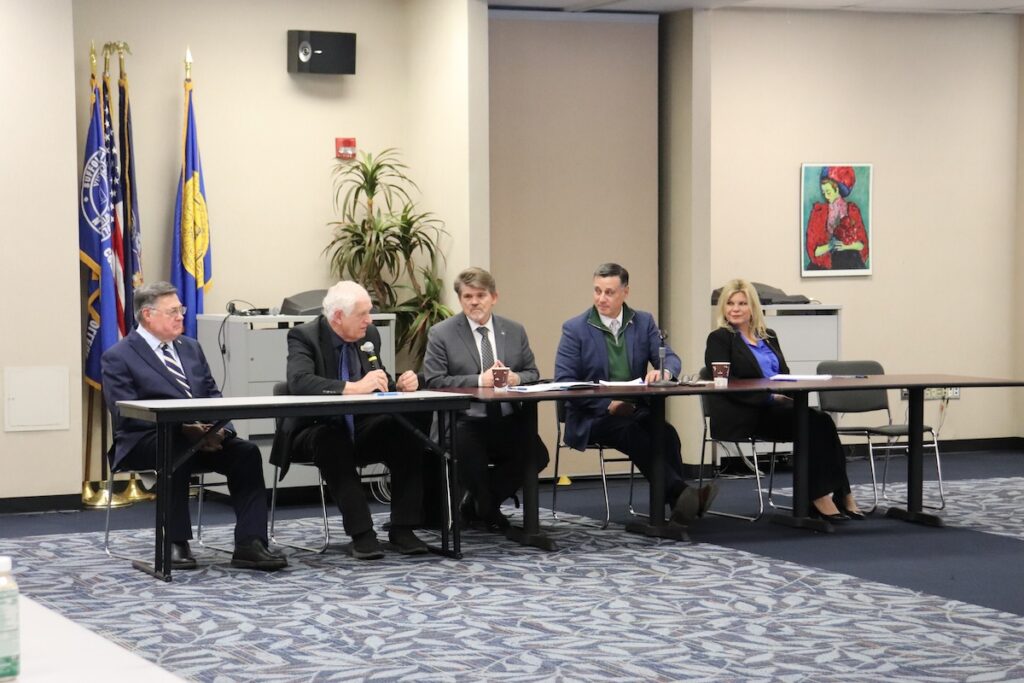
Mr. Krupski said his municipality looks to the state to partner on food waste, noting Southold “would like to do whatever we can do to keep the food waste on the island.” Southold’s Waste Management District runs its own composting facility in the interest of keeping local food waste on the island instead of shipped off by trucks, he said.
Suffolk County Executive Ed Romaine and Brookhaven Town Supervisor Dan Panico were most outspoken about waste management. Mr. Panico urged state officials to focus on what he called “the basics” — roads, infrastructure, preservation of open space and developing a regional solid waste plan.
“Our future is largely dictated by our geography,” Mr. Panico said. “This is an island, an island that cannot and should not be overbuilt.”
He referred to solid waste on Long Island as a “crisis,” cautioning officials that waste management is an affordability issue for businesses and residents. Mr. Romaine and Mr. Panico raised rail infrastructure as a better way to haul waste from Long Island instead of using trucks on the road.
“We don’t have the power as local officials to do it ourselves, and it will trickle down to an environmental problem,” Mr. Panico said, referring to dumping incidents in the Pine Barrens. “If these issues do not get resolved, it’s going to have a dramatic effect on Long Island.”
Brookhaven landfill stopped accepting municipal solid waste in 1990 and is currently in a phased closure process expected to be complete by 2027 or 2028.
A one-day summit on solid waste management will be hosted by the advisory committee of Stony Brook Southampton July 22 to further discuss the issue.
Mr. Romaine also warned of an impending “energy crisis” and expressed support for Sunrise Wind — a 924-megawatt wind farm 30 miles east of Montauk Point recently allowed to resume work after the project was blocked by the Trump administration in December — in the same vein.
“We need all the energy we can get, but more importantly we need to do solar on our industrial roof tops, and the limit to that is the substations that are inadequate,” Mr. Romaine said. He urged local, state and federal officials to work on incentives for industrial rooftop solar and increased capacity PSEG substations across Long Island.
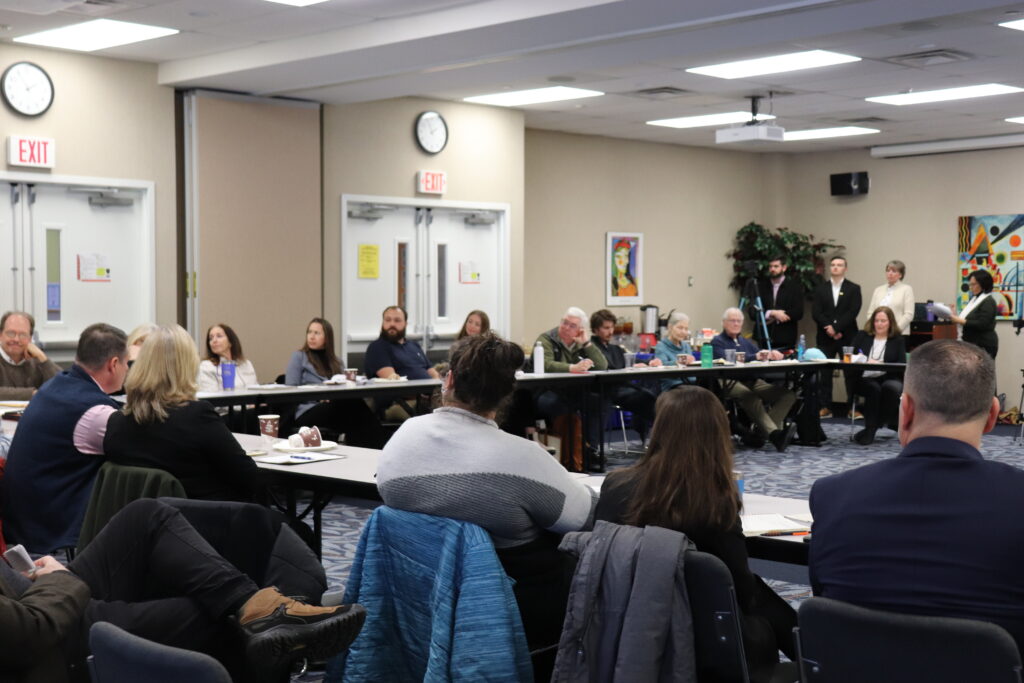
Other officials in attendance included Assemblywoman Jodi Giglio; Southampton Town Supervisor Maria Moore; Suffolk County Legislators Greg Doroski, Anne Welker, Chad Lennon and Steve Englebright; Oldfield Mayor Tom Gulbransen and Westhampton Dunes Mayor Ralph Urban. Rep. Nick LaLota did not attend the meeting, but his district coordinator Francis Martin spoke on his behalf.
Local organizations in attendance were Brookhaven National Lab, Central Pine Barrens Commission, Citizens Campaign for the Environment, Concerned Citizens of Montauk, Cornell Cooperative Extension of Suffolk County, East Hampton International Dark Sky Association, Long Island Farm Bureau, Long Island Pine Barrens Society, Long Island Progressive Coalition, NY Sea Grant, The Nature Conservancy, North Fork Environmental Council, Open Space Counsel, Peconic Bay Keeper, Peconic Estuary, Peconic Estuary Partnership, Peconic Land Trust, Quogue-Sinclair Fuel, Inc., Save the Sound, Sea Grant, Stony Brook University, Surfrider Foundation and Vision Long Island.