Stormy season leaves Town Beach severely eroded, sparks solution talks
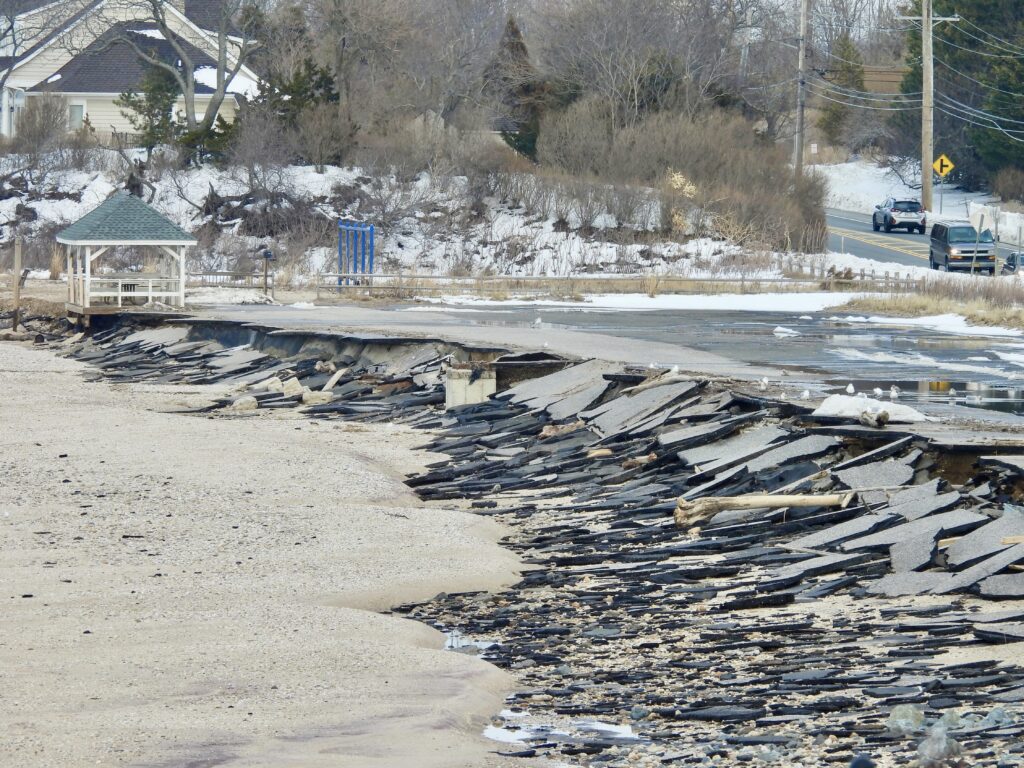
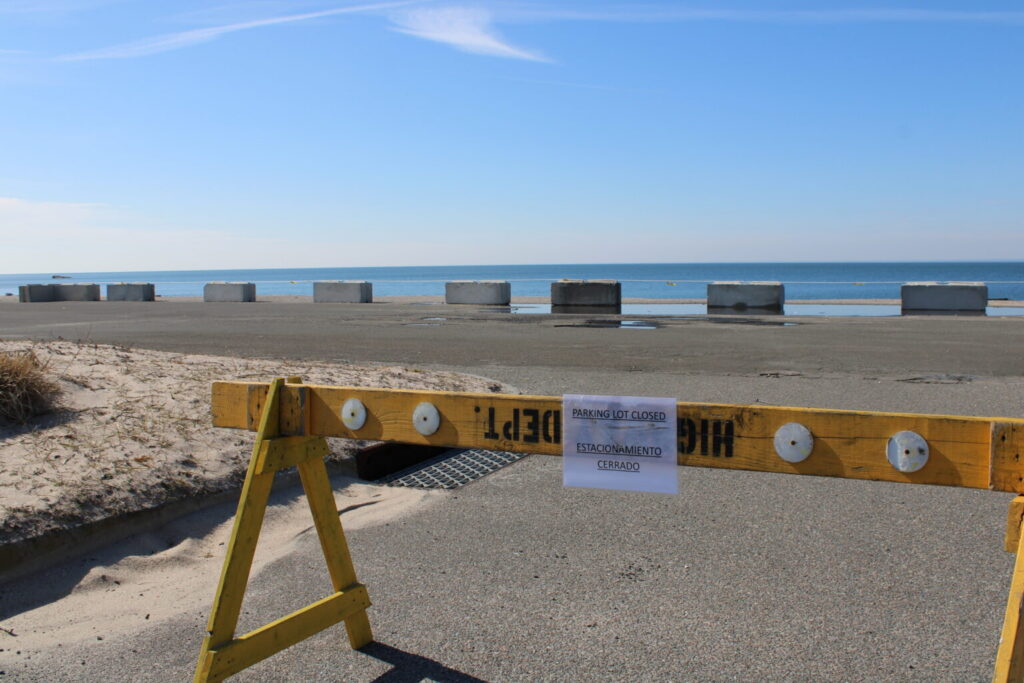
This year’s winter storms — exacerbated by last month’s Blizzard of 2026 — have left Southold Town Beach severely eroded, with a collapsed parking lot edge and dwindling sand.
Town Supervisor Al Krupski said the damage has gotten “progressively worse” since Hurricane Sandy struck in 2012. The town attempted to replenish the beach’s sand last year, but it didn’t last.
“It lasted one day, and it was all gone,” Mr. Krupski said. “Beach nourishment, like with the rest of Long Island, is not the answer. It’s very expensive, and it’s very temporary.”
Trustee Joe Finora said storm conditions hold a lot of weight, including wind direction and intensity, and the angle of waves hitting the beach.
“For a public beach, unfortunately, there’s not a whole lot of beach left anymore,” Mr. Finora said. “Largely, what we have going on, is just a loss of material. This is sort of a textbook case of erosion, and that particular location really gets abused in the wintertime, when we have these northeast- and northwest-prevailing winds.”
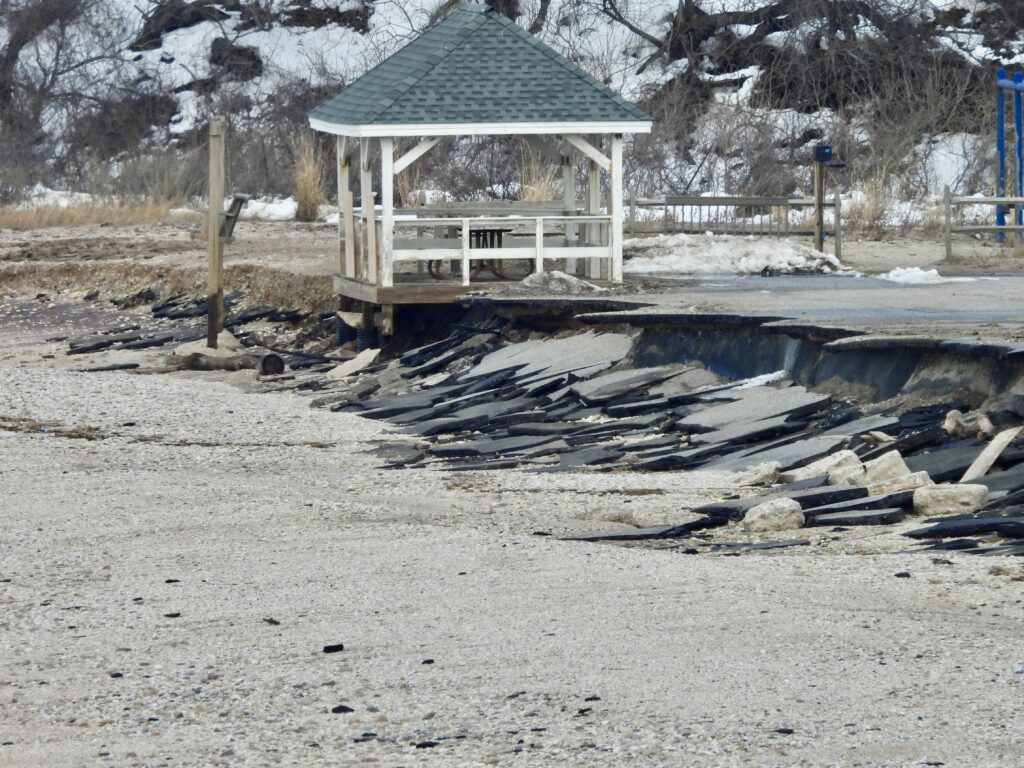
Mr. Finora said he hopes some plans will be in place soon in the short-term for restoration, or at least stabilization.
The road leading to the beach also needs attention. Mr. Krupski said the access road needs to be elevated due to flooding vulnerability. Since it’s a county road, he said the town will work with the county to secure funding. A stretch near the creek in Mattituck faces a similar issue, he said.
The supervisor said the town has been working with the state Department of Environmental Conservation, Suffolk County, Congressman Nick LaLota and County Executive Ed Romaine on ways to preserve beach access. He said the town will rope off the entire collapsed section soon to prevent people from climbing down or driving over it.
The erosion came up during the question-and-answer portion of the Greenport Civic Association’s annual membership meeting on Tuesday, March 3. Town Board Member Alexa Suess, a guest speaker, said the erosion is a “very large problem” and a public safety issue.
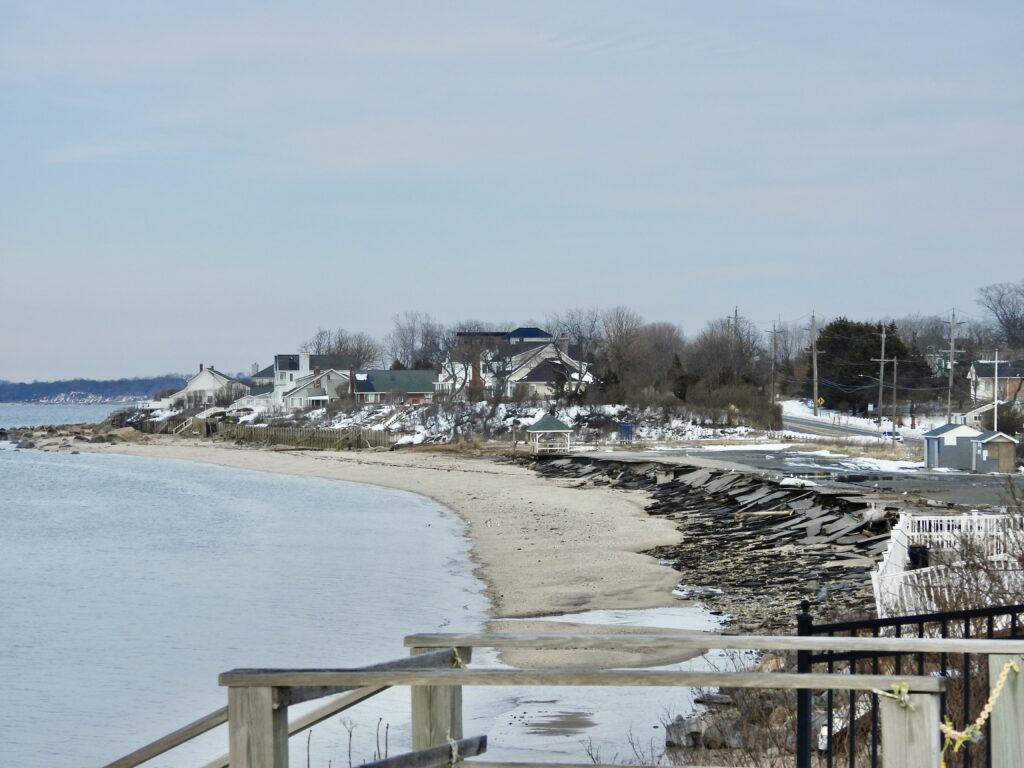
Ms. Suess cited a county resiliency study projecting up to 16 inches of sea level rise in the area by 2050.
“We will have to raise a good portion of that road. I am not an engineer, but I can tell you, it’s going to most likely cost a lot of money and will most likely take a lot of time,” said Ms. Suess. “So, I want to temper expectations. This is not something that Southold Town is going to tackle by ourselves. We have to work with our county partners, and we have to work with our state partners, because this is a much larger issue than just Southold Town.”
Trustee Liz Gillooly, also a guest speaker, said more sand is only a temporary fix. Trustees are pursuing vegetated buffer areas planted with native vegetation to help stabilize the shoreline, she said. Native plants have deeper roots, which helps secure the land. The process goes parcel by parcel, she said, but it’s a primary focus.
“I would say that a lot of the work of the Southold Town trustees is in securing vegetative buffers,” said Ms. Gillooly. “Looking at moving away from hardening shorelines to looking at living shorelines and ways that we can better protect ourselves in the event of storms and flood tides that are coming in at a rate that we’ve never seen before.”