Dangerous blue-green algae blooms detected in two Mattituck waterways
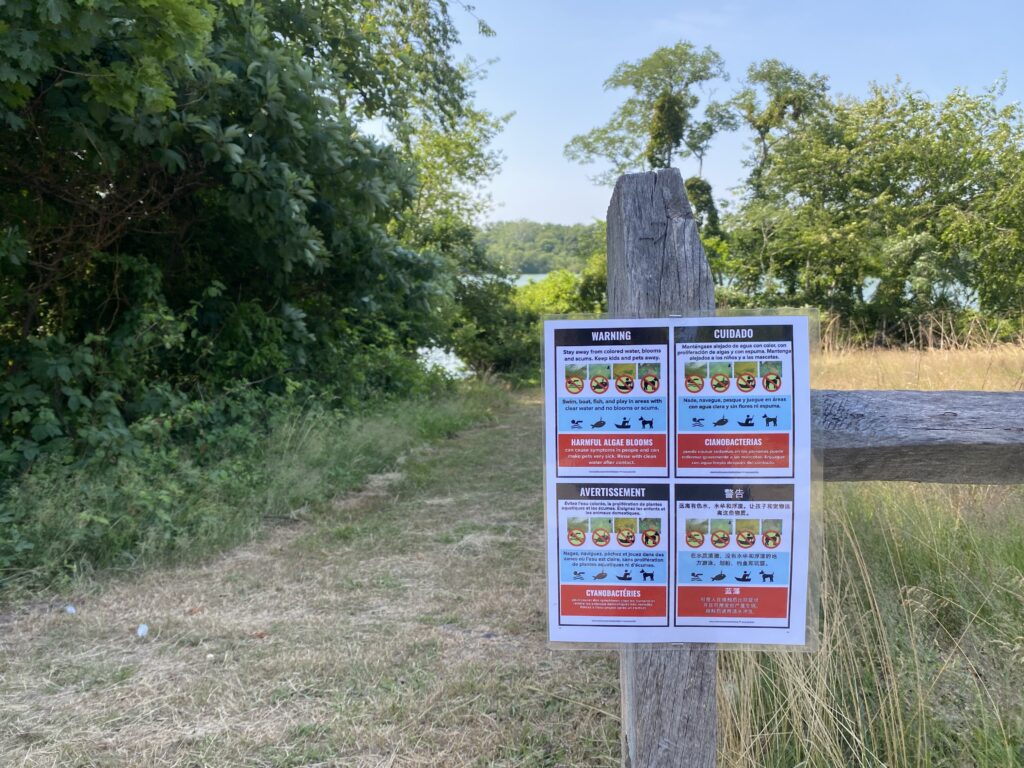
North Fork residents are being warned to steer clear of two Mattituck waterways — the latest local sites confirmed to have harmful algae blooms as a heat wave scorches the region.
Suffolk County health officials said Wednesday that Marratooka Lake and Wolf Pit Pond tested positive for cyanobacteria, also known as blue-green algae.
Surface water samples analyzed by Stony Brook Southampton confirmed the blooms, according to the county.
The warning comes ahead of the Fourth of July weekend and follows last week’s findings of blue-green algae blooms in Laurel Lake and Riverhead’s Merrits Pond.
Blue-green algae, microscopic organisms found in both marine and freshwater environments, are naturally present at low levels in lakes and streams. However, experts say under the right conditions, including favorable sunlight, temperature and nutrient concentrations, they can multiply and form blooms in shades of green, blue-green, yellow, brown or red.
Floating scums can appear on the surface of the water, creating a paint-like appearance or discoloration that the public should avoid, health officials said. Recreation in these waters is not recommended. Children and pets should be kept away from these areas.
If contact occurs with tainted water, rinse off with clean water immediately. If any symptoms occur after contact, such as nausea, vomiting, diarrhea, skin, eye or throat irritation, allergic reactions or breathing difficulties, seek medical attention.
Those who spot suspected blue-green algae blooms at a Suffolk County-permitted bathing beach can report it to the Suffolk County Department of Health Services’ Office of Ecology at 631-852-5760 or by email at [email protected]. The office is open between 8:30 a.m. and 4:30 p.m.
Report possible blooms in waters without a county-permitted bathing beach to the NYSDEC by emailing [email protected].
For additional information about blue-green algae, as well as other harmful algal blooms, visit the the websites of Suffolk County Health Services, the New York State Department of Health, and New York State Department of Environmental Conservation.