Experts outline four pillars to tackle Southold’s housing crisis
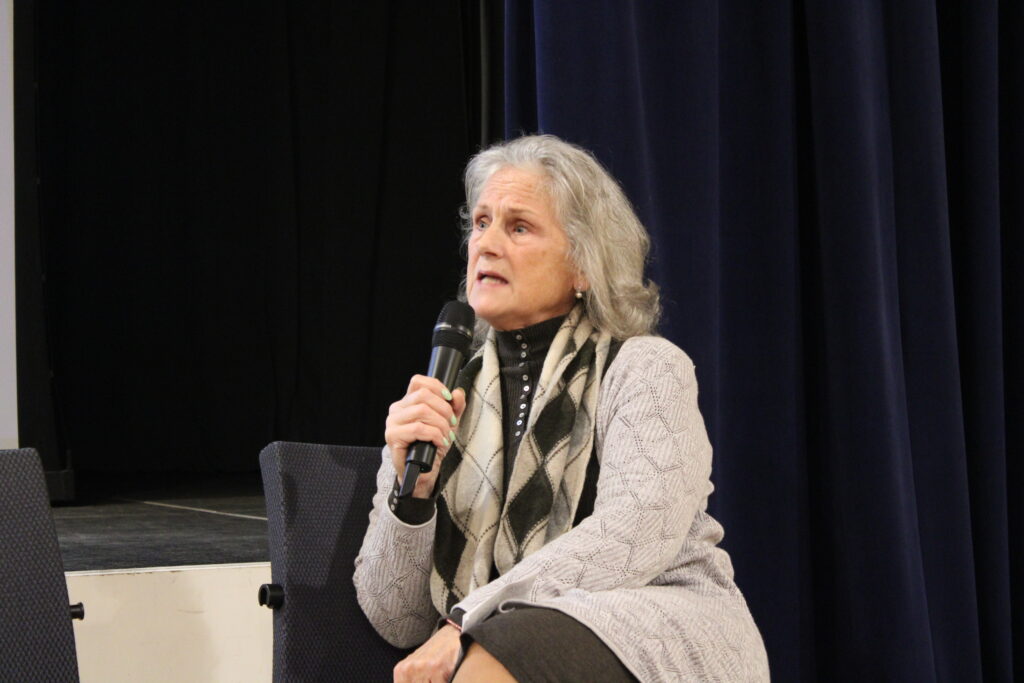
East End officials and community advocates offered Southold a blueprint for tackling the North Fork’s housing crisis — built on four pillars: community support, political will, financing and sound property management.
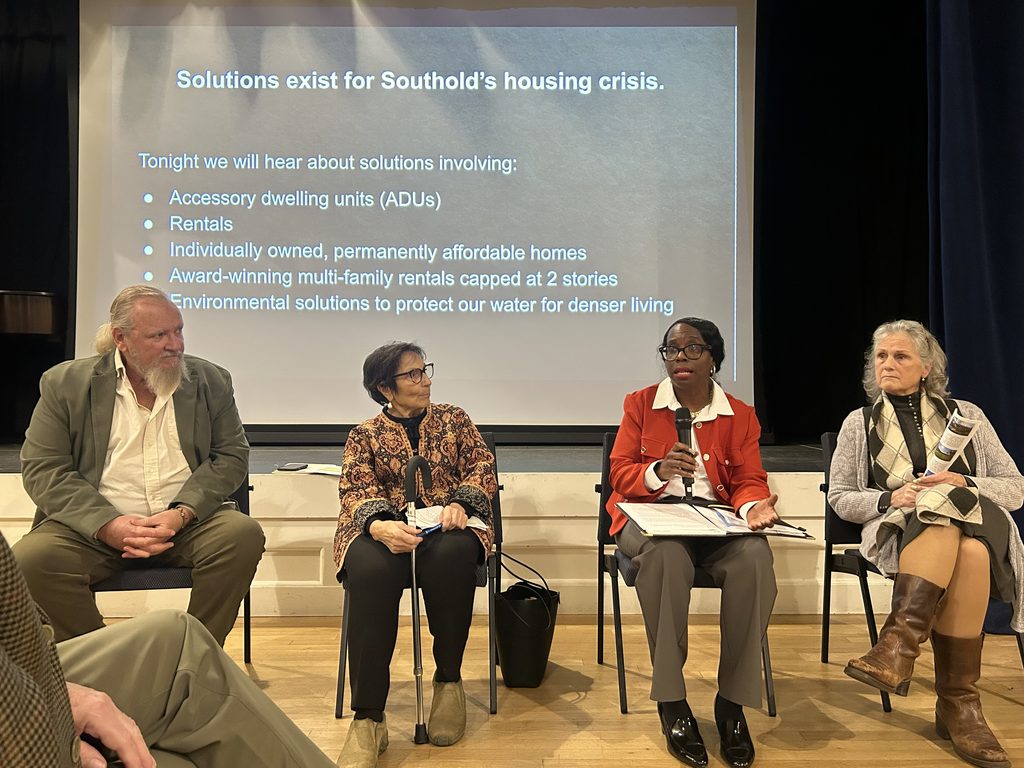
Those pillars were suggested by East Hampton Housing Authority Director Katy Casey, who was part of a panel discussion organized by the North Fork Civics Coalition’s Housing Working Group at CAST in Southold on Monday, Nov. 10.
About 40 people, including Southold Town Board member Anne Smith, attended the 90-minute forum, with topics ranging from accessory apartments to permanently affordable homes and rental developments.
“In order to get all this done, you need four legs to stand on,” Ms. Casey said.
Joining Ms. Casey on the panel were Shelter Island Town Board member Liz Hanley, North Fork Housing Alliance Executive Director Tanya Palmore and housing advocates Rona Smith and Michael Daly.
The forum followed an August gathering that documented the shortage’s consequences for local residents and institutions. Mattituck-Cutchogue school officials described losing teachers to jobs closer to their homes, while Stony Brook Eastern Long Island Hospital reported that fewer than half its employees lived on the North Fork. Residents described struggling to remain in the communities where they grew up.
Rona Smith, the housing advocate, said the median income in Southold Town is about $86,000, compared with roughly $130,000 across Nassau and Suffolk counties.
One source of financing is the Community Housing Fund, supported by a voter-approved 0.5% real estate transfer tax. The money can help finance construction and rehabilitation, property purchases for affordable housing and assistance for first-time homebuyers.
Southold’s fund had collected $8.54 million through July. Town officials have been working through changes to the housing code and program rules governing how that money can be used, The Suffolk Times previously reported. Ms. Casey said East Hampton’s fund had generated more than $25 million since April 2023.
Ms. Hanley cautioned that communities need several approaches to address different residents’ needs.
Shelter Island is using some of its community housing fund to build 10 affordable apartments on land the town already owned, Ms. Hanley said: four two-bedroom units and six one-bedroom units.
State grants provide another source of assistance. Ms. Hanley said one of Shelter Island’s first steps was applying for the state’s Plus One ADU program, which helps eligible homeowners build or improve accessory dwelling units — separate apartments within a house or elsewhere on the property.
She described financial and technical assistance of up to $125,000 per project. Shelter Island received $2 million in its first round of funding and $1.5 million in its second, she said.
“That was really important because we’re a super small community, so we just really don’t have the budget,” Ms. Hanley said.
Southold also participates in Plus One ADU through the Long Island Housing Partnership. The program helps eligible low- and middle-income homeowners create accessory apartments or bring existing ones into compliance with building requirements. Its application period is currently closed, according to the partnership.

Other topics included individually owned homes intended to remain permanently affordable, examples of two-story multifamily rental developments and ways to accommodate denser development while protecting water quality.
Ms. Palmore described assistance available through the North Fork Housing Alliance in Greenport, including rehabilitation help for homeowners who need repairs so “you can stay in your home.”
The alliance offers first-time homebuyer counseling. Across its programs, it advises 800 to 900 clients annually, Ms. Palmore said.
Its rental assistance includes the Housing Choice Voucher Program, also known as Section 8, which helps eligible households pay rent. Applications depend on whether a waiting list is open. Suffolk County lists the alliance among the agencies residents can contact about rental assistance.
Ms. Palmore said the alliance has about 50 rental units in its service area, which stretches from Orient Point to Laurel. It also offers a Family Self-Sufficiency program to help participants work toward economic independence.
“The community housing fund, that’s going to be the key. In order to get it spent, we have to educate everyone as far as tenants, as far as renters,” Ms. Palmore said. “We’re here, we’ve been here, we’re going to continue to be here.”
Southold residents have already pressed the board to make sure the town’s code changes produce homes local workers can afford. At a September public-input session, speakers questioned whether proposed housing-overlay sites were workable and whether the town had clear goals for meeting local needs.
During Monday’s question-and-answer session, Councilwoman Smith urged supporters to participate when specific projects come before the town.
“If it’s true that we have community support when we start rolling out these projects, we’re going to need everyone to come to the hearings about these projects and speak in favor of them,” she said.
She also acknowledged the work Southold has ahead and the lessons offered by its neighbors.
“We do work with the other communities; we do learn from the other communities,” Ms. Smith said. “We’re a few steps behind, but the four legs tonight really stuck with me. The importance of partnerships really stuck with me.”