Veterans discuss mental health, benefits and life after service at East End forum
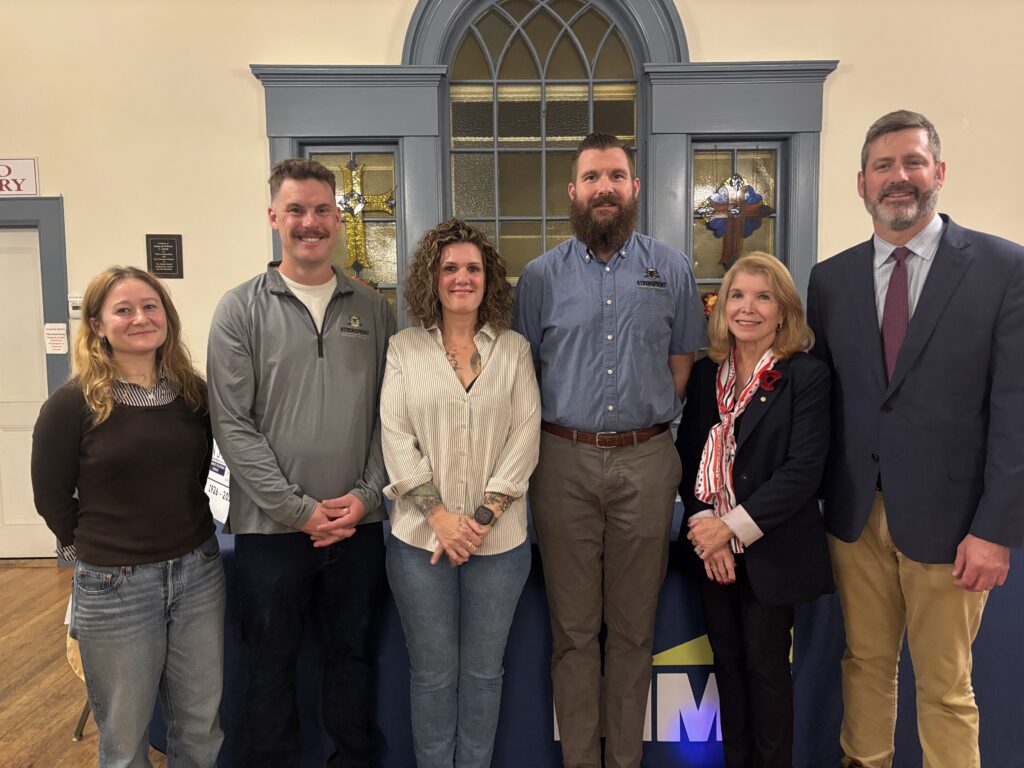
Veterans can face challenges long after their military service ends, from finding affordable housing to getting mental health care — sometimes held back by a reluctance to seek assistance.
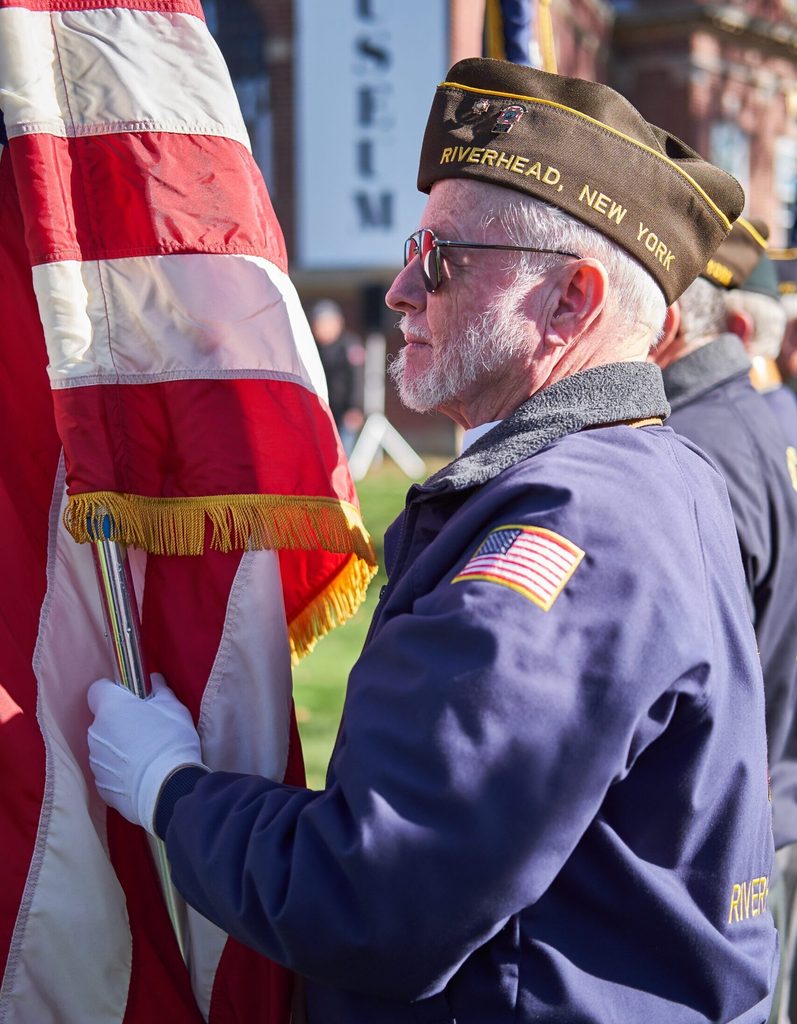
Those concerns, and the resources available to help, brought veterans, advocates and a county lawmaker together for a forum at the Shelter Island Presbyterian Church’s Fellowship Hall on Nov. 5, less than a week before the nation pays tribute to all those who served.
Sponsored by Suffolk Security Systems, attorney Sandra V. Saiegh, Dime Bank, Mattituck Environmental Services and North Ferry, a distinguished panel took questions from the Shelter Island Reporter’s Charity Robey on personal memories and reflections on service, the advantages of joining the military, new initiatives at the state and county levels to address veterans’ often arduous return to civilian life; and the state of the Department of Veterans Affairs today.
Ms. Robey began the disccusion — part of the Shelter Island Reporter’s Community Forum series — by noting that “all is not well with our veterans.” She cited estimates from the U.S. Department of Veterans Affairs that there are about 18 veteran suicides per day. She also discussed the death of Suffolk resident Lance Cpl. Filipe Feitor Runa DaSilva, a 22-year-old who died by suicide in 2021 after he was honorably discharged from the Marine Corps.
Joseph Cognitore, 79, a commander for VFW Post 6249 in Rocky Point, has said veterans can be reluctant to discuss mental health. “Everybody holds it in. We all have post-traumatic stress,” he added, an issue that was addressed later in the forum.
Ms. Robey also said in her introduction that “we also know that military service does not guarantee access to a middle-class life, and that food insecurity and affordable housing are problems that plague veterans at the same rate as those who did not give years of service to their country.”
Joining at 18 against her family’s wishes
A poignant reflection on service at the forum came from Laurene Silvani, a Shelter Island resident and U.S. Navy veteran. She spoke about being a senior in high school and enlisting without telling her parents, who wanted her to continue her education. But she rebelled and “snuck off to Riverhead to meet with a recruiter. Next thing you know, I was enlisting. It wasn’t received well by my parents, to say the least.”
She was in basic training on Sept. 11, 2001, and everything was accelerated across the military services. Ms. Silvani was assigned to the USS John F. Kennedy, an aircraft carrier, where she was one of six women in her division of 250 personnel. She worked on the flight deck, assisting in the recovery of aircraft. She was also a bugler and attended “countless burials at sea.”
Ms. Silvani said her service, which began when she was 18, could be extremely challenging.
“I learned commitment and core values. Challenging, but it was a good way to grow up,” she said.
County and state assistance
Legis. Greg Doroski (D-Riverhead), Shelter Island’s representative in the Suffolk County Legislature, spoke about laws at the county and state levels specifically crafted for veterans, noting the many services available at the Suffolk County Veterans Service Agency.
Picking up the theme of the reluctance of certain vets to seek help, Mr. Doroski said some thought of help as being “a handout,” when they have earned it because of their service. He spoke about Suffolk County home heating assistance, urging those entitled to reach out to the agency, which has an office in Riverhead.
Mr. Doroski also discussed property tax exemptions for veterans. He mentioned that the state Legislature had passed a bill expanding eligibility for veterans who served on submarines or classified missions.
A bill that passed the Assembly and remains before a Senate committee would establish a review of veterans’ health care, including access to treatment for PTSD and suicide prevention. Mr. Doroski also urged veterans to get in touch with his office if they needed assistance.
Strongpoint
James “Jimbo” Theinert spoke about his brother, Lt. Joseph Theinert, an Army officer killed in combat in Afghanistan, and how both boys were taught growing up “how to learn to be good citizens.”
Lt. Theinert died protecting the men under his command. Mr. Theinert — a math and business teacher at the Shelter Island School — told the forum’s audience, “When Joey was home before his deployment, he said the only thing he wanted was for all his men to come home safely. They did. But he didn’t.”
After his death, the Theinert family established Strongpoint Theinert Ranch in the Magdalena Mountains of New Mexico in 2013, which hosts veterans for restorative retreats. Mr. Theinert discussed PTSD and the survivor’s guilt experienced by combat veterans: “The idea of, ‘Why him? Why not me?’”
He also noted, with agreement from other panelists and members of the audience, that veterans are trained to serve “but are never trained on how to leave” their service, which often results in serious mental and emotional health problems. The five-day retreats bring veterans and sometimes their families together to help with the transition to a healthy civilian life.
The VA
Panelist Karen Sibert Haddy is a retired anesthesiologist and a veteran of the U.S. Army Reserve, where she served from 1992 to 1999. As a physician, she joined as a captain and was a major at the time of her discharge.
Currently treasurer of Shelter Island’s Legion Auxiliary, Dr. Haddy noted that membership is no longer limited to women. The organization helps the community in numerous ways, she said, supporting veterans and their families, including food assistance, counseling and other services.
On the state of the VA these days, she began by saying, “I know we’re all sick of politics” but felt it important to say that the current administration has gutted the VA. More than 40,000 employees left the department in fiscal 2025, she said, including 1,000 physicians and 3,000 nurses.
“Veterans in crisis need health services,” Dr. Haddy said.
Mr. Theinert said that Strongpoint is always in touch with the VA to help veterans. “People are owed services,” he added, and “need a central hub to connect.”
Michael “Zack” Mundy — the commander of Shelter Island’s American Legion Post 281 — said he and veterans he knows have nothing but praise for the VA. Audience member Joe Felise, an Air Force veteran from the Vietnam War era, became emotional as he said, “The VA saved my life. They helped tremendously. And they saved my brother’s life. The VA is fantastic. All the employees have us in their hearts.”
Audience member Sharon Morgan spoke about her husband Bob, a Vietnam veteran who became a Shelter Island School teacher and was helped by the VA along the way. He went to school on the G.I. Bill, got his teaching degree and used benefits when his health declined.
“Not one bill ever came to our house,” Ms. Morgan said, pausing at times to gather herself emotionally. When it was time for Bob to go in for extended care, he entered a VA facility that was beautiful,” Ms. Morgan said.
Mr. Mundy, a Marine combat veteran who served in Afghanistan, and Mr. Theinert remembered Mr. Morgan with affection as a beloved figure to students and families on Shelter Island.
Mr. Mundy said a few days before he left for Marine Corps boot camp, Mr. Morgan asked him if he would help him move his refrigerator. The refrigerator was in the basement, and when they arrived, young Zack asked Mr. Morgan where they were moving it.
“He said, ‘We’re moving the beer in it upstairs so we can drink it,’” Mr. Mundy said to laughter.
It brought the evening to a close on a happy note of a remembered kindness from a veteran to a young man who in a short time would be leaving home to prepare to go to war.