Greenport community shares thoughts on short-term rental proposals
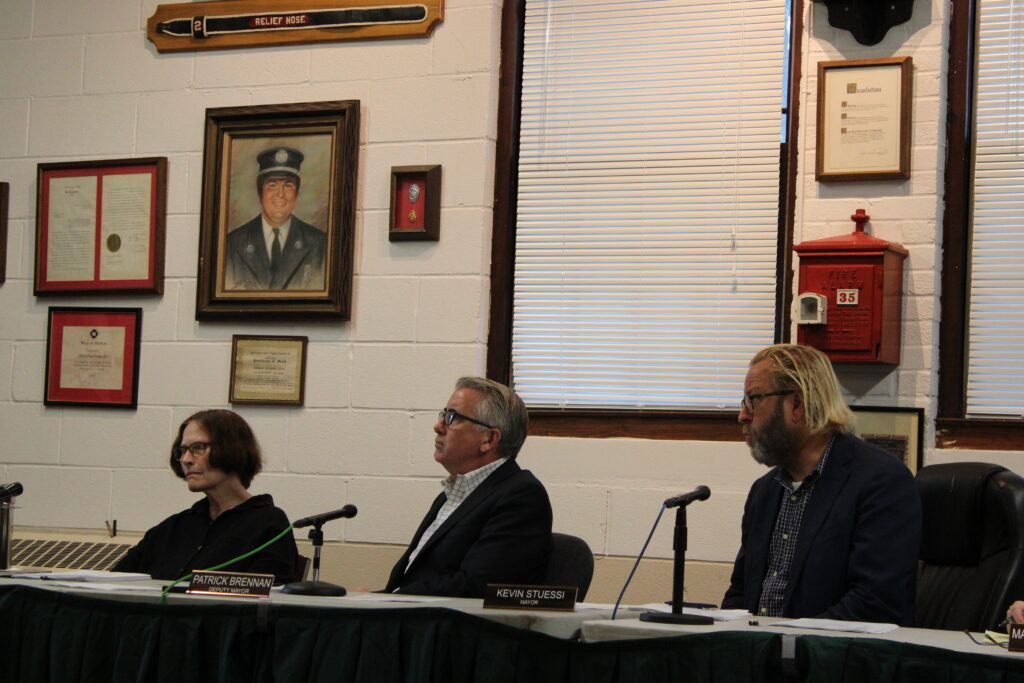
Greenport officials proposed stricter rules on short-term rentals — leaving some longtime residents who lease out their properties fuming over the possible clampdown.
The new regulations, presented during a spirited Village Board meeting on Thursday, Sept. 18, require permits for short-term rentals of 30 days or less – like those offered on Airbnb and Vrbo – as well as longer leases.
Occupancy on short-term rentals would be capped at two people per bedroom or a maximum of eight (excluding children under 3) for an entire house.
Greenport resident and rental owner John Kramer let Mayor Kevin Steussi and other board members know he was not pleased by the restrictions.
“My neighbors love my guests. You seem to hate them,” Mr. Kramer said. “With all these hoops in this new program, the village is going to really feel it.”
Fellow rental owner John Winkler was upset about an additional proposal calling for one off-street parking space per bedroom.
“I can’t believe we’re even going to deal with the issue of parking and forcing people to have off-street parking if they have short-term rental,” said Mr. Winkler, who has been renting out his property for more than a decade.
The board did scrap a highly contentious push to establish a 30-day minimum for rentals.
“Greenport currently has the most liberal short-term rental code of the entire eastern end. We do need to make corrections to it. Some areas need to be fixed, which we have worked with legal on,” Mr. Stuessi said. “We are proposing, again, something that is very liberal, but it requires a lot of language.”
Resident Dinni Gordon, head of the village’s new housing committee, said about a third of the village’s 1,442 housing units were unoccupied, according to data from 2023.
The board proposed establishing three types of short-term rentals: hosted, owner-occupied and resident.
Hosted rentals will require the owner to remain in the unit during a guest’s stay, and only bedrooms can be rented, not the whole house.
For owner-occupied, the entire house could be rented, but the owner has to show that they live in the home at least part of the year.
Resident short-term rentals refers to two-unit properties, where one must be occupied by the owner or a year-long lease tenant.
All short-term rental properties can only have one type of permit.
Violations of the code can result in fines — ranging from $500 to $5,000 — permit suspensions or revocations, a three-year disqualification from getting a new permit, perjury prosecution and repayments of unlawful rents. Owners can appeal denials, suspensions or revocations to the Board of Trustees.
Patricia Hammes, the village’s Planning Board chairwoman, said she’s not a fan of short-term rentals. She said she bought her house in a residential neighborhood, not downtown, and currently lives next to two hotels.
Now, she feels as though her community has changed.
“Revolving doors, one person in, one person out,” she said. “Actually, six people in, six people out, three cars on the street. It’s destroying the fabric of our community.”