More than half of private wells tested in Mattituck contaminated with ‘forever chemicals’
More than half of private wells tested in a swath of Mattituck contain dangerous levels of “forever chemicals.” Contamination in some wells reached more than 60 times the state’s safe limit.
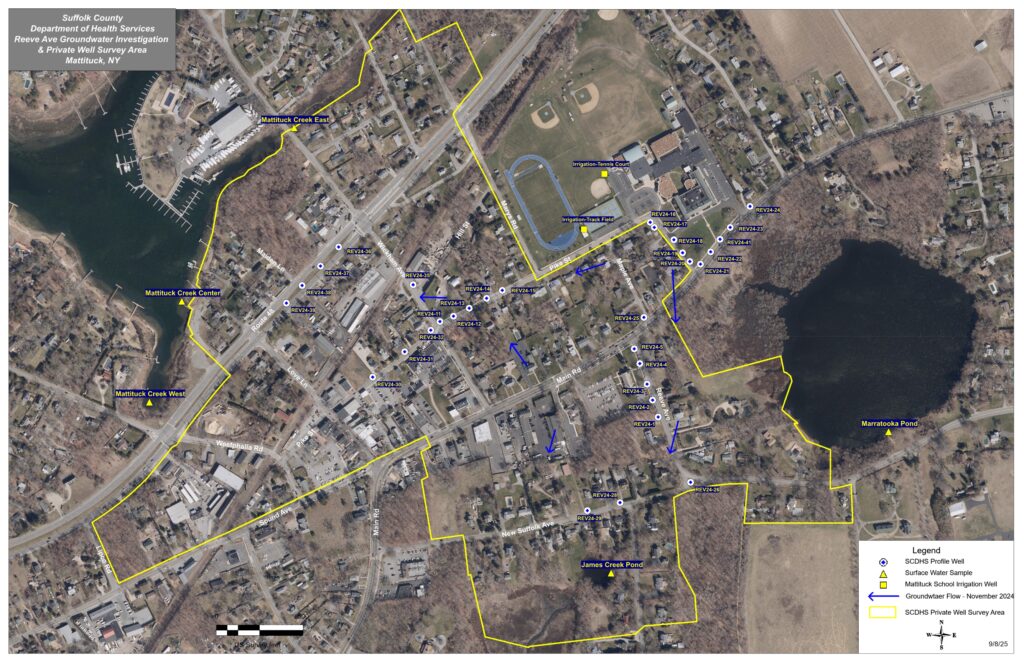
The nearly year-long survey has found 20 of 38 private wells tested exceeded maximum allowable levels for PFOA and PFOS, with 11 wells showing elevated levels of other compounds, Suffolk County Health Services Department public relations director Grace Kelly-McGovern said.
The affected area runs along the west end of Marratooka Pond, near James Creek Pond, the Love Lane corridor and from Mattituck High School to Route 48.
These “forever chemicals” — or PFAS — are synthetic compounds that don’t break down naturally and can accumulate in the body over time. The state Health Department has noted exposure to PFAS can cause cancer and other illnesses in both people and animals.
Several of the wells tested in the study identified high contamination levels ranging up to 607 parts per trillion. New York’s safe limit is 10 parts per trillion.
Lokesh Padhye, who researches emerging water contaminants for the state, called the results “concerning.”
“These levels are extremely high for some of these wells,” Mr. Padhye told The Suffolk Times after reviewing the results. “So, I’m really kind of concerned about if people have been drinking from these wells, particularly the wells carrying triple-digit PFAS and double-digit levels of PFAS. This is certainly concerning as a resident of Suffolk County.”
The study also found high levels of specific PFAS that are not yet regulated by the U.S. Environmental Protection Agency.
“Just because they are not regulated, does not necessarily mean they are not of concern,” said Mr. Padhye, an associate director at the New York State Center for Clean Water Technology.
One Mattituck business owner faces both health risks and an $89,000 bill after his private well tested positive for PFAS.
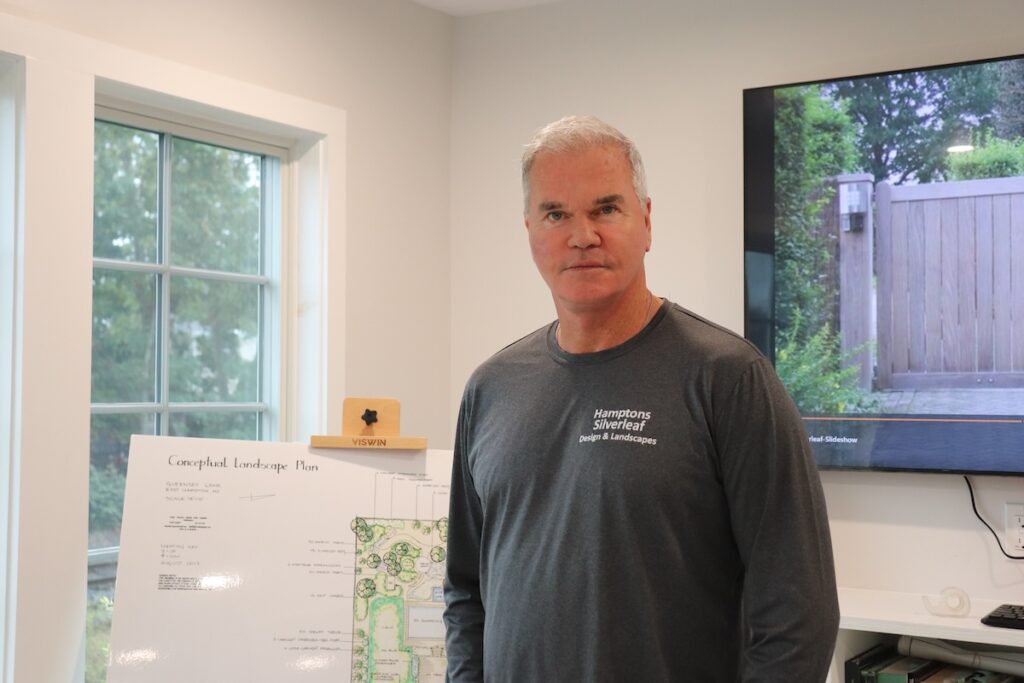
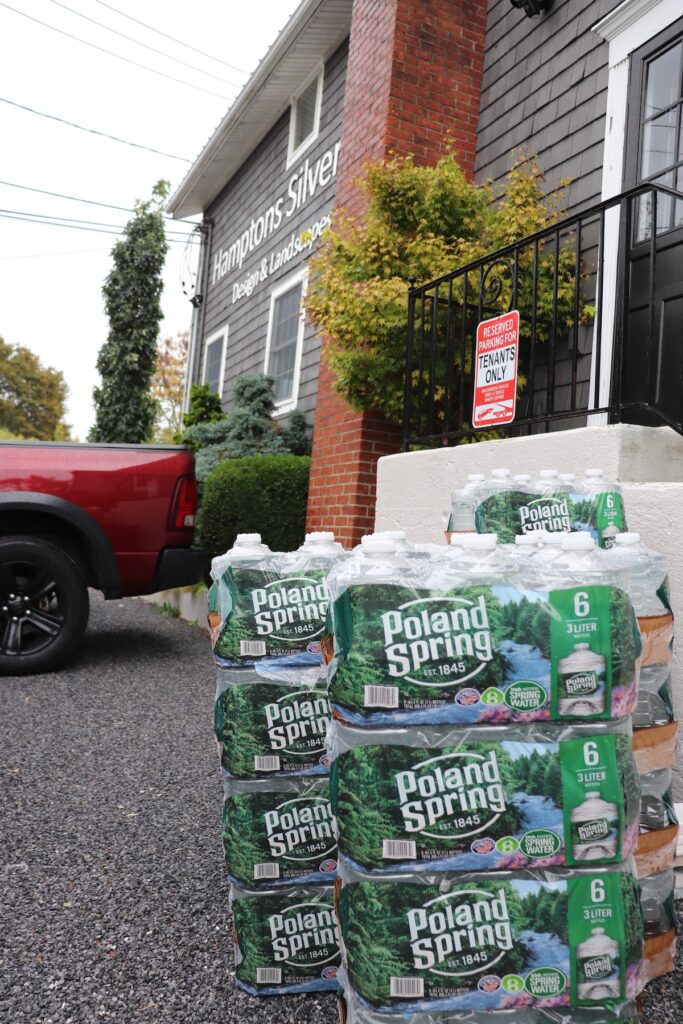
Kevin Keyser, who runs Hamptons Silverleaf Landscaping on Westphalia Avenue, said his well tested positive for PFAS above the state’s safe limit in March. He decided to test his water after a neighbor’s well came back contaminated.
His options: bottled water, an on-site treatment system or connect to public water for roughly $89,000. He chose to receive water bottles. Cases of Poland Spring are delivered every other week by the Health Department.
Mr. Keyser wants the Suffolk County Water Authority to find grants to fund pipe installations so residents don’t have to front the cost to hook up.
“I’d really like them to do the right thing,” he said of the water authority.
SCWA communications director Daniel Dubois said the authority submitted a request for a congressional grant in March that was unsuccessful. A separate Water Infrastructure Improvement Act (WIIA) grant application was filed with the New York State Environmental Facilities Corporation in September. SCWA is waiting for a response for the WIIA grant.
The water main in the area was extended in 2021, 2023 and 2024, Mr. Dubois added.
The cost for a residential homeowner to hookup to the SCWA water supply can range between $10,000 and $25,000, according to Mr. Dubois. However, the SCWA offers the first 75 feet of new water main for free and offers financing up to 20 years.
Two of the wells that also tested above the state’s safe limit are at Mattituck High School’s track field and tennis court, used for irrigation. The tennis court PFOA levels are considerably lower than the track field well’s PFOA levels.
Mattituck-Cutchogue School District superintendent Shawn Petretti told parents in an Oct. 1 letter that the district has “not used well water for drinking, cooking or indoor use for many years.” The school’s potable water supply is serviced by the SCWA.
He said the school already irrigates the fields at night to allow standing water to seep into the ground or evaporate before use in line with the health department’s recommendations.
“People using the fields … should be advised to wash their hands before eating or drinking,” a letter from the county Health Services Department commissioner Gregson Pigott stated.
Out of an abundance of caution, Mr. Petretti said the school is looking to potentially move all field irrigation water to county water. The undertaking would have to be discussed for an upcoming budget.
“Again, we want to assure you that all drinking water in our schools is safe and continues to meet or exceed all local and state standards,” Mr. Petretti said in the letter. “The health and well-being of our school community remain our top priority, and we will continue to monitor and maintain all water sources used on our campuses.”
For any questions regarding the school’s water testing process, parents can contact the district office at 631-298-4242. So far, Mr. Petretti said there has been no concern regarding the wells at the school.
Mr. Keyser encourages residents on private wells to get them tested. He regrets not testing his well when he purchased the Westphalia Avenue building two years ago.
“Anybody that’s buying a house or a commercial building on the North or South Fork, everybody should do a water test if you’re on a well before closing,” Mr. Keyser said.
Residents in the Mattituck survey area will be waived the Health Services Department $100 fee for water quality analysis, Ms. Kelly-McGovern said. To request analyses for private wells, residents must fill out a request for private well analysis form including tax map location.
The department website states that a sample can be collected within six weeks “in most instances.” Results of the analysis can take up to eight weeks to receive after sample collection is completed.
The investigation and private well survey remain ongoing. There are 19 unsampled properties in the area whose owners have not responded to or denied the Health Department’s request to sample, according to Ms. Kelly-McGovern.
The Health Services Department also installed groundwater profile wells to evaluate groundwater quality at various depths within the survey area.
A source of the contamination has not been identified. The New York State Bureau of Environmental Exposure Investigation did not respond to a request for comment. Bureau staff conduct exposure investigations through the state’s Cancer Surveillance Improvement Initiative, which dates back to 1998.
Resident concerns were first reported by The Suffolk Times in July, when county testing found that 14 private wells tested along Reeve Avenue and Westphalia Avenue in Mattituck had exceeded the safe limit for “forever chemicals” as of June 24.
In Suffolk County, roughly 45,000 private wells serve around 200,000 people, according to the county’s private well water testing program site. Private wells are typically shallow, which can increase vulnerabilities to pollutants and saltwater intrusion.
SCWA CEO Jeff Szabo previously told The Suffolk Times that its wells are “typically much deeper.” The SCWA — an independent corporation that filters, tests and supplies approximately 1.2 million residents across its 633 wells in the county — has been testing for PFAS since 2013.
“We run 200,000 test results a year,” Mr. Szabo said.
By the time water reaches the tap, he said it “meets or exceeds all standards.”