Southold bans new residential docks at nine wetlands
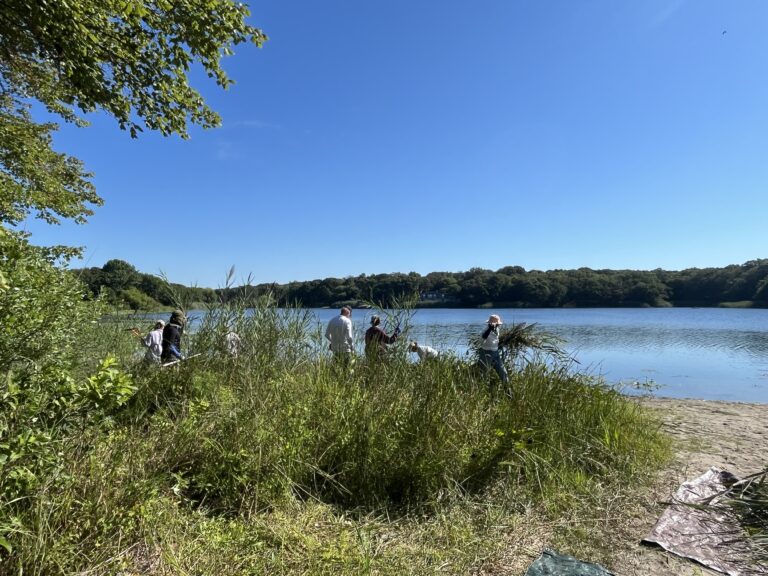
Southold Town banned new residential docks at nine waterways and doubled pool setback requirements near wetlands in a rare split vote on Wednesday, Nov. 5.
The 5-1 ruling — with Councilmember Jill Doherty voting in opposition — adds Laurel Lake, Marion Lake, Marratooka Pond, Husing Pond, Lilly Pond, Great Pond, Inlet Pond, Hashamomuck Pond and Dam Pond to 17 other wetland locations already prohibited from building residential docks by the existing code.
Swimming pools will be required to maintain a 60-foot setback from wetland boundaries. Pools with retaining walls higher than two feet above ground level face an even stricter 100-foot setback.
Supervisor Al Krupski supported the changes at the Nov. 5 meeting, referencing his 20-year tenure on the Board of Trustees and his experience dealing with development pressures on Southold’s shorelines.
“If you look at the resource there as a public resource, I think you see it the way the Trustees are looking at it, as not only a fragmentation of habitat but also fragmentation of public use,” Mr. Krupski said.
The law changes will aid the Board of Trustees in their ability to enforce the town’s wetlands code.
“[The Trustees] see firsthand, every month, how the effects of development affect the wetlands and our surface waters,” Mr. Krupski said. “They recommended these adjustments based on what they see in the field. The reality and the conditions on each parcel.”
Citing her time as a Trustee from 2005 to 2011, Ms. Doherty said that the town had allowed narrow, elevated catwalks with open-grating for resident access to the wetlands. She opposed the law over concerns about traversing the wetlands in the absence of a residential dock.
“Obviously there’s disturbance to the wetlands during construction, but once that’s constructed, the marine life and everything else underneath is not disturbed,” she said. “I believe this code would be better served to allow minimum dock space without a float or a ramp or something like that which we’ve done before in other sections of the code.”
It was just the second time that a Town Board member dissented with a decision this year. Ms. Doherty previously voted against Southold’s irrigation legislation in July over enforceability concerns.
Some residents opposed the code changes at the public hearing on Oct. 7, claiming it would create environmental and economic hardships for their properties and the wetlands.
Greenport’s Victor Rerisi said the law changes amounted to overreach in a letter to the Suffolk Times that ran Nov. 6.
“Adding another restrictive layer serves only to confuse homeowners, complicate compliance and devalue properties that have long met environmental standards,” he wrote.
Meanwhile, Mattituck resident Tami Loeffler thanked the board for approving the regulations at the Nov. 5 meeting.
“Southold’s regulations are not obstacles,” Ms. Loeffler had written in a letter published in the Suffolk Times’ Oct. 16 issue. “They are essential guardrails that help preserve the clean water, open skies and unspoiled landscapes that define our town.”
The changes will additionally streamline code enforcement by removing Conservation Advisory Council review from the application process and introducing new technical definitions, including:
- Innovative/alternative septic systems: Advanced wastewater treatment systems using aeration, filtration or enhanced biological processes
- Open-grate decking: Specialized decking that allows light penetration to protect underwater vegetation
- Vegetated non-turf buffers: Areas with at least 50% coverage by native non-invasive vegetation, excluding turf grass
Mr. Krupski commended the Trustees’ efforts to clarify the terms and definitions, which he said will make it easier for waterfront property owners to understand what they’re allowed to do when looking at the code.
Key clarifications also include requiring “as-built plans” to document current property conditions around wetlands and highlight any differences from valid permits.
The board also tightened the definition of “ordinary and useful maintenance” from affecting no more than 75% of a structure to just 50%. The law was originally proposed to change the maintenance to 25% of a structure, but following a residents’ concerns over the figure, it was adjusted up to 50%.