How Stony Brook’s ‘fly cars’ are helping save lives on the North Fork
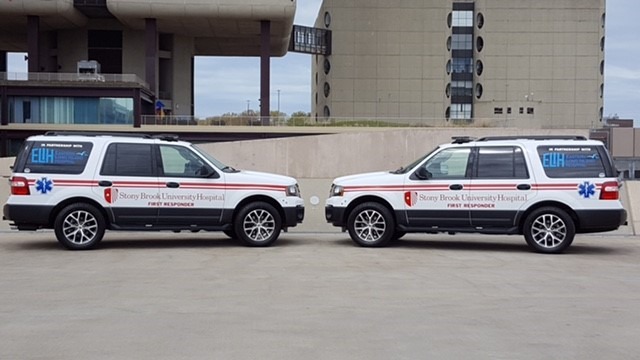
On the North Fork, the first flashing lights at a 911 call often aren’t from an ambulance, but from a paramedic in a “fly car” from Stony Brook Eastern Long Island Hospital.
The Greenport hospital, which launched the program a decade ago, sends out sport utility vehicles staffed with a single paramedic and equipped with advanced life support gear — allowing critical care to begin before an ambulance arrives.
Two fly cars, usually refitted Ford Expeditions, cover the North Fork 24/7 and respond to every 911 ambulance call from Mattituck to Orient. A third responder covers Shelter Island around the clock. The vehicles can’t transport patients, but they allow critical care to begin before an ambulance arrives.
The program has taken on added importance after the state suspended advanced life support authorization from the Greenport Rescue Squad, as previously reported by The Suffolk Times. Advanced life support, or ALS, is higher-level emergency care provided by paramedics.
“Having the fly cars, especially staffed with basically the highest level of paramedic, is hand in glove with the rescue squads,” said Paul Connor, the hospital’s longtime chief administrative officer. “I would imagine, as time goes on, it’s going to be even more necessary as each one of these rescue squads comes to grips with how they need to staff.”
SBELIH, a certified EMS agency at the ALS level, responds to roughly 2,000 calls a year, officials said. Greenport is the busiest, handling more than 1,000 calls annually, while places like East Marion see fewer than 100.
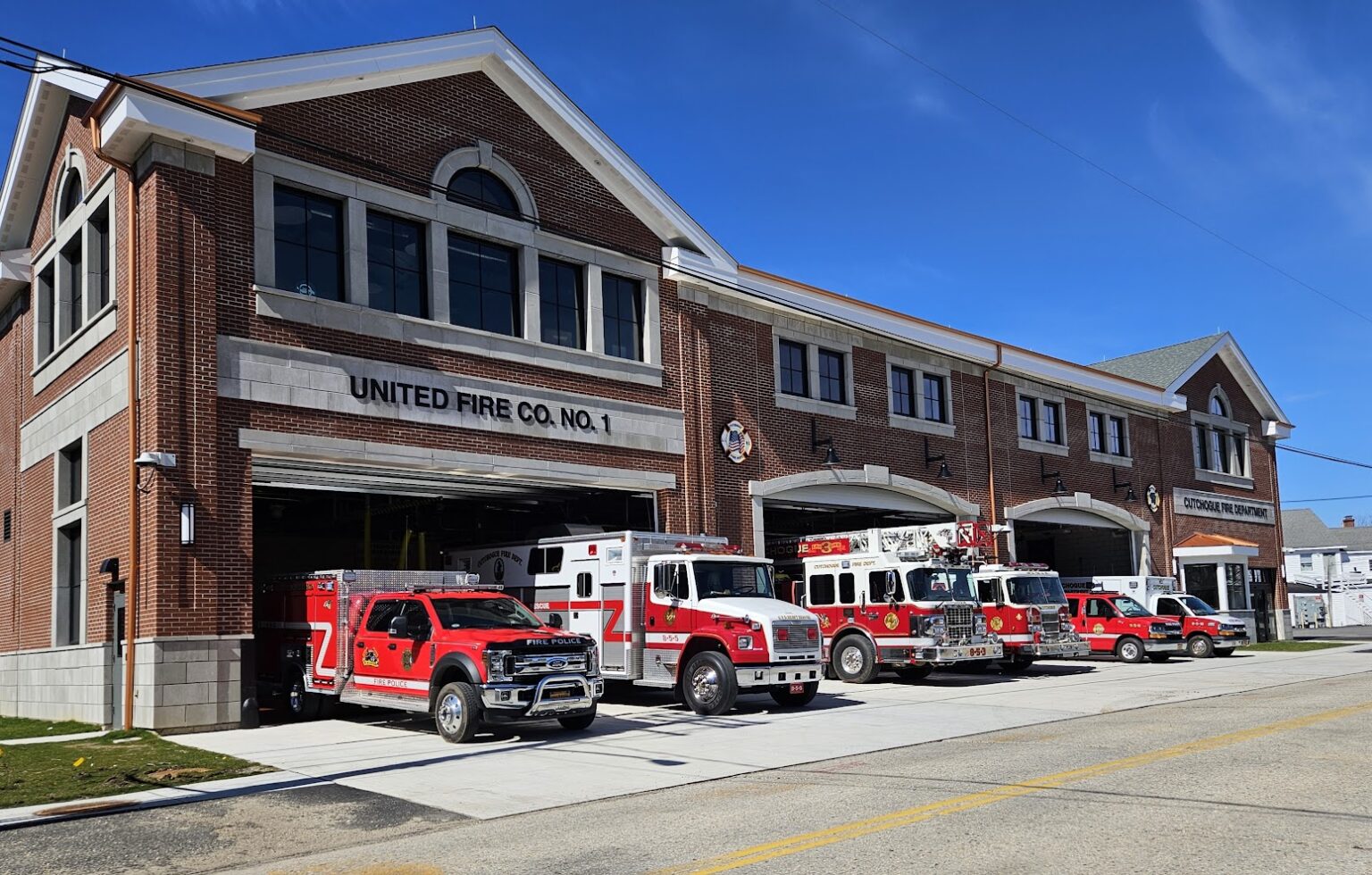
One unit is typically stationed at the Cutchogue Fire Department. Another had been based at the Greenport Fire Department, but is now operating out of the hospital following the state’s action.
Coverage began at 12 hours a day in 2016 and expanded to 24/7 in 2021. Shelter Island followed a similar path, reaching full-time coverage in early 2024.
“The geography of the North Fork lends itself to two first responders,” said Eric Niegelberg, assistant vice president for emergency medical services at Stony Brook Medicine. “The volume really does not. If the geography were half the size, with the volume of calls, one first responder would be adequate.”
Usually, the fly car arrives first — its paramedic already on the road — while volunteer crews may be responding from a firehouse.
“We work hand in hand with the volunteers,” Mr. Niegelberg said. “Most of the volunteers do not have a large quantity of advanced life support providers. So, in the majority of the calls, we are the only advanced life support provider on scene.”
Even with no current gaps in coverage, the number of advanced life support volunteers continues to decline.
The hospital works closely with local departments on training and case review, bringing in specialists like trauma and cardiology chiefs to provide feedback and continuing education.
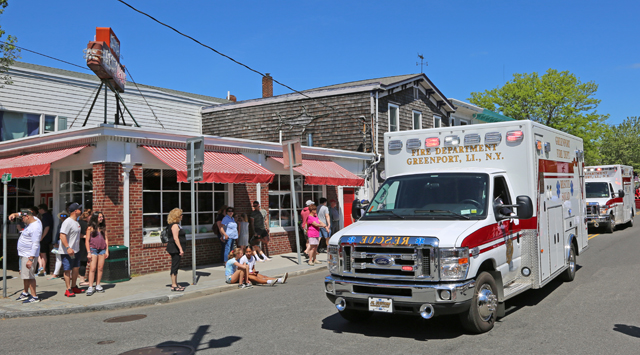
“They understand how important it is to be able to provide that guidance and to provide that feedback to these volunteers here,” Mr. Connor said. “That’s a very critically important role that Stony Brook plays out here.”
Becoming an EMT requires about 150 hours of training. EMT-CC certification adds roughly 270 hours, and paramedic training requires an additional 1,200 to 1,500 hours — a major barrier for volunteers.
“If you were looking to do this as a paid profession, it would make sense to become a paramedic,” said Mr. Niegelberg.
However, few volunteers take the paramedic program because it’s “very expensive” and “extremely time-consuming,” he added.
Across Suffolk County, many EMS agencies have shifted to hybrid systems that include paid staff to supplement volunteers — a model that mirrors what’s happening on the North Fork.
“It really would be quite challenging for some of the smaller departments, like Orient and East Marion, to fund a 24/7 employee with a fairly low volume of calls,” he said. “And in all honesty, it’s not needed.”