Guest Column: Using your IRA to make gifts to charity
This is the time of year when we North Forkers are grateful for all we have — the beautiful place we live in, the abundance of resources available to us and our friends and family. We also think about those less fortunate than we are: people in our communities who lack the resources many of us take for granted, like healthy food and a safe place to live. One way to help our less fortunate neighbors is to implement a technique that uses your IRA, if you qualify under the IRS rules.
If you are at least 70 1/2 years old with a traditional IRA, you can direct your IRA custodian to donate a total of up to $111,000 to your favorite charity by Dec. 31, 2026, in the form of a check directly from your IRA account to the charity. This direct transfer, called a qualified charitable distribution (QCD), avoids having to recognize the transferred assets in your gross income on your tax return.
Generally, when you take an IRA distribution and make an equivalent gift to charity, the distribution is considered taxable to you as income, and you may qualify for a charitable deduction for the gift to charity. The charitable deduction you receive may not totally offset the taxes you must pay for receiving the IRA distribution. Direct distributions from your IRA as QCDs to charities are not tax deductible as donations, but correspondingly, they are not treated as income received by you, so they do not result in higher income taxes and other negative consequences (e.g., reduced Social Security benefits).
To use the QCD, you must be at least 70 1/2 years of age and you must direct your IRA custodian to make the contribution directly to the charity of your choice. The custodian can also send you a check made payable to the charity, which you would send to the charity before year-end. The charity must be a “qualified” charity. Most public charities are qualified charities, and certain contributions to private foundations and other charities will also be treated as qualified. The QCD can be used to satisfy a portion or all of your annual required minimum distribution (RMD).
For example, Tricia and John care deeply about the work being done by the Center for Advocacy, Support & Transformation, headquartered in Southold. CAST provides a critical safety net for our vulnerable and low-income neighbors. The organization helps address insecurities around food, housing, employment and health care with dignity and compassion. John is over 70 1/2 and is required to take RMDs. He does not need his full IRA RMD for 2026 to live comfortably and wants to help his less fortunate neighbors by donating to CAST. Instead of withdrawing funds from his IRA and then distributing them to charity, John wants to make a QCD of $50,000 directly from his IRA to CAST.
John directs his IRA custodian to draw a check from his IRA in the amount of $50,000 made payable to CAST. When John receives the check, he delivers it to CAST prior to year-end. John will not have to include this $50,000 withdrawal from his IRA in his 2026 gross income or pay income taxes on this distribution. In turn, CAST receives the benefit of the entire $50,000.
If you are fortunate enough not to need your entire RMD for the year, or if you would like to make a gift in excess of your RMD for the year to a charity doing work you care about, a QCD may be the right vehicle for you to express your gratitude and help your less fortunate neighbors.
Another tax-efficient way to use your retirement funds for the benefit of charity is to name your favorite charity as the designated beneficiary of your IRA or other retirement plan upon your death. While individual beneficiaries generally must pay income taxes on distributions they receive from qualified retirement plans (other than qualified distributions from Roth plans), such distributions received by a tax-exempt charity upon your death will be income tax-free to the charity, providing an even greater impact.
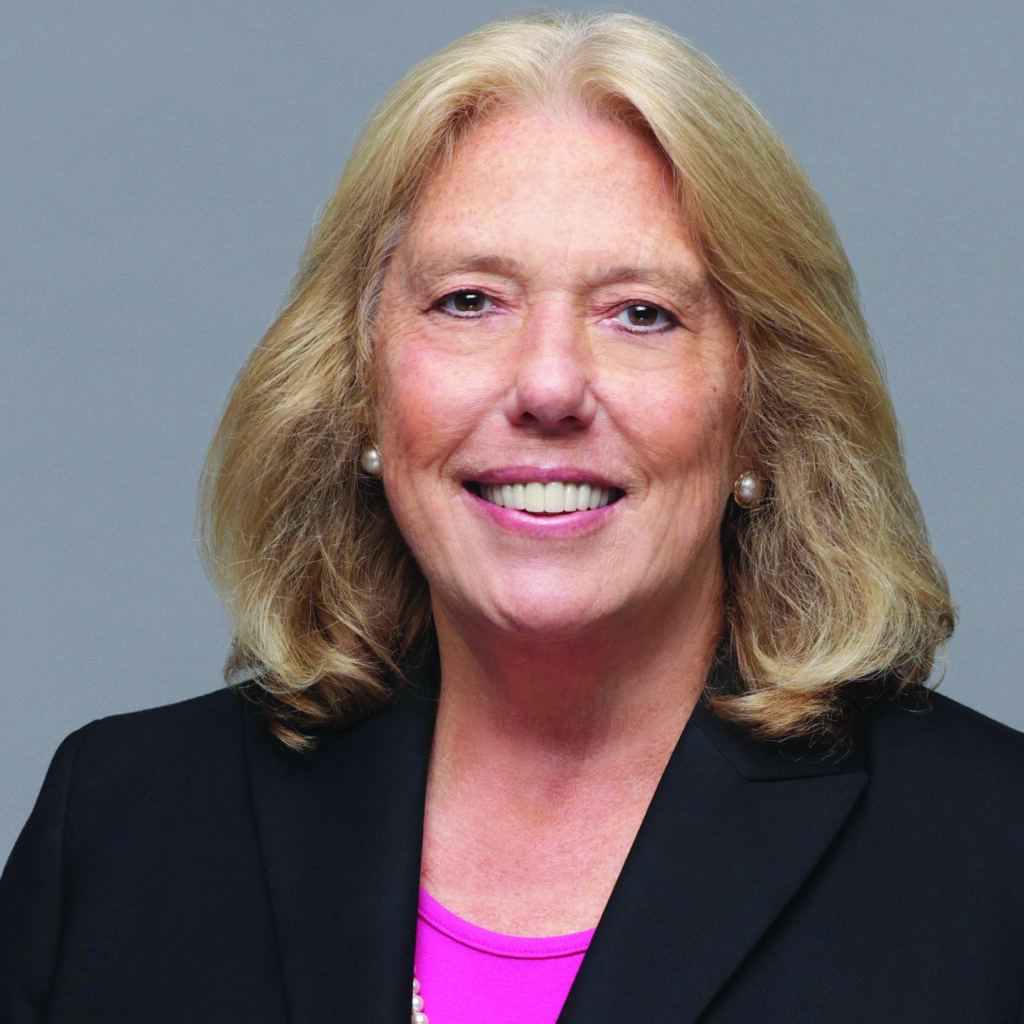
Patricia Marcin is a partner at the law firm of Rivkin Radler LLP. She concentrates in trusts, estates and tax law. She can be reached at [email protected] or 516-357-3342.