North Fork water pipeline clears SCWA review milestone amid court fight
The Suffolk County Water Authority has advanced its plan to bring more drinking water to Southold, accepting a final environmental study while its court battle with Riverhead over local oversight continues.
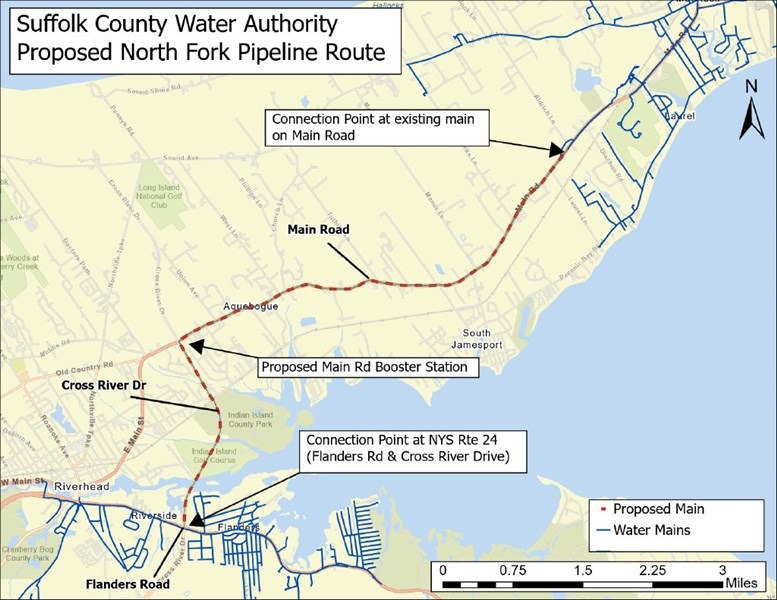
The authority announced Friday that its board had issued and accepted the final environmental impact statement for the controversial North Fork Water Main Project. The 7.5-mile pipeline would carry water from Flanders through Riverhead to North Fork customers, easing pressure on Southold’s existing wells.
SCWA’s board could adopt a formal findings statement as early as its November meeting, completing the state environmental review process, according to the authority.
“This project is a requirement for the long-term sustainability of the North Fork,” SCWA Chairman Charlie Lefkowitz said in Friday’s release. “Accepting the Final Environmental Impact Statement moves us one step closer to protecting our local water resources while meeting the current needs of our communities.”
SCWA operates 60 wells across 18 well fields on the North Fork, serving 9,500 customers. The authority says increasing demand is straining the system despite conservation efforts.
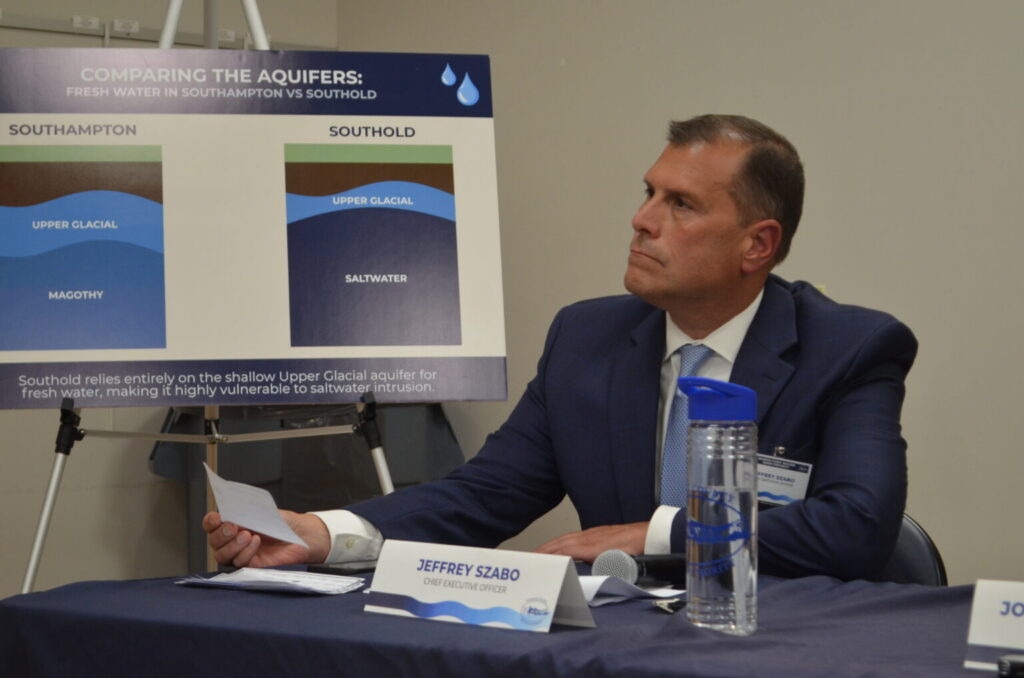
Most local wells draw from the Upper Glacial Aquifer, which is vulnerable to contamination. Excessive pumping also risks drawing saltwater into the freshwater supply, according to SCWA. The authority says the pipeline would reduce the burden on those wells.
The 152-page final review anticipates taking eight Southold wells out of routine service and reducing pumping at nine others. It says those changes would ease stress on the aquifer and help limit saltwater intrusion, but the analysis does not establish how fully the aquifer would recover.
Southold Supervisor Al Krupski told The Suffolk Times on Friday he had not yet reviewed the final environmental study and wanted to read it before commenting.
Suffolk County Legislator Greg Doroski criticized SCWA for failing to treat local towns “as equal partners,” saying the authority had not alerted area elected officials before releasing important project documents or information to the press.
After reviewing the document, Mr. Doroski told The Suffolk Times Friday that he believes it still fails to adequately address water conservation needs on the North Fork.
“They are continuing to offload the responsibility for that, at least as a primary responsibility, to the towns and villages,” the legislator said. “I think the Water Authority needs to view itself at least equally as a steward of a limited and precious resource, as they do as a supplier of that resource.”
The review addresses groundwater pumping, wetlands, agricultural soils, habitat, construction noise, traffic and potential development impacts. It incorporates the earlier draft study and responds to comments from residents, local officials and other agencies.
Following those comments, SCWA committed to daily online construction updates and a construction manager overseeing environmental safeguards, traffic controls and access to neighboring properties. It declined a recommendation for a separate independent monitor. Some details, including school-access plans and work-hour restrictions, would be finalized through construction planning and permits.
The project includes a 24-inch transmission main and a booster station to improve water pressure and reliability. SCWA says the additional water would come from existing capacity in parts of Southampton where the aquifer is deeper and more plentiful, without affecting service to homes and businesses there.
SCWA continues to favor the route announced in July, running north along County Route 105 and east along Main Road, avoiding the original Sound Avenue corridor. The authority says that route would shorten the pipeline by one mile and allow completion in 2028 rather than 2030. The review says formal route selection will follow consideration of the final study and adoption of the findings statement.
“We listened to the public throughout the environmental review process and finalized a plan that reflects their input,” SCWA Chief Executive Officer Jeff Szabo said. “The FEIS confirms that our preferred route reduces costs and environmental impacts while allowing us to complete construction faster, keeping disruption to the community to a minimum.”
SCWA spokesman Dan Dubois told The Suffolk Times on Friday that the Main Road route is currently estimated to cost $25 million, compared with the original $35 million estimate for the Sound Avenue route.
Although the environmental review identifies added costs associated with construction on a state road, Mr. Dubois said that discussion is not a comprehensive comparison of the project’s total costs.

Construction is expected to take 12 months once final permits are secured, according to Brendan Warner, SCWA’s director of construction and maintenance.
“We will stage the work specifically to avoid traffic disruptions on the North Fork during the peak summer and fall months,” Mr. Warner said.
In Southold, officials and environmental advocates have pressed for stronger conservation measures, while Greenport officials have supported the pipeline as a way to improve water reliability and reserves for firefighting.
At an August hearing, Mr. Krupski sought more time to review the draft environmental statement and questioned lawn irrigation practices. Mr. Doroski, a former Southold Town Board member, urged the authority to consider pricing changes to discourage excessive use.
SCWA said conservation efforts would continue alongside the project, including appeals for customers to follow an odd/even lawn-watering schedule.
“While the North Fork Water Main Project is critical to the region’s future, it’s not a silver bullet,” Mr. Lefkowitz said. “We need everyone in Southold to adopt water conservation practices, especially during the summer when demand is at its highest.”
The environmental review does not settle the dispute over whether SCWA must obtain Riverhead’s zoning and land-use approvals. The authority sued the town in February, arguing that the project is exempt from those requirements.
The lawsuit remains active in Suffolk County Supreme Court. No ruling resolving the dispute over local zoning authority was listed on the public court docket as of Friday.
Riverhead officials have maintained that the town should have a say over construction impacts within its borders, even though no customer connections would be made within the Riverhead Water District’s service area.
The Town Board voted unanimously Oct. 6 to require local approvals for the revised route, including a special permit for a booster station, site-plan review, wetland and road-opening permits and utility easements.
Riverhead Town Attorney Erik Howard said Friday that SCWA’s acceptance of the environmental review would have little bearing on the pending lawsuit.
“I do not believe that the Water Authority’s independent acceptance of a FEIS relative to the project would have any significant impact upon the pending litigation other than potentially accelerating a decision on the validity of our determination that SCWA is not immune from local zoning and land use regulations,” he told The Suffolk Times.