Sheriff’s officials push back on Southold’s Flock camera concerns
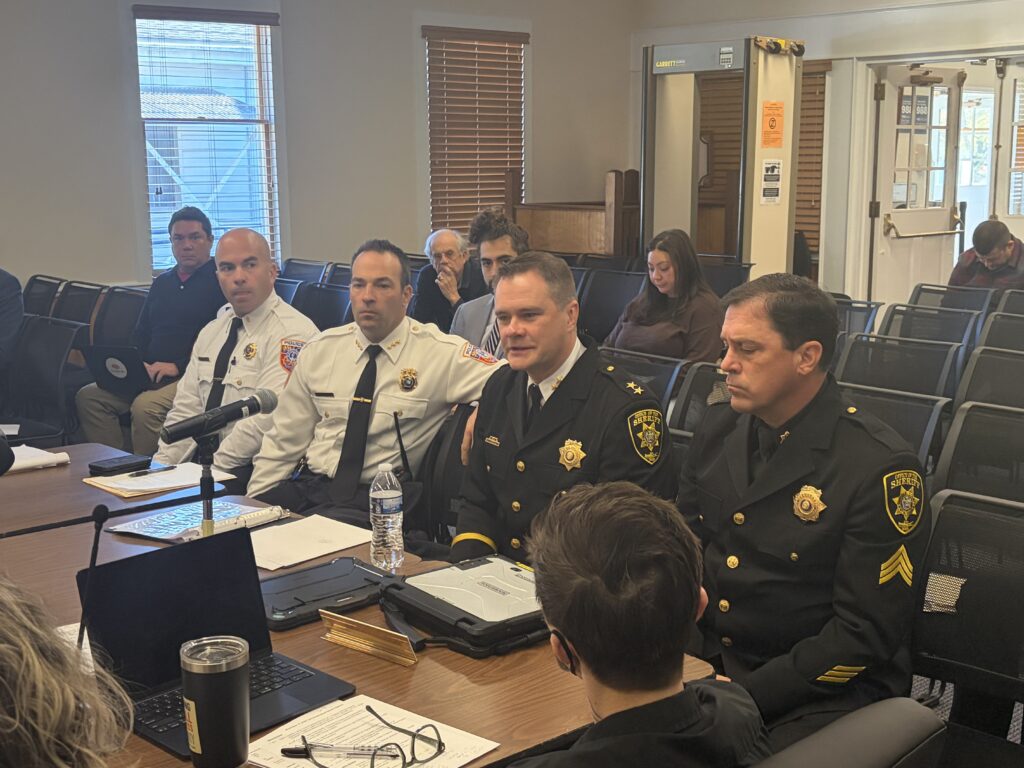
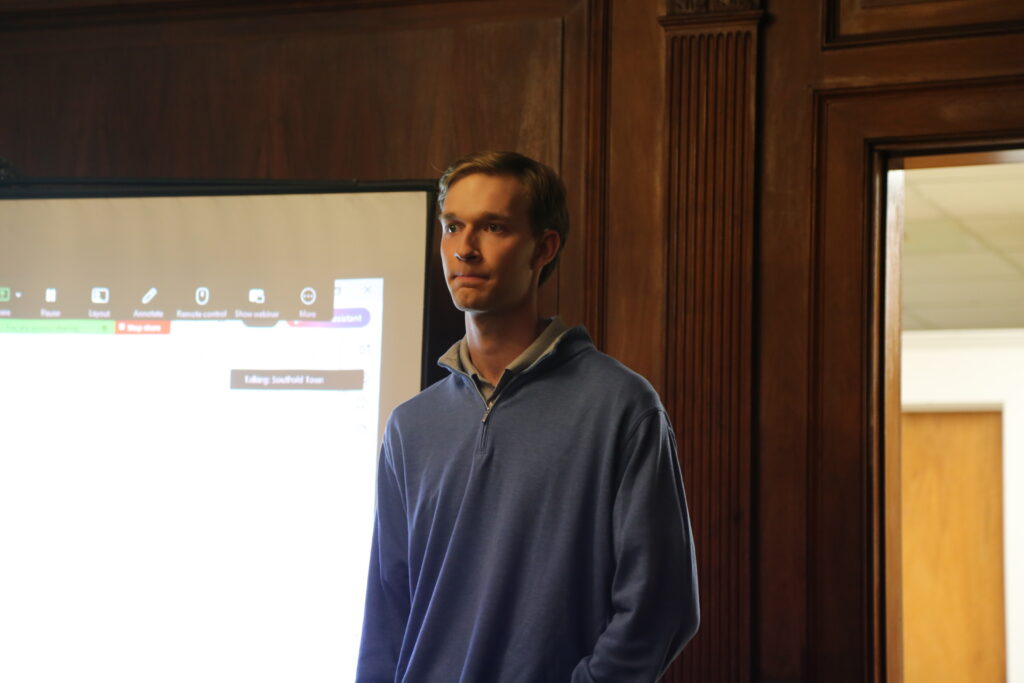
Suffolk County sheriff’s officials denied using controversial Flock cameras “to track people” during a Southold Town Board work session Tuesday, but local leaders continued to question how the private company protects and shares drivers’ information.
Chief Deputy Sheriff Christopher Brockmeyer described the automated license plate readers as one of many digital tools used by law enforcement during the hour-long discussion.
“I’m not tracking you walking your dog down the street or maybe having a nice time with your kids in the neighborhood,” Mr. Brockmeyer said, stressing the use is for criminal-related activity.
Councilwoman Alexa Suess, who raised the prospect of ending the town’s contract with Flock at a Nov. 4 work session, said her focus extends beyond police agencies’ internal safeguards to how private vendors manage and secure license plate records.
“My concern is actually with how the data is handled and shared,” she said.
Board members questioned how the town could ensure private vendors are held accountable for protecting residents’ information, rather than relying on assurances that security standards are being met.
Mr. Brockmeyer, sitting alongside Southold Police Chief Steven Grattan at the Nov. 17 work session, was unable to answer some of the board’s questions about data security and encryption.
He said the sheriff’s office shares Flock data with more than 400 law enforcement agencies. Those relationships are established through the system’s sharing settings rather than formal written interagency agreements.
The town police department controls three of the 11 Flock cameras in Southold under a four-year, $37,152 contract approved in January 2025, according to town documents cited in The Suffolk Times’ earlier reporting. The sheriff’s office controls the other eight.
Chief Grattan, who did not speak during the work session, previously told The Suffolk Times that Southold police had disabled nationwide sharing and continued sharing with a smaller group of approved agencies, mostly in New York and Connecticut. Additional outside access required the department’s approval, he said.
He previously defended the cameras, telling The Suffolk Times this month that they had helped investigators locate missing people, solve crimes and find stolen vehicles.
Mr. Brockmeyer said Flock’s automated license plate readers, or ALPRs, take still images of vehicles and their license plates as they pass cameras on public roads.
The system records vehicle and license plate images, along with the date, time and camera location, according to Flock’s license plate reader policy. Those records can show where a vehicle was photographed, although the company says its license plate readers do not use facial recognition.
“It is not used to track people, it’s not used to track their faces or vehicle speed,” Mr. Brockmeyer said.
He said police “routinely” handle sensitive information, from victims’ addresses and criminal records to DNA evidence and sensitive photographs and videos.
Mr. Brockmeyer acknowledged that cloud-based systems such as Flock’s could be vulnerable to hacking and data breaches, saying those risks must be taken seriously.
“These types of records contain significantly more personal information than a still image of a vehicle and its license plate captured on an ALPR system,” he said.
Ms. Suess also asked about the use of artificial intelligence and how images are accessed after they are captured.
“We now have numerous digital systems such as RMS, computer-aided dispatch, body cameras, local, state and federal record checks, drones, integrated mobile, mobile radio networks, and AI-assisted translation tools to allow officers to better communicate with the public,” Mr. Brockmeyer said.
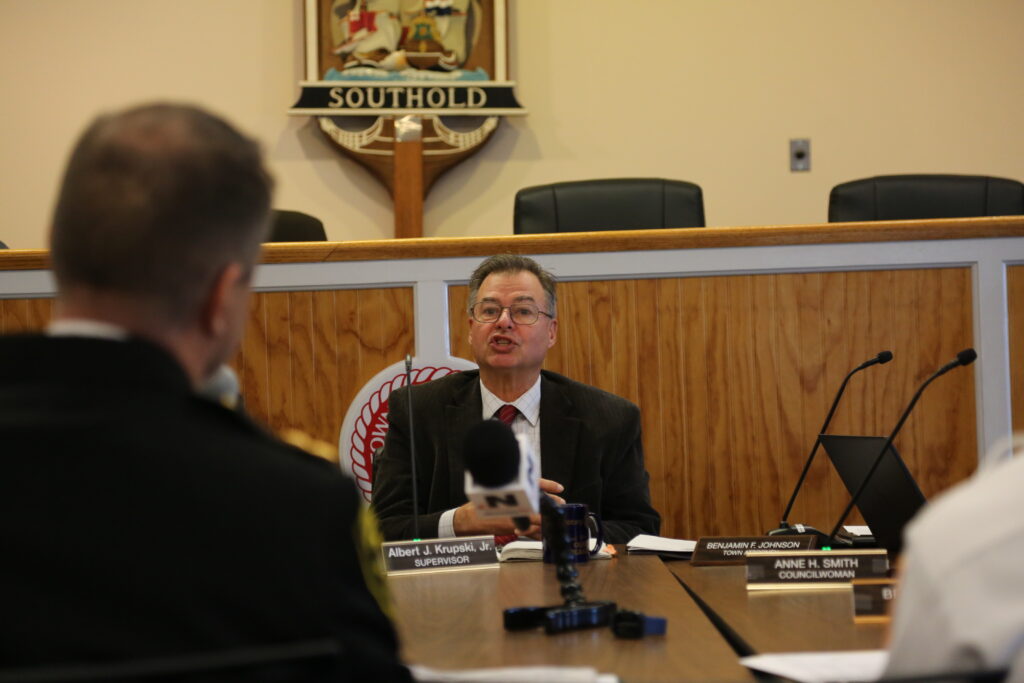
Supervisor Al Krupski questioned how much privacy people expect in public spaces as surveillance cameras become more common.
“These expectations of privacy on public property have to be reinforced too, because if you think about it, there are cameras everywhere these days,” Mr. Krupski said. “We watch the news in the morning and think, ‘didn’t that person know when they went in there that their face was going to be on the news the next morning?’ That’s kind of shifting culturally where people shouldn’t have an expectation of privacy in a public area.”
In separate comments to The Suffolk Times following the meeting, Chief Grattan said he would contact Flock representatives to seek answers to the board’s questions and could arrange a future meeting with company representatives.
“Initially, to seek clarification of the questions,” he said. “If the board would like to schedule a future meeting with Flock representatives, we could coordinate that as well. We recognized that there were some questions we did not have the answers to. We intend to get answers to those questions and provide the board members with the information.”