Roadside marker honors Southold man freed in 1813

A historic figure in Southold’s storied past, an enslaved man who secured his freedom in 1813, was commemorated with a roadside marker at the intersection of Main Road and Mill Lane in Mattituck on Tuesday, July 8.
Local historians were joined by Southold elected officials to recognize the life of Southold-born Elymus Reeve, who was enslaved by Elizabeth Reeve, the granddaughter of Joseph Wickham and owner of a large part of what is now known as Wickham Fruit Farm.
In 1820, after Elymus secured his freedom, Elizabeth gave him an acre of land on a part of the farm that is now called Wickham Creek, according to the town’s website. His father, Reuben Reeve, was also given 3.5 acres of land and a house along the south side of Main Road, facing Marratooka Pond in Mattituck. Elymus and his wife, Hagar, inherited his father’s house and farm, where they raised their own family.
The two are believed to have had eight children, but historians have only been able to identify five, including the well-known Rev. Dr. John Bunyan Reeve, the couple’s youngest son, who was born in 1831.
According to the African American ministries, the Rev. John was the first Black student to graduate from Union Theological Seminary, with honors. He served as a missionary, visiting the American Southwest, where he worked to facilitate Black churches starting in 1865. The Rev. John earned a doctorate in divinity from Lincoln University in 1870. Shortly after achieving his doctorate, he was appointed to organize Howard University’s theological department. He died in 1916.
Tuesday’s ceremony and installation is part of The North Fork Project, an initiative spearhead by a group of historians to uncover more details of the Reeves family’s history in addition to more than 550 other enslaved North Fork residents who have been forgotten.
Steve Wick, former executive editor of Times Review Media Group and founder of The North Fork Project, noted that the group started out with records of four or five enslaved people and have now identified 350 names of enslaved men, women and children who lived on the North Fork.
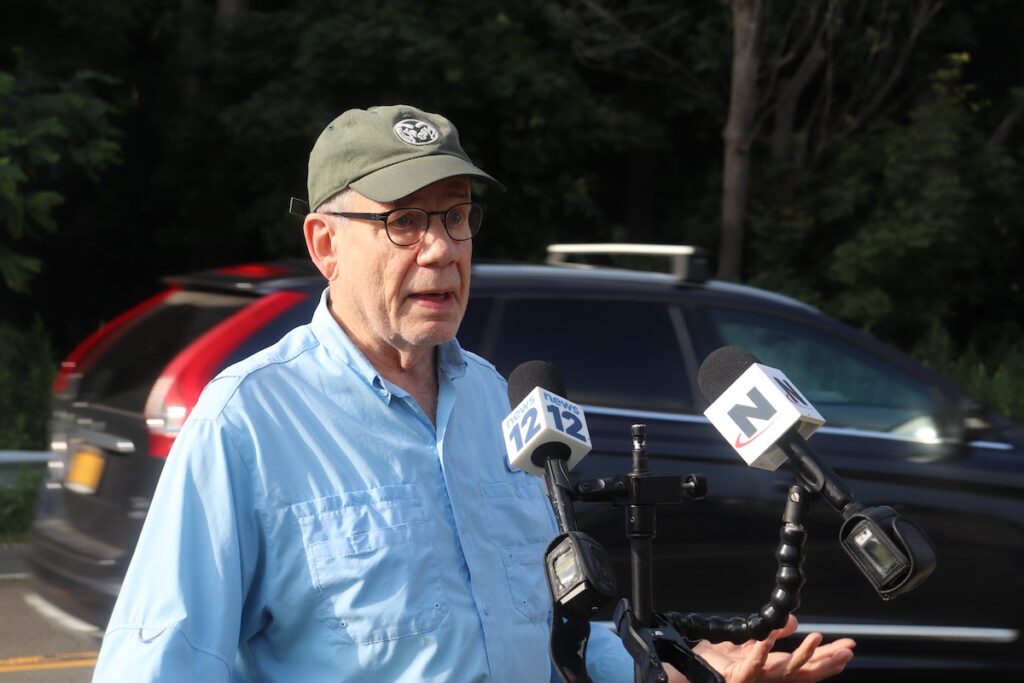
“They’ve contributed to everything about this town,” Mr. Wick said. “They’ve worked every farm that you see here; they lived in the attics of the old houses. Not to know their names is to leave out an enormous part of the story.”
He stressed the importance of sharing their history, an inextricable chapter of The North Fork’s story, when observing Elymus’ marker.
“Consider this sort of day one of revamping and retelling a more complete story of this town,” Mr. Wick said.
The roadside marker commemorating the lives of Elymus and his family was made possible by a grant from the William G. Pomeroy Foundation. The foundation was established by Bill Pomeroy in 2005 and made funding historical markers a priority, according to Southold town historian Amy Folk.
“Bill learned that New York State had stopped funding its marker program decades ago, which left it up to communities to raise funds on their own,” Ms. Folk said.
The Elymus Reeve sign joins 143 other historic markers across Nassau and Suffolk counties, acknowledging the history of Long Island.
“With this Pomeroy Marker, you commemorate Reeve’s legacy,” the foundation’s executive director Bill Brower wrote in a letter. “We extend our heartfelt gratitude to the Town of Southold, community members and all who helped make this dedication possible.”
Elymus’ final resting place is Old Burying Ground on Main Road in Cutchogue.
“To remember something like this that happened, I feel is really the right thing to do,” Supervisor Al Krupski said.