Greenport’s $13.7M budget would raise taxes 3.24%
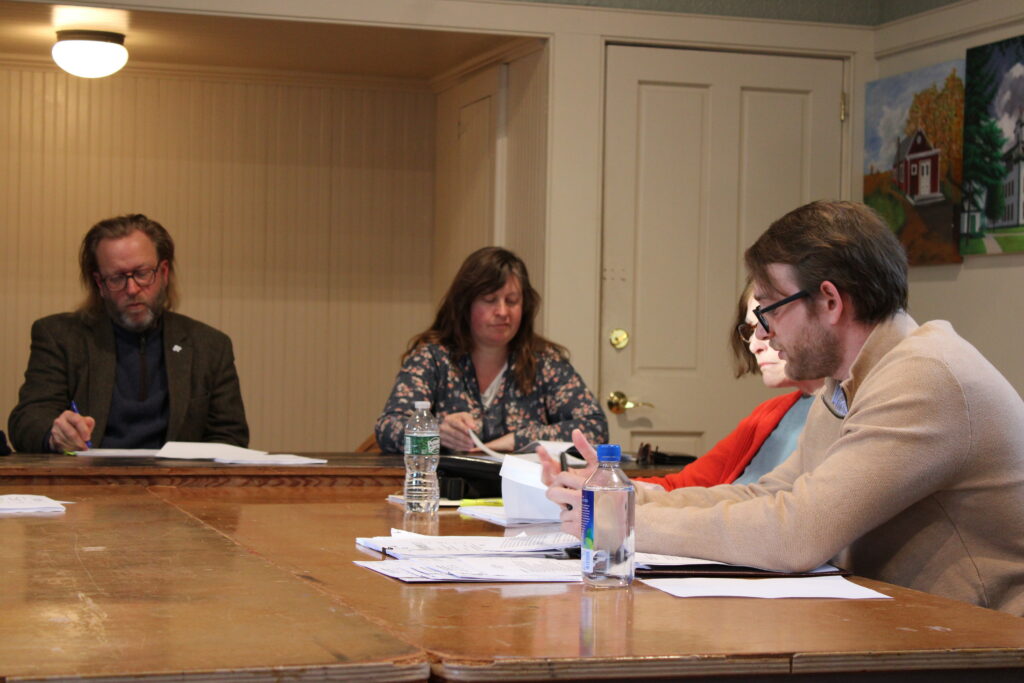
Greenport village officials proposed a $13.66 million budget that would modestly increase taxes next year while keeping overall spending nearly flat.
The plan, unveiled at a hearing Thursday, includes a 3.24% increase in the tax rate, driven in part by declining assessed values, officials said.
Approximately 0.62% of the increase is needed just to maintain last year’s revenue levels, with the remainder generating about $37,437 in new revenue, Village Treasurer Adam Brautigam explained at the hearing.
“This additional revenue will help offset some anticipated reductions in recreation-related revenue and support ongoing village operations,” Mr. Brautigam told Mayor Kevin Stuessi and other board members.
The tax hike equates to approximately 2.62% in new revenue growth, but keeps the village “fully compliant with the New York State tax levy limit,” Mr. Brautigam stressed.
The tentative budget calls for $1.46 million to be raised through property taxes, while the majority of revenue comes from other sources such as electric service, marina operations and parking fees — helping to keep overall spending increases minimal.
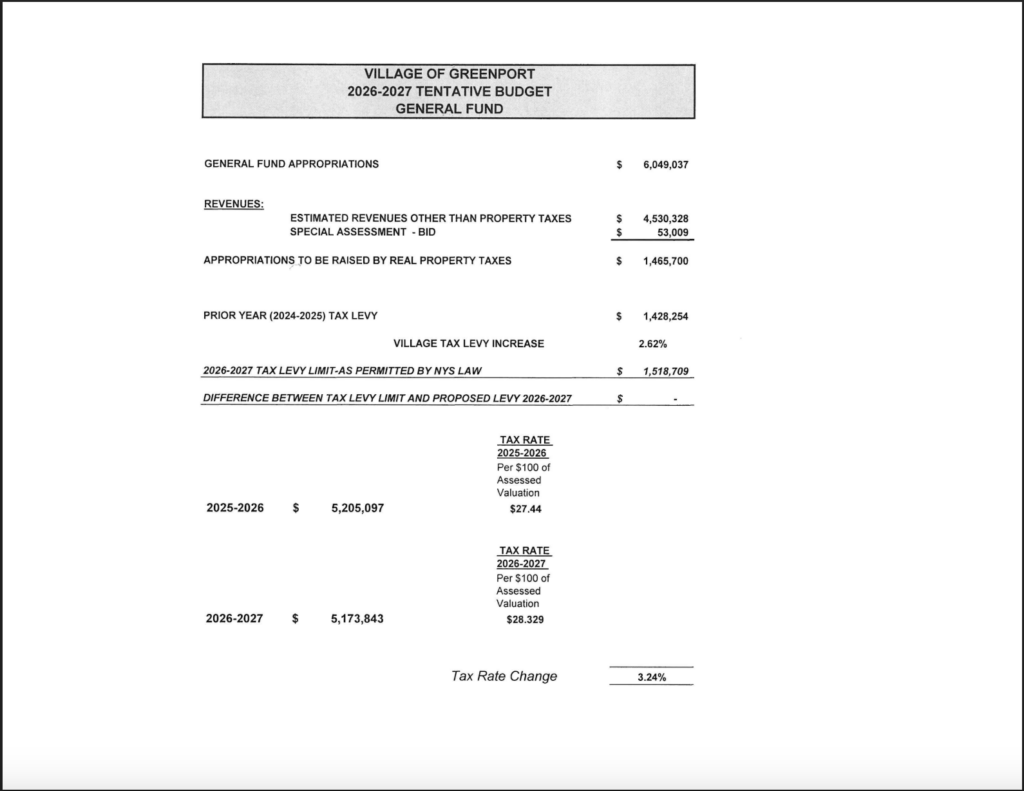
The tax rate per $100 of assessed valuation is $28.33, up from $27.44 in the current fiscal year.
The increase translates to about $0.89 more per $100 of assessed value. The effect on homeowners will likely be less than $35 per household on average.
The budget documents show the village’s taxable assessed value declining slightly year over year, a trend that is pushing tax rates higher even as overall spending remains largely unchanged.
“The taxable full value has gone up 50% in the last couple of years,” Mr. Brautigam said after questions from Trustee Mary Bess Phillips. “Meanwhile, our taxable assessed value is stagnant or decreasing. These are definitely concerns that this village should be worried about.”
Officials said the gap between rising property values and stagnant assessments is not unique to the village, and may take time to correct. Mayor Stuessi suggested raising the issue at a future joint meeting with Southold Town.
Separately, a major reduction in the village’s Transmission Congestion Contract will lower some pass-through electric costs, even as overall power expenses continue to rise.
Mr. Brautigam said that when the current fiscal year began, the village budgeted $690,000 for a TCC contract based on prior years’ costs. The village has since received the finalized cost for the upcoming year, which has come in at $263,000.
“This does not negatively impact the village’s finances,” said Mr. Brautigam. “Instead, it represents a cost savings to our utility customers, and the lower expense results in lower charges being passed along.”
The village’s electric fund, nearly a third of the overall budget at more than $4.3 million, plays a major role in both costs and savings, with fluctuations in power-related expenses directly affecting ratepayers. The lower TCC cost shifts the overall electric fund budget from a projected 4.8% increase to a 5.5% decrease.
On the flip side, there will be an increase in the cost of power. It affects the village’s operating costs, but it will not be recovered from customers.
Mr. Brautigam said he will be looking to conduct a rate study on the village’s electric rates this upcoming fiscal year to review base rates. He said the goal is to ensure that the rates are sustainable to cover ongoing operations while keeping the light fund financially stable.
The spending documents also show the village is dedicating significant resources to infrastructure. Spending includes more than $530,000 for street maintenance personnel and an increase from $50,000 to to $66,500 for roadwork and sidewalk repairs, with this increase being funded by revenue from paid parking — a 33% spike over last year.
“That increase is tied to the projected revenue from paid parking, where 10% of the estimated revenue will be added to our already existing expense line for repairs and upkeep on the sidewalks,” Mr. Brautigam said.
Public safety and emergency services also account for a substantial share of the budget. Fire protection and related costs totaling roughly $1.4 million for equipment, maintenance, insurance and operations.
Recreation and waterfront assets remain key investments as well, with funding for parks, the Mitchell Park marina and other facilities that support the village’s tourism-driven economy.
At the same time, the budget includes millions of dollars in fixed costs for employee benefits, insurance and debt service — including bond payments and long-term capital expenses. These underscore the village’s ongoing financial commitments beyond its day-to-day operations.
The Village Board is scheduled to adopt the final budget on Thursday, April 23, locking in tax rates and spending priorities for the year ahead as officials continue to grapple with shifting property values and rising costs.