Three Southold creeks closed to harvesting over marine biotoxins
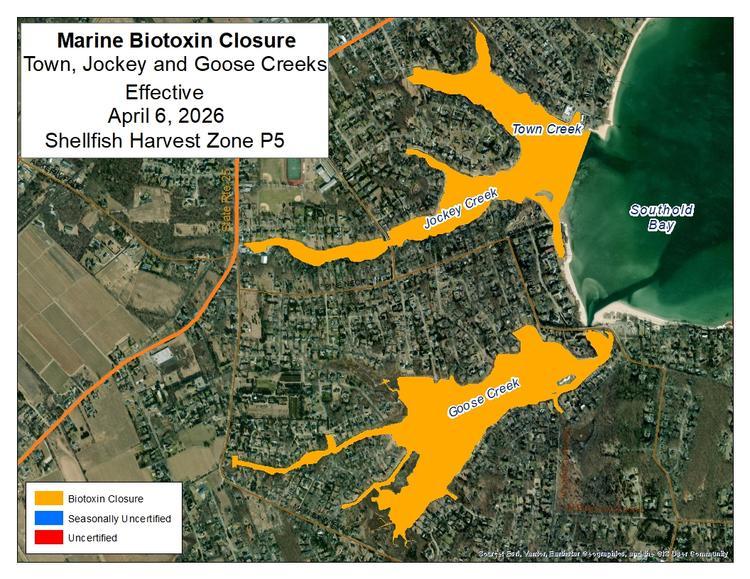
Three Southold waterways — Jockey Creek, Town Creek and Goose Creek — are closed to shellfishing due to elevated marine biotoxins risk, a recurring spring condition that can cause serious illness if contaminated seafood is consumed.
The New York State Department of Environmental Conservation initially prohibited the harvest of shellfish and carnivorous gastropods, such as conchs, whelks and moon snails, in Jockey Creek on April 1 as a precautionary measure due to plankton density in the water, DEC spokeswoman Samantha Rosen said.
The closure was extended on April 6 to include the entire Jockey Creek and Town Creek system, as well as Goose Creek.
“So, no shellfishing, and that includes hanging any shellfish off your dock, or anything that can get contaminated and make you sick,” Councilwoman Jill Doherty told residents at a Town Board meeting April 7.
The DEC did not have toxicity results as of April 9 when reached by The Suffolk Times.
The closures are part of a seasonal pattern on the North Fork, where harmful algal blooms can produce toxins such as saxitoxin, a marine biotoxin that causes paralytic shellfish poisoning.
“The creeks will remain closed for harvest until a determination is made that marine biotoxins are no longer present at levels that may make shellfish and carnivorous gastropods hazardous for use as food,” Ms. Rosen said. “The blooms are not unusual and can occur on an annual basis.”
The creeks were temporarily closed April 16, 2025, after saxitoxin was found in mussels in the creeks. A similar closure was enacted in April 2023 when mussels collected from a monitoring site in Jockey Creek also tested positive for saxitoxin.
For more information on temporary shellfishing closures, visit the DEC’s website at dec.ny.gov/things-to-do/shellfishing/temporary-closures#Suffolk. The shellfish closures hotline is 631-444-0480.
Information about marine biotoxins and paralytic shellfish poisoning is also available at HABs and Marine Biotoxins.