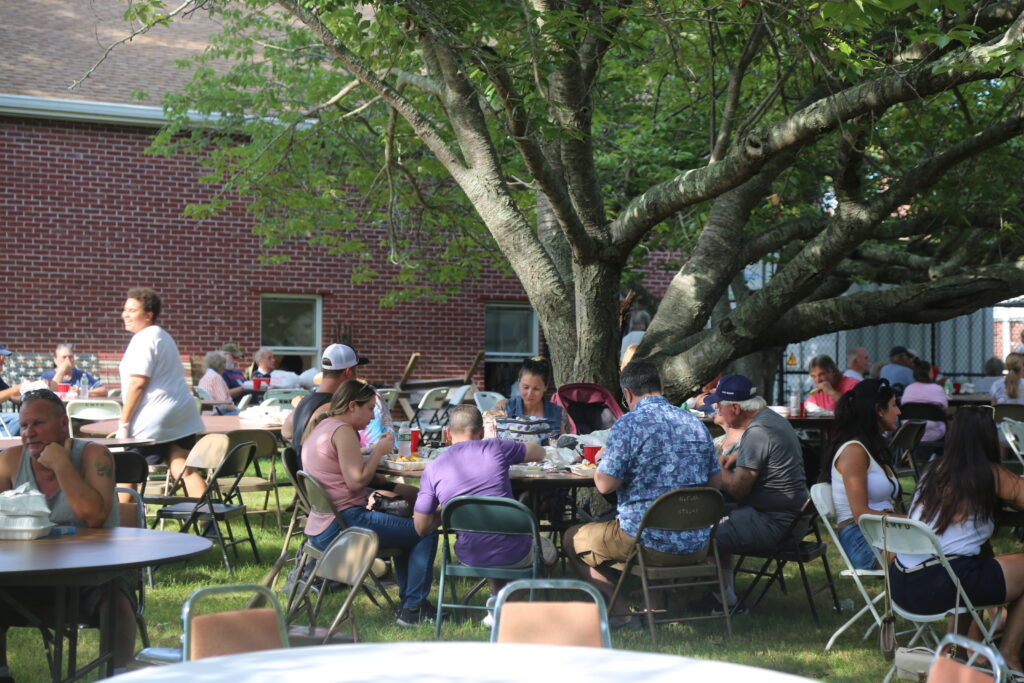
Hundreds of North Forkers walk to end Alzheimer’s disease
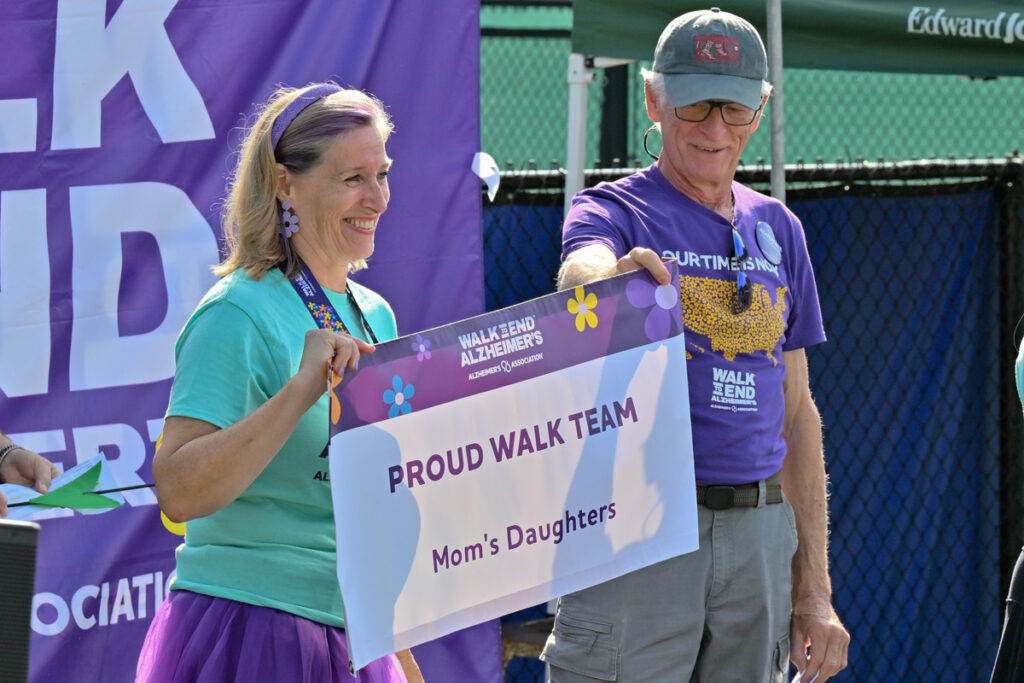
When John Chandler of Southold was diagnosed with mild cognitive impairment — the early stages of Alzheimer’s disease — his first reaction was denial. Then, it was anger.
“I thought, ‘What did I do to deserve this?'” Mr. Chandler said to the crowd at the third annual North Fork Walk to End Alzheimer’s on Sept. 27 at Peconic Landing. “My whole life, I’ve been a top level athlete, a runner, biker, skier. [In] my business career, I was energetic, creative, successful, right up to my retirement.
“I never smoked, wasn’t dependent on drugs, been a social drinker my whole life — the bottom line if is someone with my fitness, diet and lifestyle can get Alzheimer’s, then this isn’t just an ‘old person’s disease,'” he said.
He is one of the over 7 million Americans living with Alzheimer’s today. In New York State alone, more than 426,500 people are living with this disease. Unfortunately, the numbers are growing rapidly. The National Alzheimer’s Association predicts nearly 13 million people in the U.S. will be diagnosed with Alzheimer’s by 2050.
Although these diagnosis-rate figures are alarming, the collective message at North Fork Walk to End Alzheimer’s was that no one is alone in this fight. The unity was evident in the nearly 400 walkers who participated the event led by the Long Island chapter of the national Alzheimer’s Association.
The event is one of five Walks held around the Island to support global research, increased risk reduction and early detection around Alzheimer’s and other dementias. The Long Island chapter surpassed its $86,800 fundraising goal with a total of $124,050 raised. Judy Wichter, co-chair of the North Fork walk, said they received so many donations, the website crashed.
Each walker received a “promise garden flower,” and the colors represented different meanings. Yellow flowers were for those caring for someone with Alzheimer’s or dementia, purple flowers signified losing a loved one to the disease, blue flowers represented those who have been diagnosed, and orange flowers were for individuals who do not have a direct connection, but strive to help and support the cause.







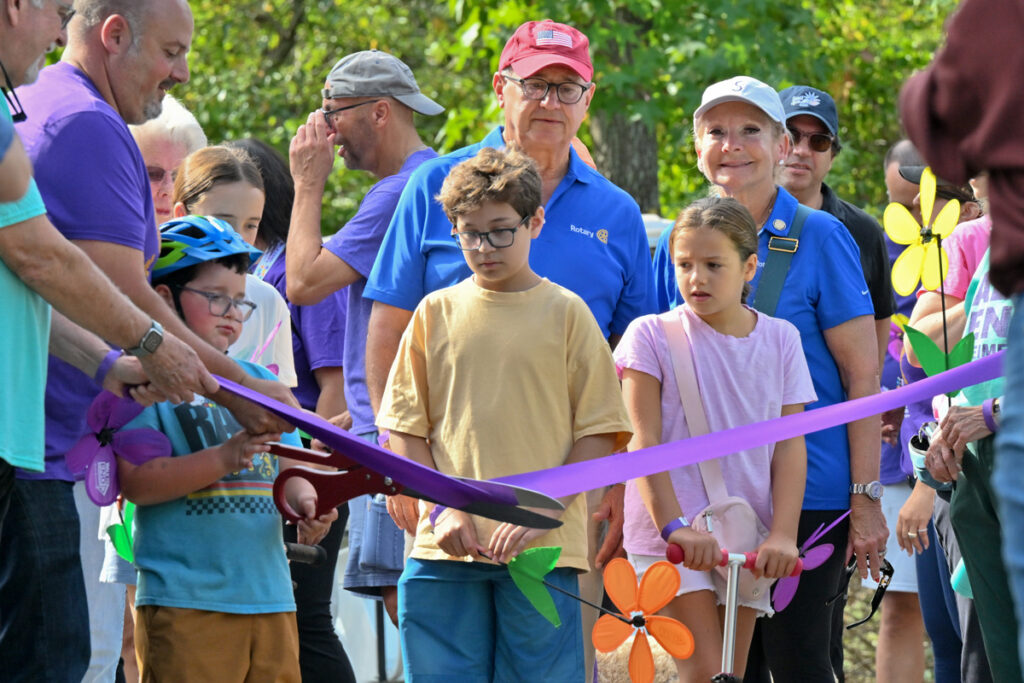


As each speaker during the open ceremony shared their sentiments and flowers, the audience waved theirs up high in solidarity. Community members then walked the Peconic Landing campus.
“Standing up to Alzheimer’s takes immense bravery, but you have shown up in force,” said Nancy Chandler, John’s wife and Long Island Alzheimer’s Association board member. “The flowers represent our different reasons to end Alzheimer’s and all other dementia. With this colorful display of determination, I am confident that one day, we will add a white flower that represents the first survivor of Alzheimer’s.”