Southold cell tower plan gets a public hearing set for Feb. 10
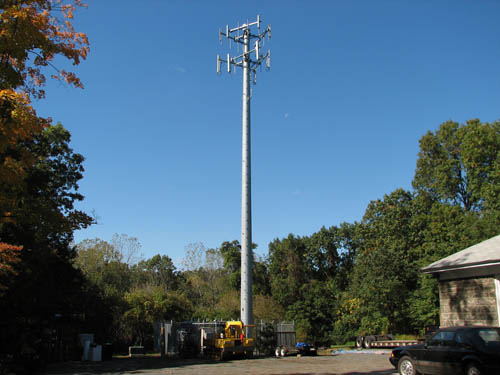
The Southold Town Board will hear public comments regarding its new wireless communication plan Tuesday, Feb. 10, at 6 p.m. at Town Hall.
The new plan comes on the heels of a townwide survey conducted last summer between July 18 and Aug. 14, which revealed that nearly 50% of residents get only one bar of service in their homes.
The proposed law outlines the town’s intention to minimize the visual and environmental impacts of the cell towers and recognizes the crucial role of wireless coverage. It also outlines regulations for structure types and intentions to protect the scenic qualities of Southold “while meeting the community’s need for consistent and dependable coverage.”
Under the law, locations would be reviewed and approved in conjunction with zoning and historical development patterns in town as well as any other federal, state, or local laws and regulations. The erection, enlargement, expansion, alteration, operation, maintenance, relocation and removal of all wireless communication facilities would be regulated by the new code.
Priority locations for towers, in descending order, are:
- Within a half-mile geographical search ring of potential tower locations by design type and height identified in the Wireless Master Plan
- On town-owned property
- On other taxing districts’ property
- On other property in the Light Industrial or Light Industrial Park zoning districts
- On other property in the Marine I, Marine II, General Business or Hamlet Business zoning districts
- On other property a minimum of two acres in size in the Agricultural Conservation, Low Density Residential R-40, R-80, R-120, Limited Business, Residential Office, Resort Residential, Hamlet Density Residential, or Affordable Housing zoning districts.
Towers would not be allowed in the Low Density Residential R-200 or R-400 districts. Towers would also not be allowed in wetlands, on land with high groundwater within 10 feet of the surface, on lands purchased with Community Preservation Funds, in coastal erosion hazard areas or on designated parkland without a permit from all jurisdictional agencies.
Collocation on an eligible structure without exceeding the definition of substantial change was the most preferred method to increase wireless connectivity, followed by collocation of an existing base station exceeding the definition of substantial change, replacement of an existing tower, new collocation on a new base station without preexisting equipment, or a new tower.
Preferred design standards for towers listed in the proposed code are, in descending order, concealed tower, painted monopole, non-painted monopole or lattice tower. Maximum tower height, excluding lightning rods, would be 140 feet in all districts where permitted, or as provided in the town’s Wireless Master Plan.
Before a lease can be secured for a new facility, a predevelopment meeting must be held with the planning department and building inspector to discuss the proposed project, location and possible alternatives. All wireless communication facilities and modifications would require a building permit, wireless facility planning permit and, in some instances, a special exception approval by the Planning Board.
Outside of existing zoning and land-use designations, the town may deny an application for any safety concerns, or conflicts with the historic nature or character of a neighborhood or historical district.
A structural analysis signed and sealed by a professional engineer in New York that states the facility is designed to the U.S. standard for design loads, including wind speed design requirements, and tower loading/wind design requirements of the Electronic Industries Association/Telecommunications Industry Association standards, would be needed for all facilities.
New facilities and any facility modifications would need a signed statement from a radio frequency engineer that assesses how radio frequency emissions from the facility comply with applicable FCC standards.
Noise emitted by any facility base equipment, would have to measure less than 45 decibels at all adjacent property lines, under the proposed code.
If any proposed facility does not correlate with the priorities outlined in the code, the applicant would have to submit a written report outlining why they chose that site.
Definitions relating to communication facilities are outlined in the new code to clarify language used in applications and when considering applicable regulations.