Guest column: Surviving the World Cup beat
When friends hear that I am covering the World Cup, they invariably ask if they could carry my bags.
Covering the Cup is far from a vacation. Since I am covering my ninth World Cup, I learned long ago that it takes much preparation. You also need a strong back for your backpack, as you will be doing a lot of walking and standing.
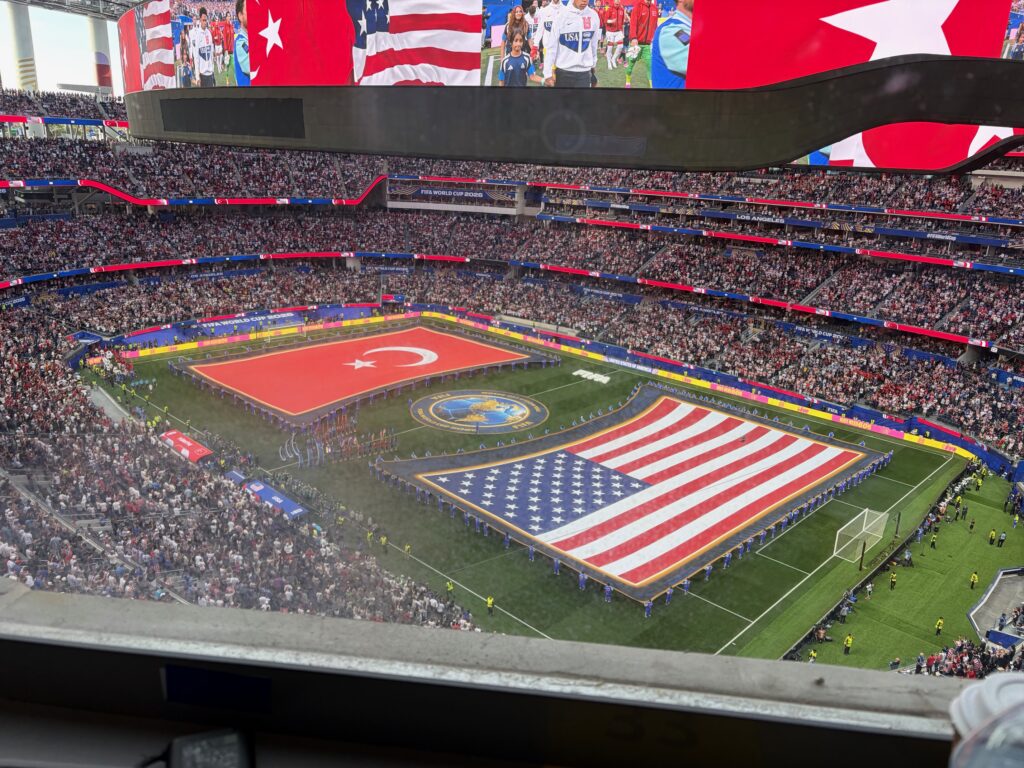
I recently returned from covering the U.S. men’s national team on the West Coast. I reported on the team’s three Group D matches, two in Inglewood, Calif., and one in Seattle.
Many individuals think it’s special talking to players. Well, it is, in a way. When you are trying to get quotes for a story, it’s not like you’re thinking, “Oooh, I am talking to Christian Pulisic!” You’re thinking more like, “Christian, please say something really good for my story.”

I stayed in a Marriott Residence Inn in Irvine, 20 minutes from the USA’s training camp. It was for a reasonable cost because it was booked last November before prices went sky high. The room had a full kitchen. I could buy food from a supermarket, have lunch or dinner, and save money.
Occasionally, I would have dinner out with two colleagues, Steven Goff of Yahoo.com (former Washington Post soccer writer) and Jeff Carlisle of ESPN.com.
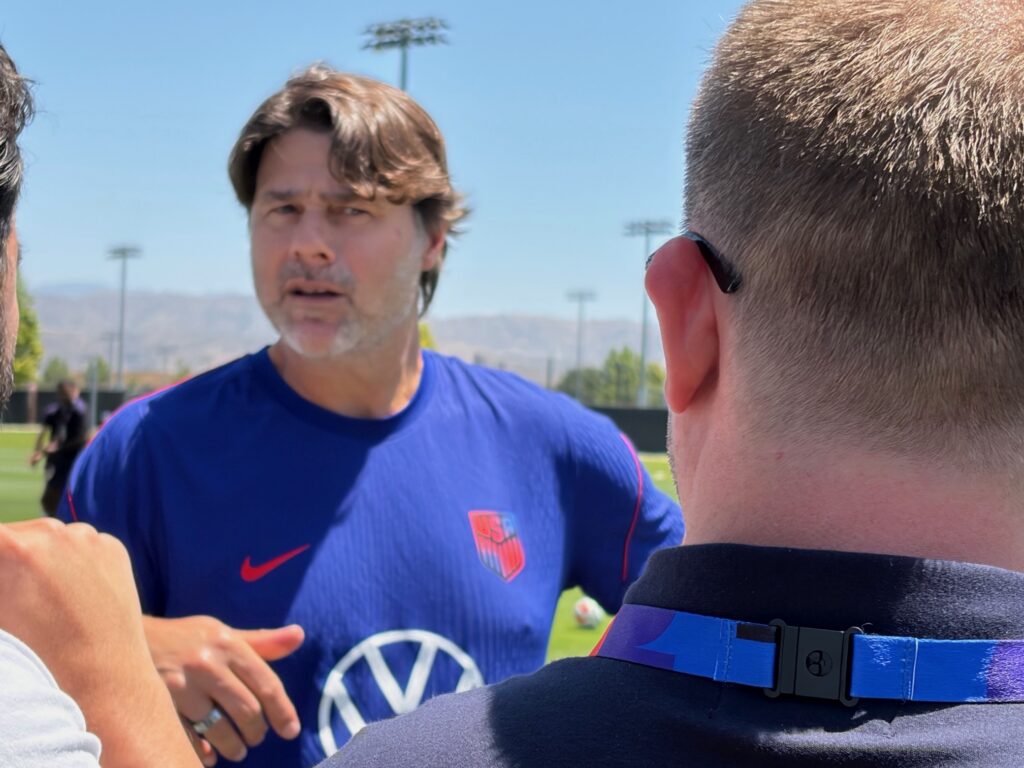
On the day before a match, the media interviewed three players at the camp, then drove an hour to SoFi Stadium for the official FIFA press conference with U.S. head coach Mauricio Pochettino. It made for a long day.
We also traveled together on game day.
The USMNT’s regular beat writers, such as Goff and Carlisle, would get first dibs on questions to players and Pochettino. I understood. At one time, I had that role.
The one thing I have learned is to stay within my lane. So much news is happening elsewhere at the World Cup; it is easy to get distracted.
From a local angle, I wrote about Lake Grove defender Joe Scally, the first Long Island man to compete for the U.S. in the World Cup. I penned a story about Scally giving his shirt to his youth coach, former Sachem High School boys soccer coach Frank Schmidt, after a pre-World Cup friendly. I wrote another about Scally’s family watching games in California and interviewed him in the mixed zone after he made his World Cup debut in the 2-0 win over Australia in Seattle.
The less said about the mixed zone, the better; the bane of many sportswriters.
The zone is where players walk through toward their team bus. Players don’t have to stop for the media, but most do.
When you have 40 to 50 individuals trying to get within listening distance, it can turn into an intriguing scramble of humanity. You also discover who doesn’t take showers.
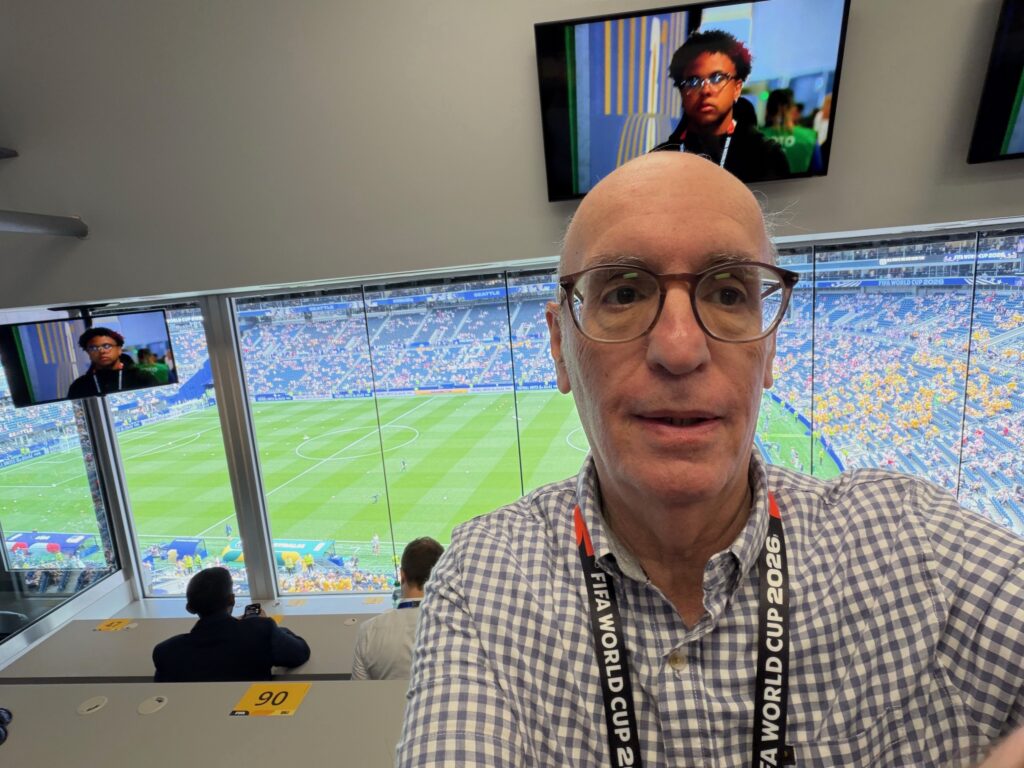
The one thing they never taught us in journalism school is the waiting process. There were times when the media waited as long as 90 minutes to talk to players in the mixed zone, which can be dangerous when on deadline. Some writers sat on the ground and produced their stories.
It wasn’t easy leaving the team, but I knew my budget. Given the team’s World Cup record over the years, I didn’t think they would win their group and stay on the coast. I thought the squad would finish second or third and head east.

Not the end of the world or the World Cup for me.
I had an opportunity to cover games at MetLife Stadium in East Rutherford, N.J., attending Norway’s 2-0 victory over Brazil on Sunday, July 5. The day was a 13-hour affair. I left my house at 8:30 a.m. to catch a train to the city. Then it was a five-minute walk to the stadium bus pick-up point. After reaching the stadium four hours before kickoff, we waited 45 minutes for the gates to open.
The game was fabulous, as the great Erling Haaland scored two late goals. I wrote my game story.
That was the easy part.
Media members walked 10 minutes to a structure housing the mixed zone and waited for Norwegian players to come through. We were told that Haaland was preoccupied with several one-on-one interviews elsewhere. We waited more than an hour. He was a great interview and humble. Instead of staying at the stadium, I hopped on the media bus. I downloaded my interview to my laptop and started writing a feature about Haaland. I finished it on the train to Ronkonkoma, while editing other stories.
Again, things they didn’t teach in J-school.
What I did was nothing spectacular. That is what a sportswriter does to survive at the World Cup.
The next match at MetLife is the final on Sunday, July 19. I am keeping my fingers crossed that I will receive a credential.
Michael Lewis, a longtime Suffolk Times contributor, has covered 13 World Cups, including eight men’s tournaments and five women’s tournaments.