Suffolk County signs groundbreaking law to save working waterfronts from development
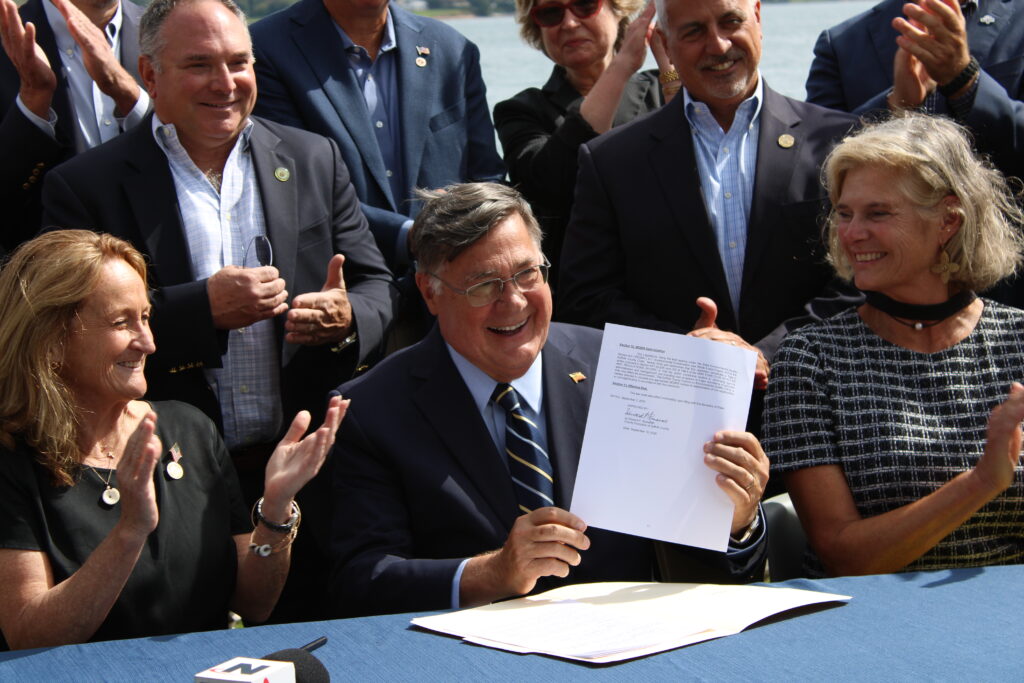
Suffolk County Executive Ed Romaine signed the groundbreaking “working waterfront” bill at the Greenport railroad dock Monday — officially enacting unprecedented protections for the area’s commercial fishing and maritime heritage.
The ceremony to sign the legislation — attended by dozens of maritime business owners, as well as local politicos — marked the culmination of months of advocacy following the Suffolk County Legislature’s unanimous approval on Sept. 3.
“We need working waterfronts to encourage those in the oyster business, to encourage those growing kelp, to encourage those who are fishing — all those who earn their living by the sea,” Mr. Romaine told the assembled crowd. “If we do not have a working waterfront, if all that land is purchased and used for other things, we’re going to miss out on one of the heritage industries of this county.”
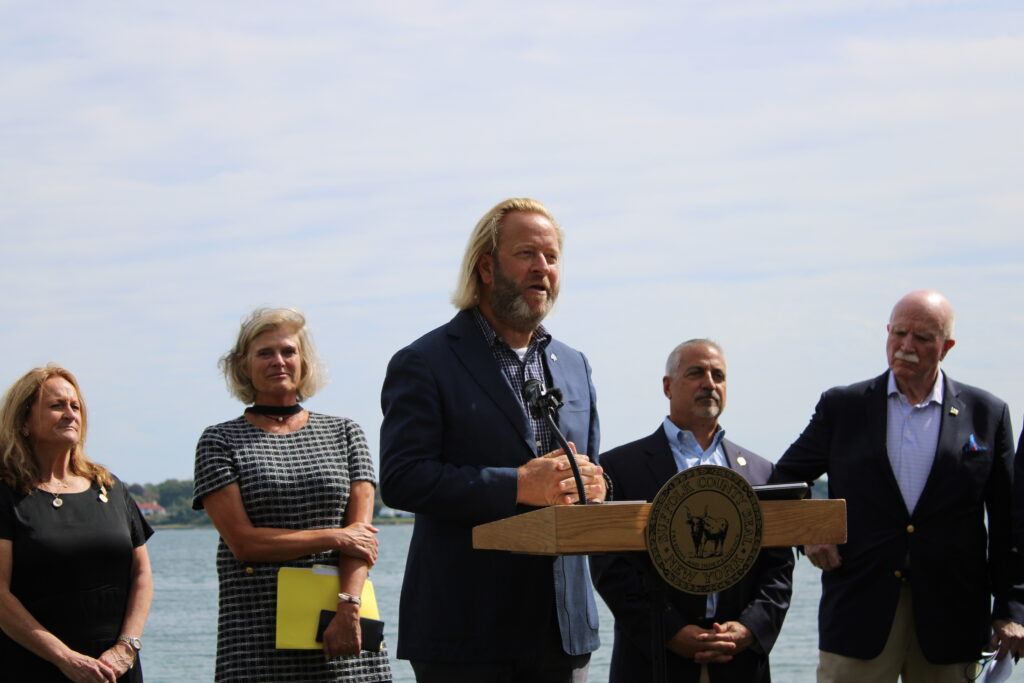
Greenport Mayor Kevin Stuessi said the village will continue working to conserve its waterfront. (Credit: Brendan Carpenter) 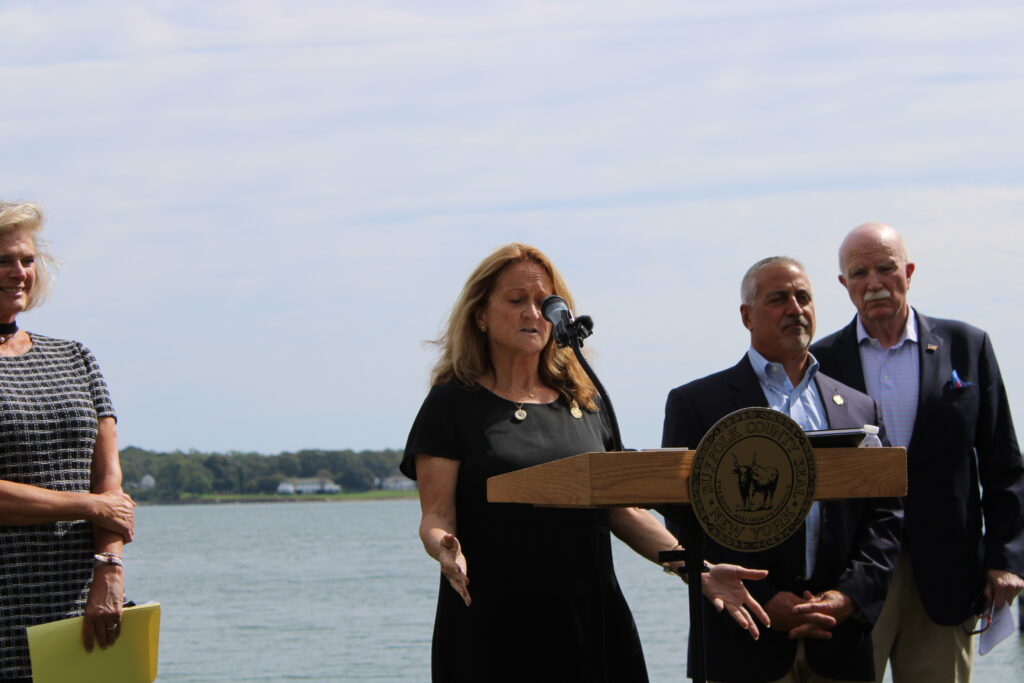
Legislator Catherine Stark has been a key mover in the bill’s success. (Credit: Brendan Carpenter) 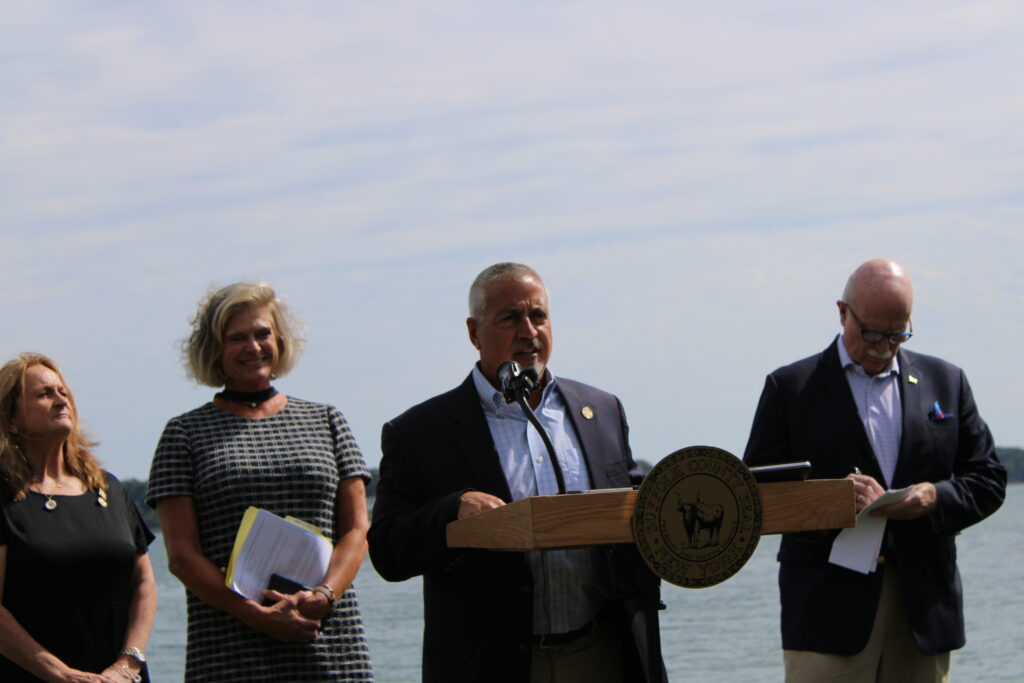
Legislator Jim Mazzarella shared his memories of the water growing up. (Credit: Brendan Carpenter) 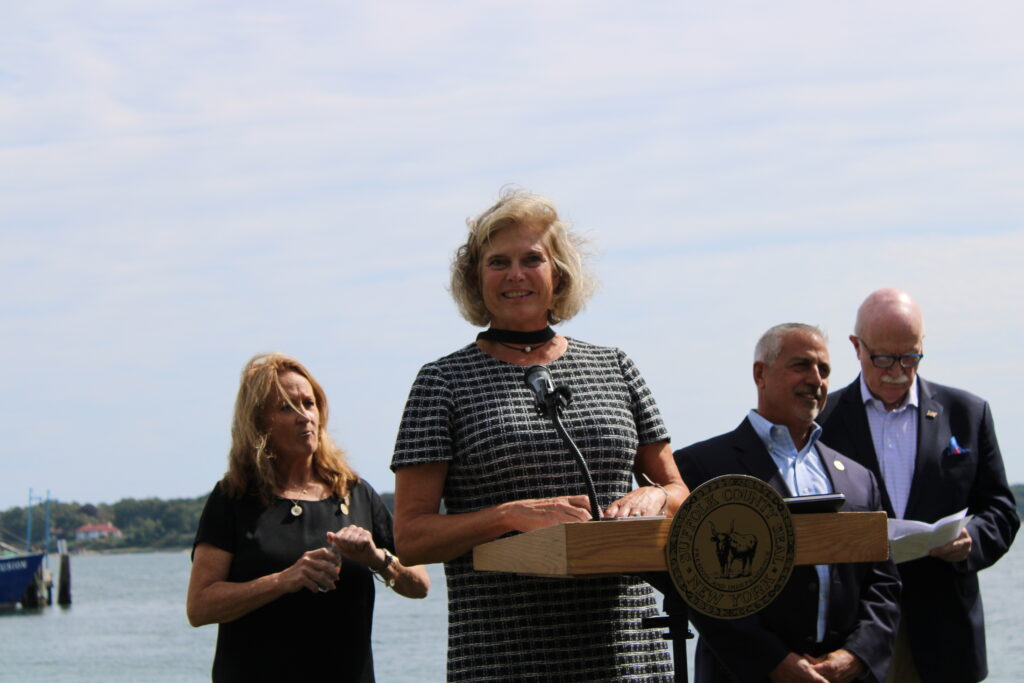
Legislator Ann Welker thanked all those involved in moving the legislation along. (Credit: Brendan Carpenter)
The new Chapter 26 of the Suffolk County Code establishes a framework for acquiring conservation easements on working waterfront properties, creating protections against development pressures that have threatened to transform commercial docks into residential properties.
Commercial waterfront property owners can now apply to a newly formed 17-member Working Waterfront Committee for conservation easements that would preserve their properties for maritime uses — a protective framework modeled after the county’s successful farmland preservation program launched 50 years ago.
Industries including aquaculture, marine repair, commercial fishing and recreational boating are protected under the new guidelines.
“Today marks a turning point,” declared Bonnie Brady, executive director of the Long Island Commercial Fishing Association, her voice carrying across the dock. “For over 300 years, commercial fishing has helped feed Long Island, New York and the nation. But when we lose access to ice, fuel, a place to pack our fish and fix our vessels, we risk losing something much deeper.”
Legislators Catherine Stark and Ann Welker, who spearheaded the first-of-its-kind initiative in the state, flanked Mr. Romaine during the signing. Ms. Welker noted the legislation mirrors Maine’s successful program, which has preserved 35 miles of working shoreline since 2008.
“Today, we shine a light on our future as we stand where sea, sky and shorelines meet,” Ms. Welker said, “honoring Suffolk County’s farming and fishing history while looking forward with hope.”
The county has allocated $9.5 million in capital funding for the program in its 2026-2028 budget to support conservation easement acquisitions.
Ms. Stark characterized the legislation as “an investment in the economy, maritime traditions, the future of the East End and the rest of Suffolk County.”
Commercial fishing, aquaculture and maritime industries have faced mounting pressure in recent years to sell their properties for alternative development, threatening the availability of working waterfront properties that serve as docks, piers, packhouses and support facilities, according to the legislation.
Suffolk County’s 2,949 marine-related businesses employ 38,419 people, representing 6.1% of the county’s economy across 2,400 acres of commercial waterfront property, according to the legislation.
Legislator Jim Mazzarella, who chairs the county’s Economic Development, Planning and Housing Committee, shared his own memories of growing up on the waterfront. He recalled drag-netting for bait fish, bamboo-poling for snappers, treading for clams and body surfing in the ocean.
“This legislation protects the unparalleled connection community members have with the waterfront,” Mr. Mazzarella said.
Greenport Mayor Kevin Stuessi called Monday’s signing a “momentous day” for the village.
“We are very much looking forward to doing more on preservation of historic waterfronts and water quality,” Mr. Stuessi said.
The legislation defines conservation easements as agreements that “limit or restrict development, management or use of such real property for the purpose of preserving or maintaining the scenic, open, historic, working waterfront, maritime, archaeological, architectural or natural condition, character, significance or amenities of the real property in question.”
The Aug. 5 public hearing on the proposal drew overwhelming support from the maritime community, with the county conducting outreach to marina owners, waterfront restaurants and other water-dependent businesses beginning in April to understand the challenges facing the industry.